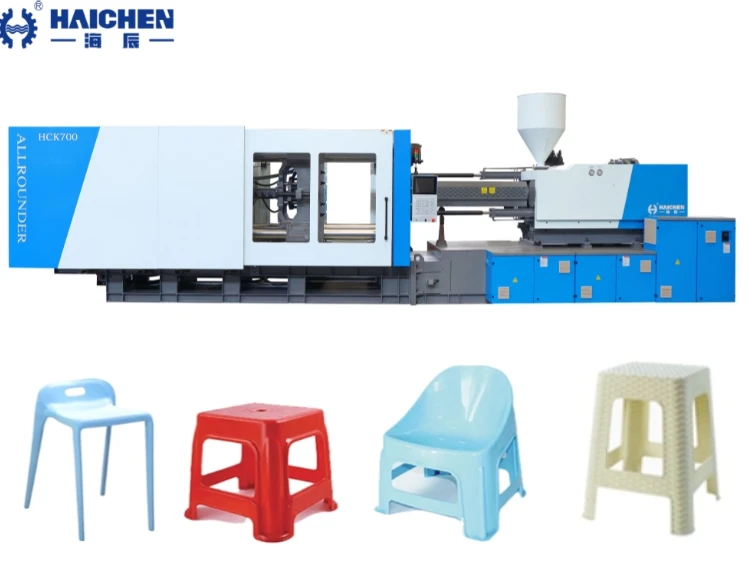
The plastic stool injection molding production line mainly includes plastic material, injection molding machines, molds, and auxiliary machines to produce plastic stools.
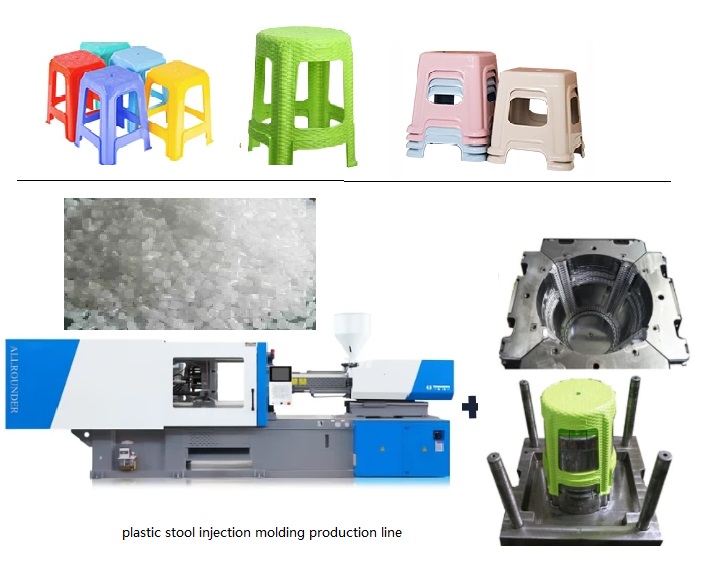
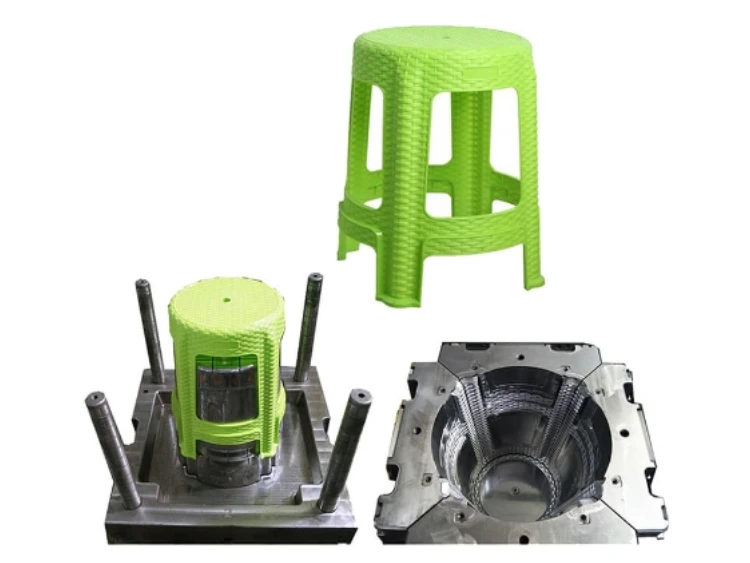
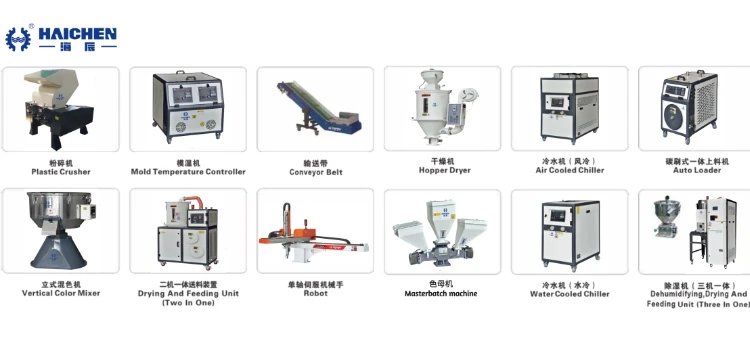
Plastic stool production line has four core parts. The material preparation system dries and stores PP or HDPE plastic stool injection molding materials. The injection molding machine is the main equipment which melts the plastic and injects it into the mold. The plastic stool mold gives the stool its final shape like plastic folding step stool, plastic foot stool, plastic stool chair, plastic bath stool or chiavari bar stool. And most plastic stools molds use a single cavity because stools are large parts. The auxiliary equipment includes a dryer for moisture removal, an auto loader for material feeding, a chiller for mold cooling, and a robot for part removal. These components work together as an integrated system.
This plastic stool injection molding production line turns plastic pellets into finished stools through an automated system process. The line includes several pieces of equipment working together. Plastic Stool Injection Molding Machine: How to Choose the Right Machine? The plastic stool injection molding machine melts the plastic and injects it into the mold. The mold shapes the stool. The auxiliary equipment supports the main machine with drying, feeding, cooling, and part removal.These components work together as an integrated system. A complete plastic stool production line can produce hundreds of platsic stools per day.
Raw Material for Plastic Stools Production Line
-
Common materials for stools
-
Material drying requirements
-
Material additives
Common materials for stools
PP is the most common material for plastic stools. It offers good impact resistance and light weight. PP also resists chemicals and moisture.
HDPE is another common choice for outdoor stools because it has better weather resistance.
The typical MFI (melt flow index) for stool materials ranges from 8 to 20 g/10 min. This flow range works well for filling large stool molds. Some manufacturers use recycled plastic to reduce material costs.
Material drying requirements
Many plastic materials absorb moisture from the air. Wet plastic causes bubbles and weak spots in the finished stool. A dehumidifying dryer removes this moisture before the pellets enter the machine.
The drying temperature for PP is typically 80-90°C for 2-3 hours. HDPE needs 70-80°C for similar duration.
The dryer keeps the moisture level below 0.1%. This prevents surface defects on the stool surface.
Material additives
Most plastic stools use additives to improve properties. Color masterbatch gives the stool its final color. The typical ratio is 1-3% masterbatch to natural resin. UV stabilizers prevent fading and cracking from sunlight. Some stools use calcium carbonate filler to reduce material cost. This filler can add weight but lowers the overall material expense. The mold design must account for the flow characteristics of filled materials.
Plastic Stool Injection Molding Machine
-
Stools Injection Machine specifications
-
Clamping force requirements
-
Servo energy-saving systems
Plastic Stools Injection Machine specifications
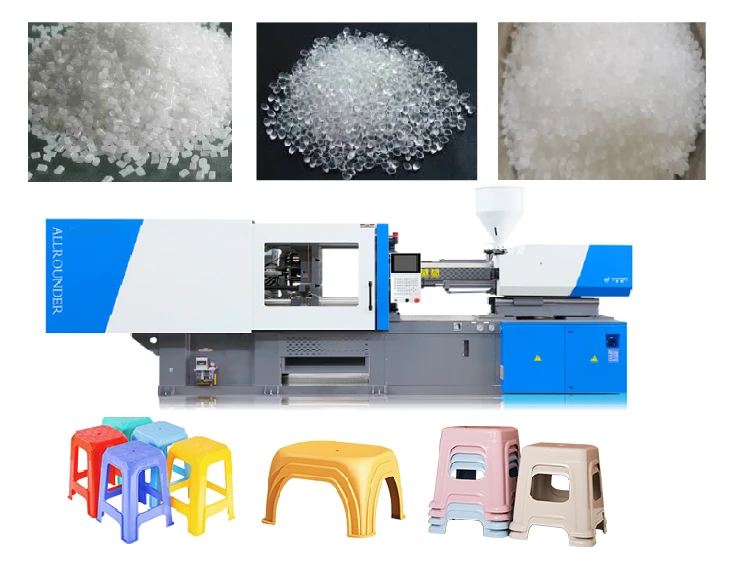
The plastic stool injection molding production line needs a plastic stool injection molding machine with specific capabilities. To choose plastic injection molding machine , the injection unit must handle melt temperatures of 200-230°C for PP. The clamping force depends on the stool size and projected area. A typical stool mold with a single cavity runs on a machine with 300-650 tons of clamping force. The machine also needs a large platen to accommodate wide stool molds. Tie-bar spacing must be large enough for easy mold installation.
Clamping force requirements
The stool injection molding machine must keep the mold fully closed during injection. Insufficient clamping force causes flash defects on the stool edges. The clamping force depends on the stool’s projected area and injection pressure.
For a standard stool with a projected area of 3000-5000 cm², the required force is 300-650 tons. Haichen HCK600 injecion molding machine provides 6000KN clamping force for efficient stool production.
| HCK600 PLASTIC INJECTION MOLDING MACHINE | |||||
| INJECTION UNIT | |||||
| ITEM | UNIT | A | B | C | D |
| INJECTION UNIT | |||||
| Screw diameter | mm | 85 | 90 | 95 | 100 |
| Screw L/D ratio | L/D | 23.3 | 22.0 | 20.8 | 19.8 |
| Shot volume(theoretical) | cm3 | 2554 | 2863 | 3190 | 3534 |
| Injiection weight(ps) | g | 2324 | 2605 | 2903 | 3216 |
| oz | 82.0 | 92.0 | 102.0 | 113.0 | |
| Injection pressure | Bar | 1909 | 1720 | 1530 | 1380 |
| Injection rate | cm3/s | 653 | 732 | 816 | 904 |
| Plasticizing capacity | g/s | 73 | 93 | 105 | 120 |
| Screw speed (Max.) | r/min | 140 | |||
| CLAMPING UNIT | |||||
| Clamping force | Kn | 6000 | |||
| Space between tie bars(W×H) | mm | 920X870 | |||
| Platens size | mm | 1350X1300 | |||
| Opening stroke | mm | 900 | |||
| Min.Mold height | mm | 400 | |||
| Max.Mold height | mm | 920 | |||
| Distance between platens(daylight) | mm | 1820 | |||
| Ejector stroke | mm | 230 | |||
| Ejector force | Kn | 160 | |||
| OTHERS | |||||
| Systerm pressure | Bar | 175 | |||
| Pump motor | Kw | 41+41 | |||
| Heating power | Kw | 51.0 | |||
| Oiltank cubage | L | 800 | |||
| Machine dimension(L×W×H) | m | 9.8X2.2X2.4 | |||
| Machine weight | t | 26.9 | |||
Servo energy-saving systems
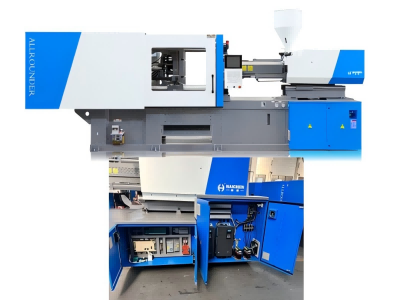
Modern plastic stool injection machines use servo motor technology. Servo systems only consume power when needed. They stop the motor during cooling and other non-active periods. A standard fixed pump runs continuously, wasting energy. Servo machines save 40-80% on electricity. They also operate with less noise. According to your specific production demand and budget, we will help choose plastic stool injection molding machine with the right one, but not the most expensive one.
Plastic Stool Mold Design
-
Mold materials and construction
-
Mold cavity design
-
Cooling and ejection systems
Mold materials and construction
Plastic Stool molds use high-grade steel for durability. P20 is the most common steel for stool mold cavities and cores. This steel is pre-hardened to HRC 30-33. It provides good wear resistance for medium to high volume production. The mold base uses S50C or 4Cr13 steel for strength. For high-volume production, 718H steel offers better corrosion resistance. Wear plates on rubbing surfaces use hardened steel with HRC 45+.
Mold cavity design
Most plastic stool molds use a single cavity because stools are large products. Why do plastic stools require deep cavity injection molding? Because The cavity design includes extra ribs on the seat bottom and legs. These ribs provide strength without adding too much weight or thickness. The mold must have good venting at the parting line. Venting allows trapped air to escape during injection. Without proper venting, the plastic cannot fill the cavity completely. The cold slug well design prevents cooled plastic from entering the cavity.
Cooling and ejection systems
The mold has built-in cooling channels that circulate water. Cool water at 7-15°C flows through these channels. Good cooling design removes heat evenly from the stool. This prevents warping and shrinkage. The ejection system uses ejector pins to push the stool off the mold core. The cycle time for a standard PP stool is about 40 seconds. Some molds use stripper plate ejection for large stools. This provides even force distribution across the part surface.
Auxiliary Equipment for Plastic Stool Production line
-
Dehumidifying dryer
-
Auto loader
-
Chiller system
-
Take-out robot
Dehumidifying dryer
A dehumidifying dryer removes moisture from plastic pellets before processing. The dryer uses hot air at 80-90°C for PP material. It circulates the air through the pellets for 2-3 hours. The dryer keeps the moisture level below 0.1%. Wet plastic causes cloudiness and weak spots in finished stools. The dryer size must match the machine’s hourly material consumption. A complete stool production line always includes this equipment.
Auto loader
An auto loader transfers dry pellets from the dryer to the machine hopper. It uses a vacuum system with sealed pipes. The loader runs automatically to maintain a constant material supply. This prevents production interruptions. The loader also keeps the material clean by avoiding manual handling. Some systems include a magnetic separator to remove metal contaminants. The auto loader reduces labor costs and improves material handling efficiency.
Chiller system
A chiller provides cold water to the mold’s cooling channels. The water temperature stays between 7°C and 15°C. Cold water removes heat from the stool faster than tap water. This shortens the cycle time. The chiller size must match the machine’s cooling needs. A typical stool production line needs a chiller with adequate flow rate. The chiller also supplies water to the hot runner controller if used.
Take-out robot
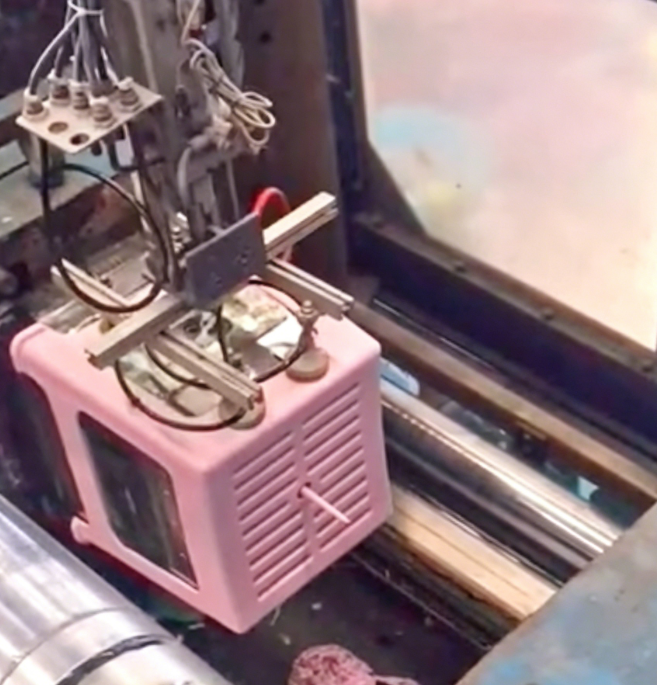
A take-out robot removes finished stools from the mold. The robot moves between the mold halves after opening. It grips the stool and lifts it out. This automation speeds up the cycle and prevents part damage. The robot also protects the operator from the hot mold area.
We know and can provide complete plastic stool production line from material selection to injection molding process. For example, which manufacturing process is used to produce plastic stool?
Moreover, we will tell you what is the cost of the machinery and equipment on the plastic stool production line?
And help you choose the commercial and save cost on the plastic stool production line. Please contact us to discuss your plastic stool production line needs.