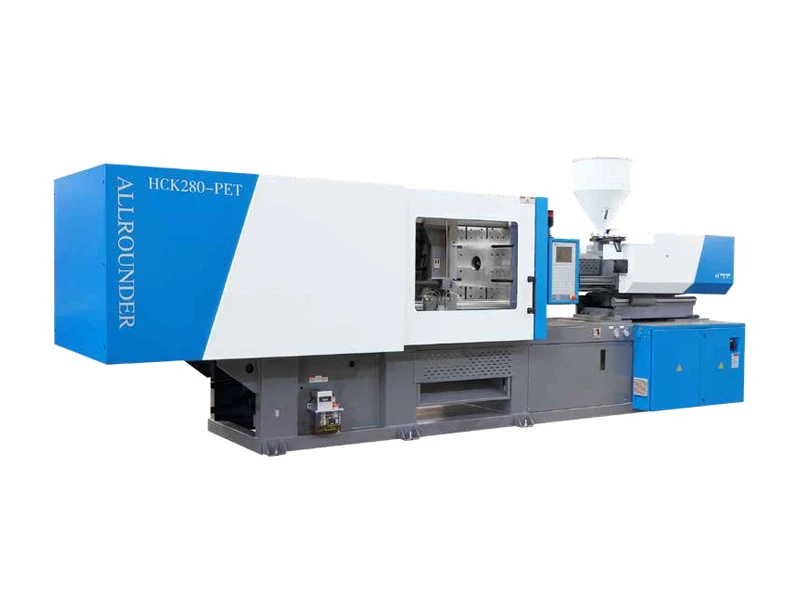
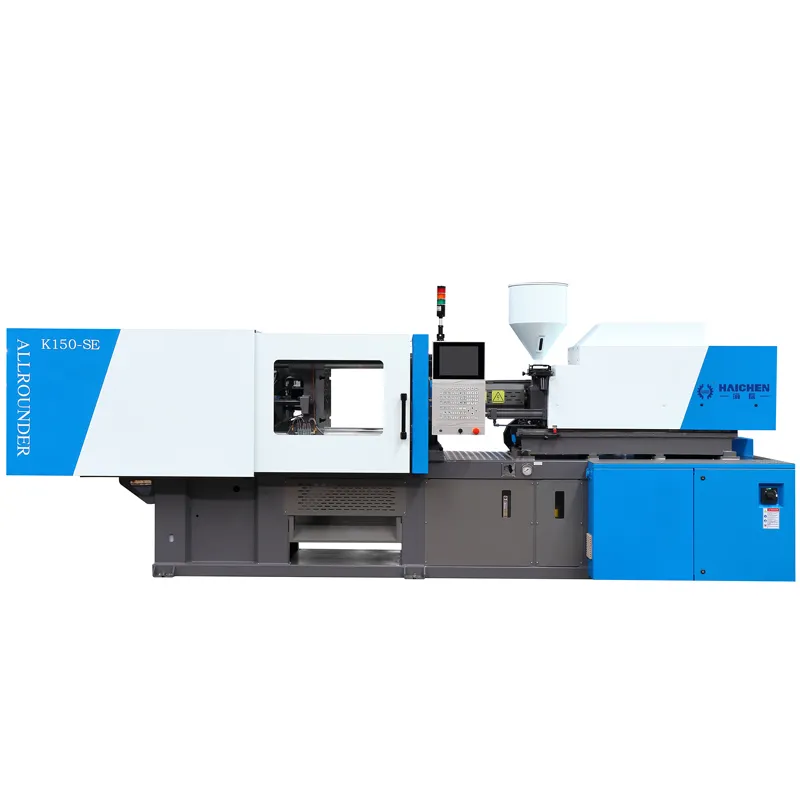
Deep cavity injection molding is the specialized process required to produce plastic stools efficiently. Plastic stools are everywhere – homes, restaurants, gardens, and event halls. Yet their simple appearance hides a complex manufacturing reality. As a manufacturer of injection molding machines with extensive experience in deep cavity injection molding applications, Haichen Machinery has helped hundreds of stool manufacturers overcome the unique challenges of this process.
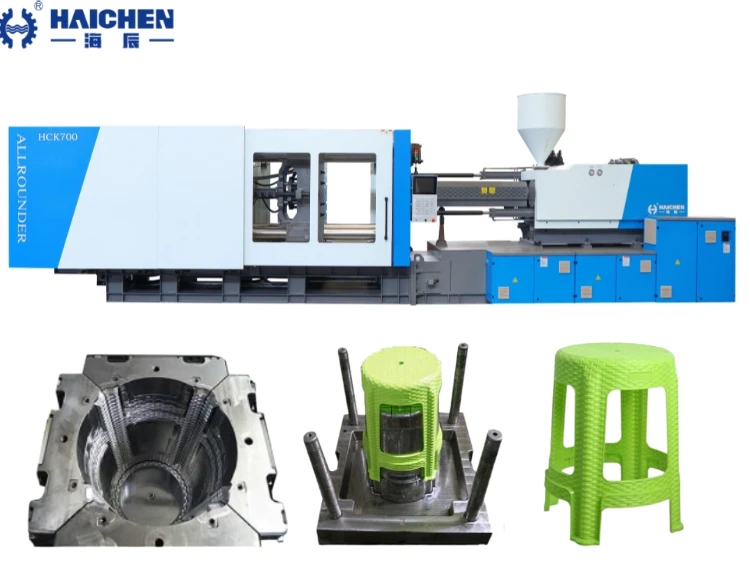
This guide explains why deep cavity injection molding is essential for plastic stools, breaks down the three key challenges it creates, and shows how the right injection molding machine – like Haichen’s HCK530 – solves each one.
Why Deep Cavity Injection Molding Is Required for Plastic Stools
A plastic stool is inherently a three-dimensional object with considerable depth. The distance from the seating surface to the leg bottoms typically exceeds 400mm. Meanwhile, the wall thickness remains only 2-4mm. This height-to-thickness ratio makes deep cavity injection molding unavoidable.
What exactly is “deep cavity” in injection molding? The industry generally defines a cavity as “deep” when its depth exceeds 80mm or when the depth-to-width ratio surpasses 1.5:1. For a typical stool, cavity depth often reaches 150-200mm, far exceeding this threshold. Standard injection molding techniques simply cannot produce such parts efficiently.
Why Can’t Plastic Stools Be Made with Standard Injection Molding?
Standard injection molding works for shallow parts like plates or lids. For a plastic stool, however, the mold cavity must be deep enough to form the entire leg structure. The plastic must flow downward into the cavity, filling every corner of the legs and support ribs.
Consider a typical stool plastic design: 450mm tall, with four legs extending from a central hub. The mold must create negative space for each leg. This forms a cavity depth that exceeds 80mm—the industry threshold for “deep cavity” classification.
A practical analogy: Filling a deep cavity is like pouring honey into a tall, narrow glass – the material must travel a long distance, and the bottom fills last, with the lowest pressure. If the pressure is insufficient, the bottom never fills completely. This is why specialized injection molding machines with high injection pressure and precise velocity control are essential.
The Stacking Feature Adds to Cavity Depth
Most plastic stools include a tapered design that allows stacking. This stacking feature requires additional cavity depth to create the draft angles and nesting surfaces. Without deep cavity injection molding, the stacking function becomes impossible to achieve.
Design insight: The draft angle required for stacking typically ranges from 1° to 3° per side. For a 450mm tall stool, this adds 15-25mm of cavity depth compared to a non-stacking design. This additional depth further increases the demands on both the mold and the injection molding machine.
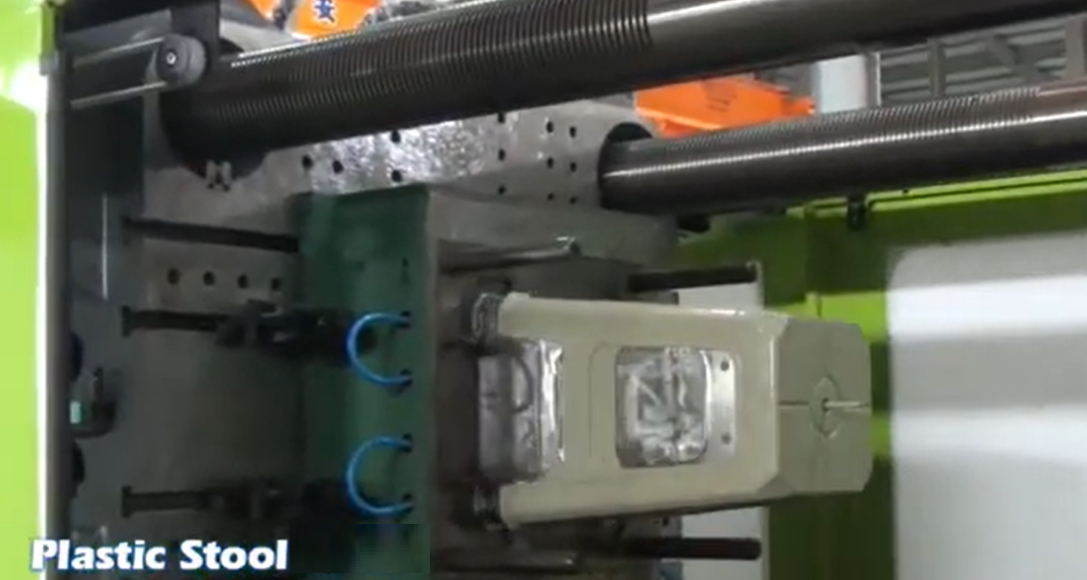
Three Technical Challenges in Deep Cavity Injection Molding
Once a manufacturer commits to producing plastic stools through deep cavity injection molding, three distinct challenges emerge. Understanding these difficulties explains why specialized equipment becomes essential.
Challenge One – Filling the Deep Cavity
Molten plastic must travel a long path from the gate to the deepest cavity points – often exceeding 500mm. Pressure drops significantly along this extended flow path, typically losing 30-50% of the initial injection pressure by the time the melt reaches the deepest leg sections. As a result, short shots (incomplete filling) and weak weld lines appear frequently, ruining both appearance and structural strength.
The physics behind it: As plastic flows through a narrow mold cavity, shear stress increases, causing the material to cool faster near the walls. This creates a frozen layer that reduces the effective flow channel, further increasing resistance. Without sufficient injection pressure and speed, the melt solidifies before reaching the cavity’s deepest points.
Solution: A machine with high maximum injection pressure (1900+ Bar) and fast injection rate (600+ cm³/s) is essential to overcome these flow challenges and ensure complete filling. For manufacturers investing in deep cavity injection molding equipment, prioritizing these parameters is the first step toward success.
Challenge Two – Warpage Control in Plastic Stools
Uniform wall thickness is nearly impossible in deep cavity products. The legs typically have thicker sections where ribs meet, while the seat surface is thinner. This variation creates uneven cooling and inconsistent shrinkage throughout the part. Consequently, warpage, sink marks, and dimensional errors become routine defects that affect plastic stool quality.
Why warpage is worse in deep cavity parts: In a deep cavity, the material near the core (the inside of the stool legs) cools more slowly than the material near the cavity wall (the outside surface). This uneven cooling causes differential shrinkage – the inside shrinks later and at a different rate than the outside, pulling the part out of shape.
Solution: Proper mold temperature control (using a chiller), balanced gate design, and optimized packing pressure are critical. Effective warpage control in deep cavity injection molding requires not just proper mold design but also a machine with consistent, repeatable pressure control throughout the holding phase.
Challenge Three – Ejection Reliability for Plastic Stool Parts
Ejection presents the toughest hurdle in deep cavity molding. The deep cavity creates extensive contact area between the part and the core surface, generating powerful wrapping force after cooling. With insufficient or uneven ejection force, parts whiten, dent, or puncture – often scrapping otherwise perfect products.
Why deep cavities wrap so tightly: As the plastic cools and shrinks, it contracts around the core, creating a friction grip that can exceed 20-30% of the clamping force. For a 530-ton machine, this means the ejection system may need to overcome over 100 kN of wrapping force just to release the part.
Solution: A machine with long ejection stroke (220mm+), high ejection force (120kN+), and multi-point ejector pins is essential. Reliable ejection is often the most overlooked aspect of deep cavity injection molding. A machine with long stroke, high force, and multi-stage programmable ejection is essential for preventing part damage.
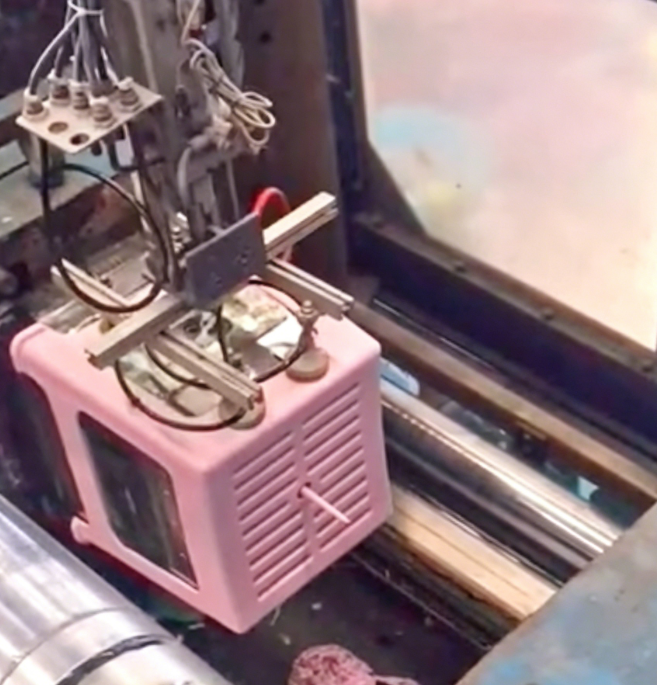
What to Look for in a Deep Cavity Injection Molding Machine for Stools
Based on the three challenges above, a deep-cavity stool machine must deliver:
- High clamping force (530 tons or more) to resist cavity pressure
- Long opening stroke (850mm+) to clear tall parts
- High injection pressure (1900+ Bar) to fill deep cavities
- High injection rate (600+ cm³/s) to overcome rapid cooling
- Long ejection stroke (220mm+) and high ejection force (120kN+)
- Large tie-bar spacing to accommodate large molds
The Haichen HCK530 is purpose-built to meet all these requirements, as demonstrated in the case studies below.
Case 1 – Tall Mold Demands Long Opening Stroke
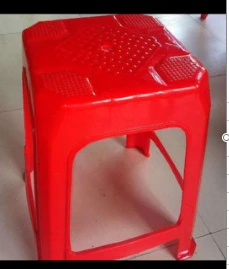
A red plastic stool manufacturer needed a reliable injection molding solution. Product height: 450mm. Mold: 650×650×720mm, P20 steel, cold runner, 500,000-cycle life.
The 720mm mold height pushed many machines to their limit. Opening distance had to clear both the mold and the 450mm tall part. Without sufficient stroke, robots could not enter, forcing manual removal and killing efficiency.
HCK530 – Opening Stroke That Fits
The Haichen HCK530 plastic stool injection molding machine delivers 870mm maximum mold height and 850mm opening stroke, combining for 1720mm maximum daylight. With the 720mm mold installed, platen gap reaches 1000mm at full open. Subtract the 450mm part, and 550mm remains for robot access—smooth automation, no cycle limits.
Case 2 – Thin Walls Demand High Injection Pressure
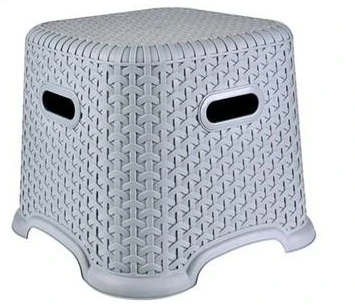
A plastic rattan stool challenged production: 260×260×460mm, PP material, hot runner, 718 steel mold, no gas assist, 500,000-cycle life. Cavity depth ratio hit 1.8:1—a truly demanding injection molding job.
The rattan texture included thin-wall sections where plastic cooled rapidly during filling. This required far higher injection pressure and speed to push PP melt completely to the cavity extremes. Insufficient pressure meant failed texture and visible weld lines.
HCK530 – Pressure That Fills Deep Cavities
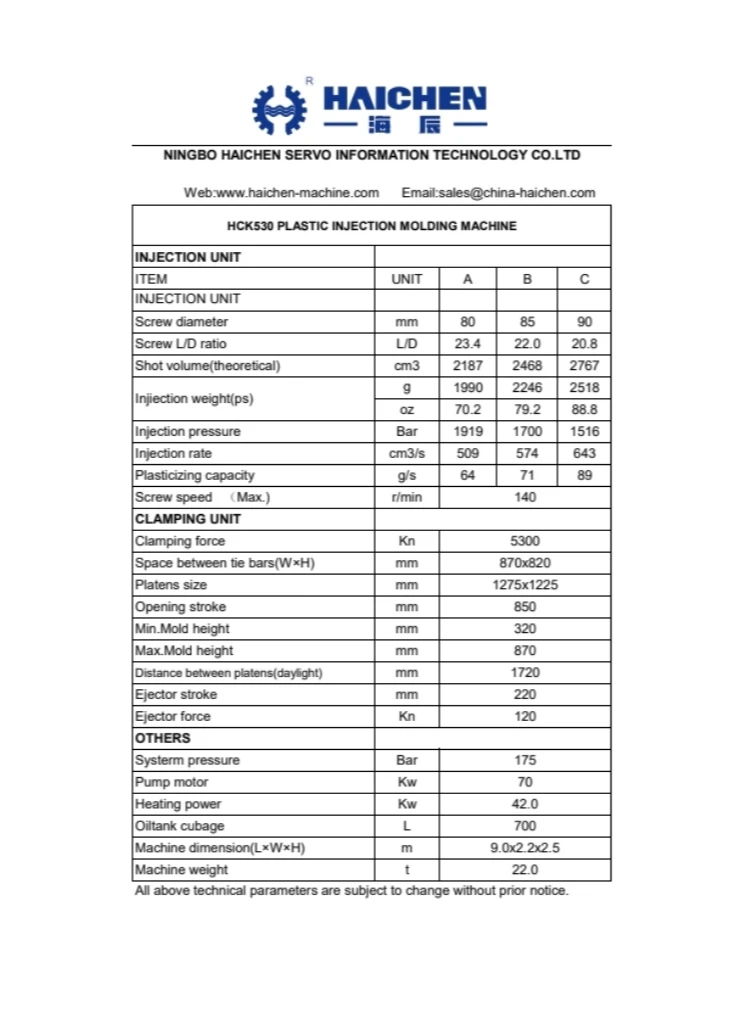
The HCK530 brings the muscle for tough plastic stool injection molding jobs. 5300kN clamping force resists cavity pressure during fill. 1919 Bar max injection pressure (80mm screw) ensures complete thin-wall filling. 643 cm³/s max injection rate (90mm screw) allows flexible control from rapid fill to slow pack. 89 g/s plasticizing capacity keeps melt supply steady for non-stop production.
Ejection – The Deep Cavity Bottleneck for Plastic Stools
Ejection problems derail plastic stool production daily. Taller parts mean more core contact and stronger wrapping force. Success demands adequate stroke, sufficient force, and precise synchronization.
Two Stools, Two Ejection Challenges
| Comparison | Red Stool | Rattan Stool |
|---|---|---|
| Height | 450mm | 460mm |
| Ejection Issue | Large area, concentrated wrap force | Texture scratches during ejection |
| Mold Steel | P20 | 718 (harder surface) |
| Runner | Cold | Hot |
| Strategy | Many large pins, even force | Pins + release agent, low friction |
The red plastic stool needed multi-point ejector pins spread across the surface. The HCK530 provided the stroke and force to handle it. The plastic rattan stool required smooth, steady ejection to avoid scratching the delicate texture. 718 steel’s polishability combined with a fine-tuned ejection profile preserved surface quality.
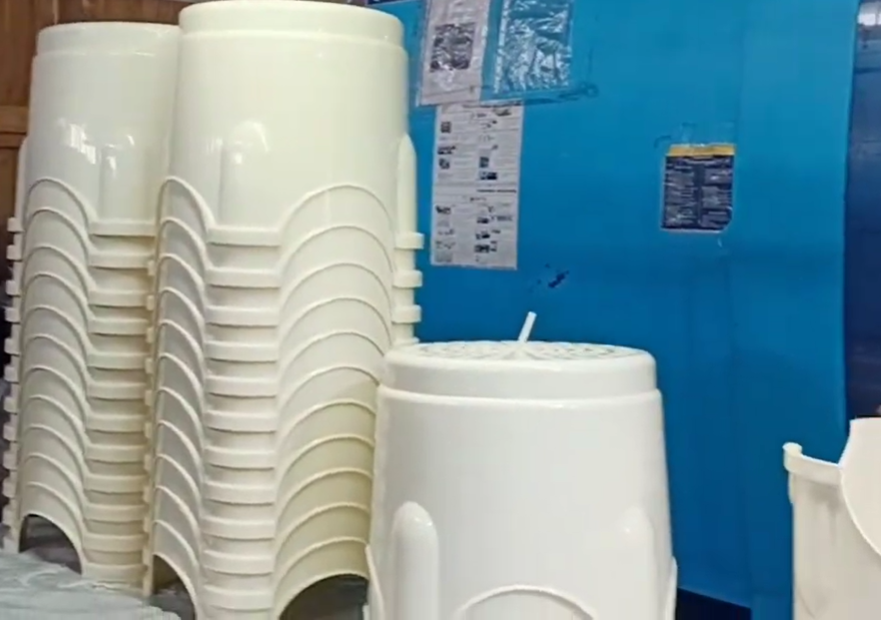
HCK530 – Ejection That Delivers
The HCK530 excels at plastic stool ejection. 220mm ejection stroke far exceeds standard machines, clearing tall parts with room to spare. 120kN ejection force handles even high-wrapping parts. 870×820mm tie-bar spacing and 1275×1225mm platen size accommodate large molds without deflection. Moreover, adjustable pressure and speed enable multi-stage ejection profiles that protect delicate surfaces.
Frequently Asked Questions About Deep Cavity Injection Molding for Plastic Stools
Q: What is deep cavity injection molding?
A: Deep cavity injection molding refers to the process of molding parts where the cavity depth exceeds 80mm or the depth-to-width ratio surpasses 1.5:1. Plastic stools, with their tall hollow legs and stacking features, typically require cavity depths of 150–200mm, making deep cavity injection molding the only viable production method.
Q: Why can’t plastic stools be made with standard injection molding?
A: Standard injection molding works for shallow parts like plates or lids. For a plastic stool, the mold cavity must be deep enough to form the entire leg structure. Without sufficient injection pressure (1900+ Bar) and injection rate (600+ cm³/s), the plastic solidifies before reaching the deepest cavity points, causing short shots and weak weld lines.
Q: What tonnage injection molding machine do I need for plastic stool production?
A: For most plastic stool applications, a 530-ton machine like the Haichen HCK530 is recommended. This provides sufficient clamping force to resist cavity pressure, an 850mm opening stroke to clear tall parts, and 220mm ejection stroke with 120kN force to overcome wrapping forces.
Q: How does deep cavity injection molding affect plastic stool quality?
A: Deep cavity injection molding, when performed with the right equipment, produces strong, uniform stools with consistent wall thickness. However, without proper machine parameters, issues like warpage, sink marks, and weld lines can occur. The HCK530’s high injection pressure and programmable multi-stage ejection profiles help minimize these defects.
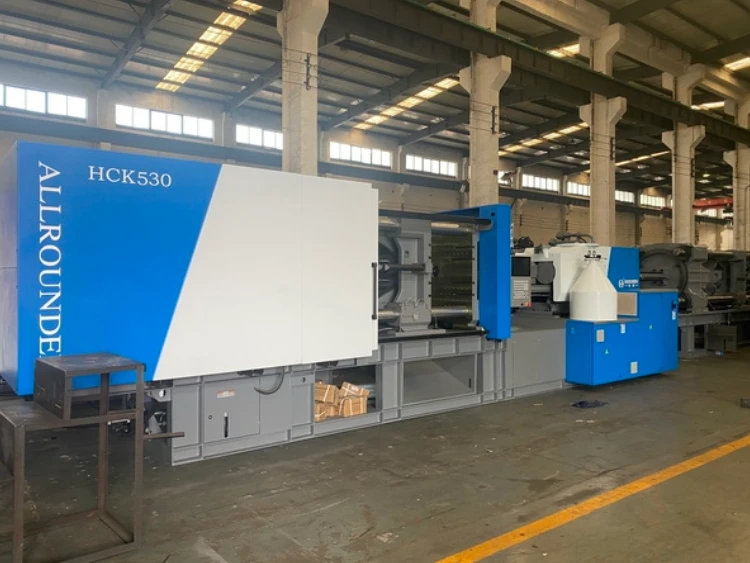
HCK530 – Built for Plastic Stool Injection Molding
The HCK530 combines every feature needed for successful plastic stool injection molding. Each parameter directly addresses a specific deep cavity challenge.
| Parameter | HCK530 | Benefit for Plastic Stool Molding |
|---|---|---|
| Clamping Force | 5300kN | Resists cavity pressure |
| Opening Stroke | 850mm | Clears tall parts |
| Max Mold Height | 870mm | Fits large molds |
| Ejection Stroke | 220mm | Ejects completely |
| Ejection Force | 120kN | Handles wrap force |
| Max Injection Pressure | 1919 Bar | Fills thin walls |
| Max Injection Rate | 643 cm³/s | Adapts to fill phases |
One Machine, Multiple Plastic Stool Applications
Different designs, different molds, same plastic stool injection molding machine. The HCK530 delivers the complete solution—ample stroke, rigid clamping, flexible injection, and reliable ejection.
Beyond standard plastic stools, the HCK530 also handles specialized products like chiavari bar stools, plastic folding stools, and plastic foot stools—all of which share the same deep cavity geometry. Whether you prioritize surface quality or cost efficiency, Haichen provides the right match and process support.
Frequently Asked Questions About Deep Cavity Injection Molding for Plastic Stools
Q: What is deep cavity injection molding?
A: Deep cavity injection molding refers to the process of molding parts where the cavity depth exceeds 80mm or the depth-to-width ratio surpasses 1.5:1. Plastic stools, with their tall hollow legs and stacking features, typically require cavity depths of 150-200mm, making deep cavity injection molding the only viable production method.
Q: Why can’t plastic stools be made with standard injection molding?
A: Standard injection molding works for shallow parts like plates or lids. For a plastic stool, the mold cavity must be deep enough to form the entire leg structure. Without sufficient injection pressure (1900+ Bar) and injection rate (600+ cm³/s), the plastic solidifies before reaching the deepest cavity points, causing short shots and weak weld lines.
Q: What tonnage injection molding machine do I need for plastic stool production?
A: For most plastic stool applications, a 530-ton machine like the Haichen HCK530 is recommended. This provides sufficient clamping force to resist cavity pressure, an 850mm opening stroke to clear tall parts, and 220mm ejection stroke with 120kN force to overcome wrapping forces.
Q: How does deep cavity injection molding affect plastic stool quality?
A: Deep cavity injection molding, when performed with the right equipment, produces strong, uniform stools with consistent wall thickness. However, without proper machine parameters, issues like warpage, sink marks, and weld lines can occur. The HCK530’s high injection pressure and programmable multi-stage ejection profiles help minimize these defects.