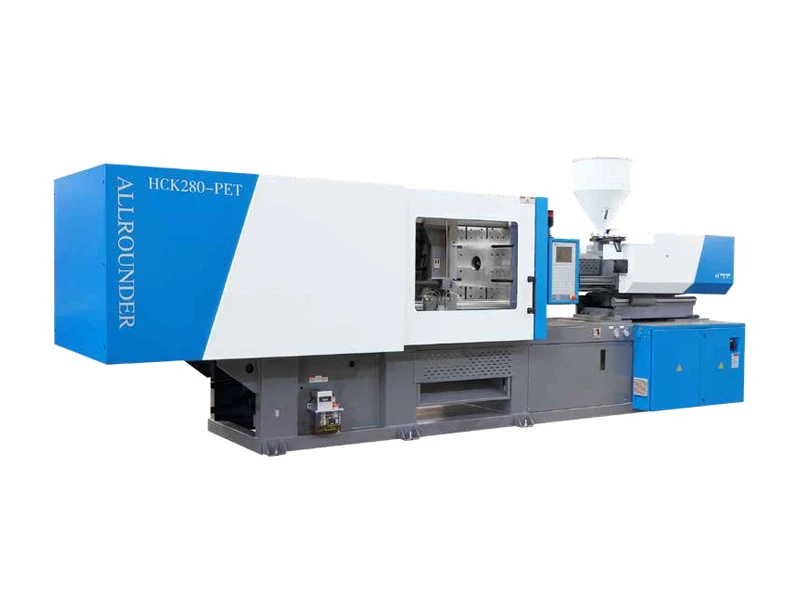
Plastic stools are widely used in homes, restaurants, schools, gardens, and commercial areas.
Because of their simple structure and stable market demand, many manufacturers choose injection molding technology to produce plastic stools in large quantities.
However, starting plastic stool production requires more than purchasing a machine. Manufacturers need to consider the injection molding machine, stool mold, raw materials, auxiliary equipment, and production capacity.
This guide explains the equipment needed for plastic stool manufacturing and how to choose the right plastic stool making machine for your business.
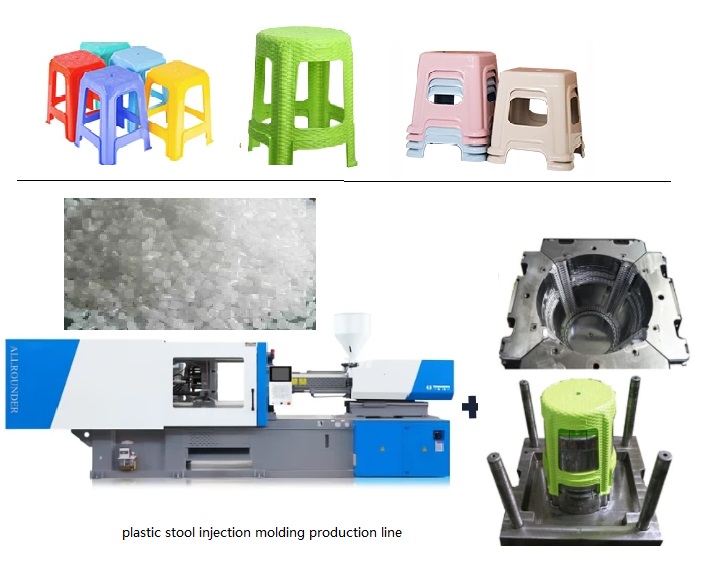
What Is Needed to Manufacture Plastic Stools?
A complete plastic stool production solution usually includes four main parts:
- Plastic raw material
- Plastic stool injection molding machine
- Stool injection mold
- Auxiliary equipment
Each part affects production efficiency, product quality, and total investment.
Different materials can be used for plastic stool manufacturing.
Common materials include:
PP (Polypropylene)
PP is one of the most popular materials for plastic stools because it offers:
- Good impact resistance
- Lightweight structure
- Chemical resistance
- Good processing performance
HDPE (High-Density Polyethylene)
HDPE provides good toughness and is suitable for durable outdoor stools.
ABS
ABS provides better appearance quality and surface finish, but the material cost is usually higher.
The material choice affects the injection molding process and machine configuration.
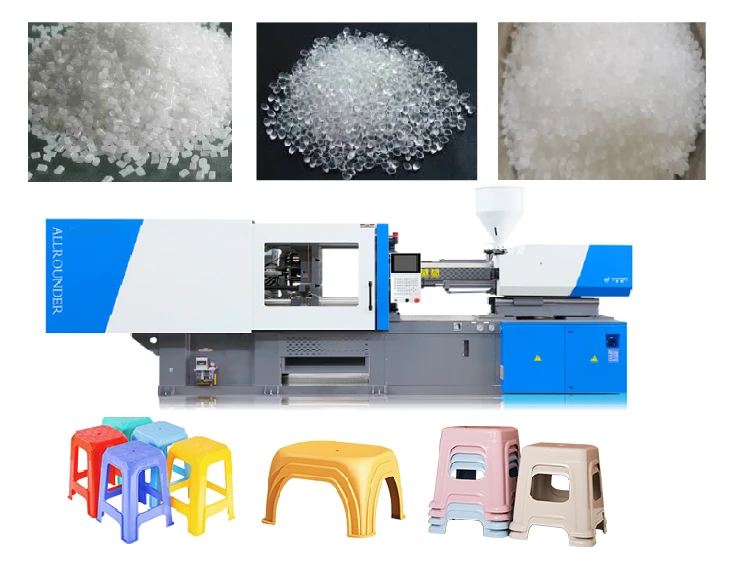
Plastic Stool Injection Molding Machine
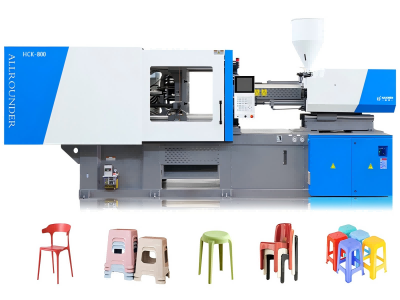
The injection molding machine is the core equipment for manufacturing plastic stools.
During production, plastic pellets are heated and melted inside the barrel. The melted material is then injected into the mold under high pressure.
After cooling, the finished stool is removed from the mold.
The machine selection depends on:
- Stool size
- Product weight
- Mold dimensions
- Production output
- Material type
For standard plastic stools, manufacturers usually choose medium and large injection molding machines because stools have a large projected area and require sufficient clamping force.
How Many Tons Injection Molding Machine Is Needed for Plastic Stools?
The required machine size depends on the stool design and weight.
Typical recommendations:
| Stool Type | Product Weight | Recommended Machine |
|---|---|---|
| Small plastic stool | 200-500g | 250T-350T |
| Standard household stool | 500-1000g | 410T |
| Heavy-duty stool | 1000g+ | 530T or higher |
Choosing the correct clamping force is important.
If the machine is too small, problems may happen:
- Flash on product edges
- Short filling
- Product deformation
If the machine is too large, it may increase equipment cost and energy consumption.
Plastic Stool Injection Mold
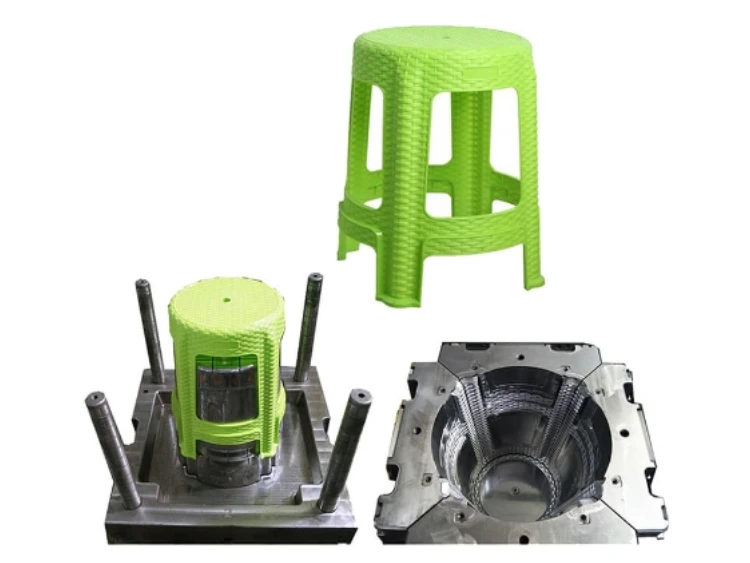
The mold is another important part of the plastic stool making process.
Most plastic stools use single-cavity molds because of their large size.
A good stool mold should provide:
- Stable production
- Smooth surface quality
- Long service life
- Easy maintenance
The mold cost depends on:
- Stool size
- Mold steel quality
- Mold structure
- Expected production quantity
For high-volume production, manufacturers usually choose stronger mold steel to reduce maintenance frequency and extend mold life.
| Mold Parameter | Standard Configuration Details |
|---|---|
| Cavity Layout | Single cavity (standard for full-size adult plastic stools) |
| Mold Steel Options | P20, 718, H13, S136 (S136 recommended for long-term mass production) |
| Standard Mold Size | Customized according to the size of the basin |
| Total Mold Lifespan | 50–500 million molding shots with regular maintenance |
| Runner Type | Cold runner (low initial cost) / Hot runner (faster cycle for high-volume lines) |
| Customization Support | Adjustable stool height, leg structure, surface texture, color matching |
Recommended Injection Molding Machine Size for Plastic Stool Production
| Plastic Stool Type | Stool Size (Approx.) | Product Weight | Recommended Injection Molding Machine | Clamping Force | Injection Weight Requirement | Mold Type | Cycle Time | Daily Output (24h) |
|---|---|---|---|---|---|---|---|---|
| Small Plastic Stool | 180-250 mm height | 150-350 g | 250T-320T Injection Molding Machine | 2500-3200 kN | 400-600 g PP | Single cavity mold | 25-35 seconds | 2,000-3,000 pcs/day |
| Children Plastic Stool | 200-300 mm height | 250-500 g | 320T-380T Injection Molding Machine | 3200-3800 kN | 600-800 g PP | Single cavity mold | 30-40 seconds | 1,800-2,500 pcs/day |
| Standard Household Stool | 300-450 mm height | 500-900 g | 410T Injection Molding Machine | Around 4100 kN | 1000-1500 g PP | Single cavity mold | 35-45 seconds | 1,900-2,400 pcs/day |
| Thickened Household Stool | 400-500 mm height | 900-1500 g | 450T-530T Injection Molding Machine | 4500-5300 kN | 1500-2200 g PP | Single cavity mold | 40-50 seconds | 1,700-2,100 pcs/day |
| Heavy Duty Industrial Stool | 450-600 mm height | 1500-2500 g | 530T-650T Injection Molding Machine | 5300-6500 kN | 2500-3500 g PP | Single cavity / gas-assisted mold | 45-60 seconds | 1,400-1,900 pcs/day |
Recommended Haichen Plastic Stool Making Machine Solutions
For plastic stool manufacturers, Haichen provides injection molding machine solutions based on product size and production requirements.
HCK410 Injection Molding Machine
Product information:
- Height: 350-450 mm
- Weight: 700-900 g
- Material: PP
- Mold: Single cavity
Recommended solution:
| Item | Specification |
|---|---|
| Injection molding machine | 410T servo injection molding machine |
| Injection weight | 1000-1500 g PP |
| Mold | 1 cavity plastic stool mold |
| Cycle time | 35-45 seconds |
| Daily output | Around 2,000 pcs/day |
HCK530 Injection Molding Machine
The HCK530 is designed for larger plastic stools and higher production requirements.
Product information:
- Height: 450-550 mm
- Weight: 1500g+
- Material: PP reinforced material
Recommended solution:
| Item | Specification |
|---|---|
| Injection molding machine | 530T injection molding machine |
| Injection weight | 2000g+ PP |
| Mold | Single cavity mold |
| Cycle time | 45-50 seconds |
| Daily output | 1,700-2,000 pcs/day |
| Parameter Category | Spec Item | Unit | HCK410 | HCK530 |
|---|---|---|---|---|
| Clamping Unit | Total Clamping Force | kN | 4100 | 5300 |
| Injection Unit | Max Shot Weight (PS) | g | 1313–1715 | 1990–2518 |
| Screw Diameter Range | mm | 70 / 75 / 80 | 80 / 85 / 90 | |
| Power Unit | Main Pump Motor | kW | 48 | 60 |
| General Data | Machine Weight | t | 15 | 21 |
| Overall Dimension (L×W×H) | m | 7.8×2.0×2.7 | 9.1×2.2×3.0 |
Besides the injection molding machine and mold, auxiliary equipment can improve production efficiency.
Common auxiliary machines include:
Automatic Loader
Transfers plastic materials automatically and reduces manual operation.
Dryer
Removes moisture from plastic materials to improve molding quality.
Mold Temperature Controller
Maintains stable mold temperature and improves product consistency.
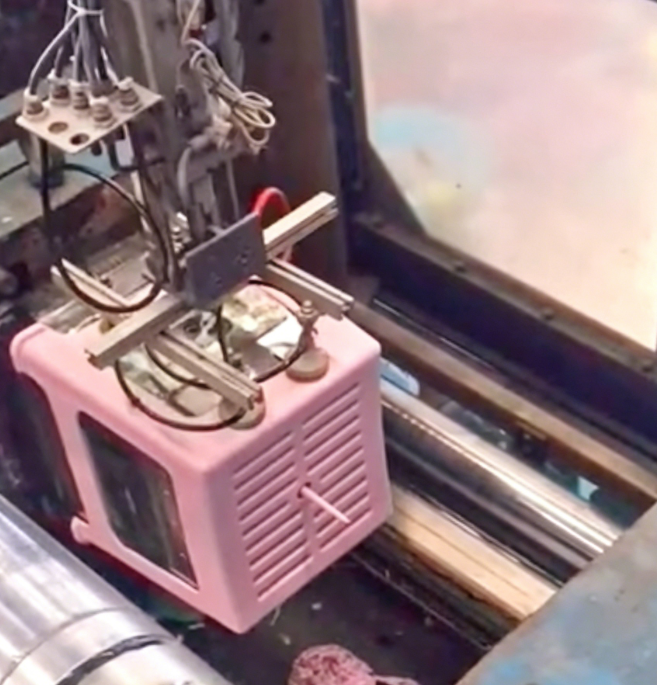
Robot Arm
Automatically removes finished stools and improves production automation.
A complete production solution helps manufacturers reduce labor costs and achieve stable output.
Startup Checklist for New Plastic Stool Manufacturers
- Match machine ton to your core stool size: Do not purchase 530-ton machines for only small kids’ stools, as excess clamping force wastes electricity and raises upfront equipment costs.
- Select PP raw material for general mass production to balance low material cost and stable product quality.
- Choose S136 hardened steel molds if your workshop runs 24-hour continuous production for over 6 months per year.
- Add a full set of auxiliary machines (dryer + manipulator + chiller + granulator) if you target daily output above 3,000 plastic stools.
- Bundle machine + mold orders from one supplier to secure a 5–7% combined bulk purchase discount.
-
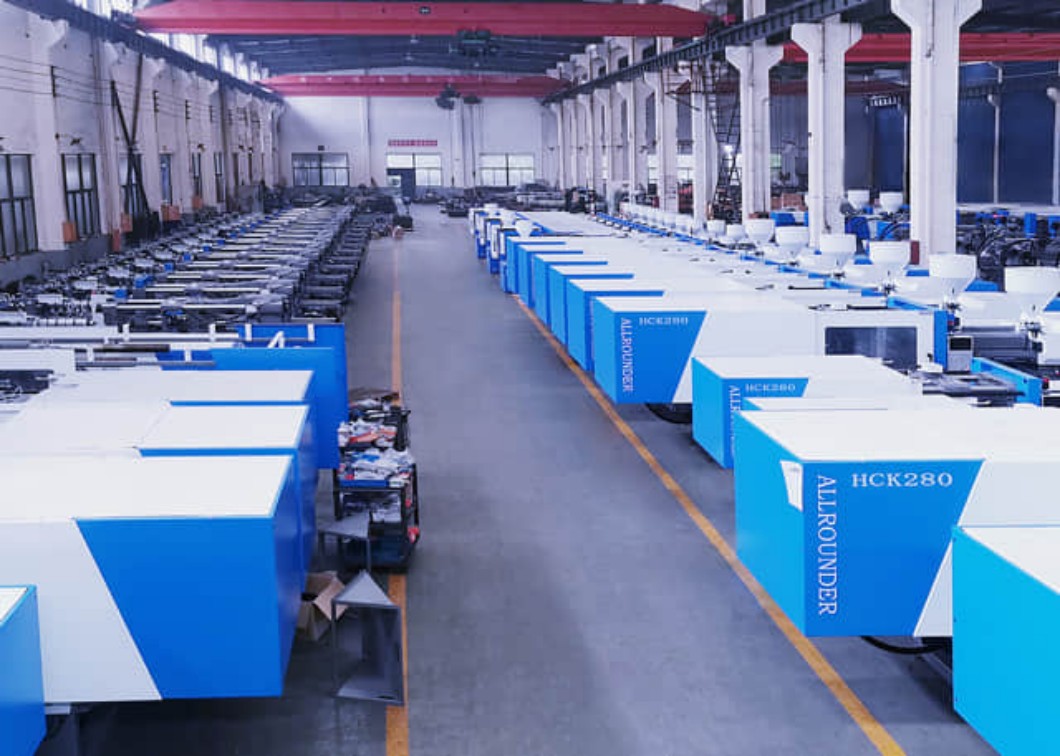
Haichen Injection Molding Machine factory
FAQ About Plastic Stool Making Machine
What machine is used to make plastic stools?
Plastic stools are mainly produced using plastic stool injection molding machines. The machine size depends on stool weight, mold size, and production requirements.
How many tons injection molding machine is needed for plastic stools?
Most standard plastic stools require 350T-530T injection molding machines depending on product size and weight.
How much does a plastic stool making machine cost?
The cost depends on machine size, mold design, automation level, and production requirements. A complete solution includes the machine, mold, and auxiliary equipment.
What material is best for plastic stools?
PP is commonly used because it provides good strength, impact resistance, and easy processing performance.
How many plastic stools can one machine produce per day?
Production capacity depends on cycle time, product weight, and mold design. Large machines can produce thousands of stools per day under suitable conditions.
How long does a plastic stool mold last?
Mold life depends on mold steel quality, maintenance, and production conditions. High-quality molds can support long-term production.
Can one injection molding machine produce different stool sizes?
Yes, we can produce different stools by changing molds, but the machine needs enough capacity to make the largest product.
What auxiliary equipment is needed for plastic stool production?
Common auxiliary equipment includes loaders, dryers, mold temperature controllers, robots, and conveyors.