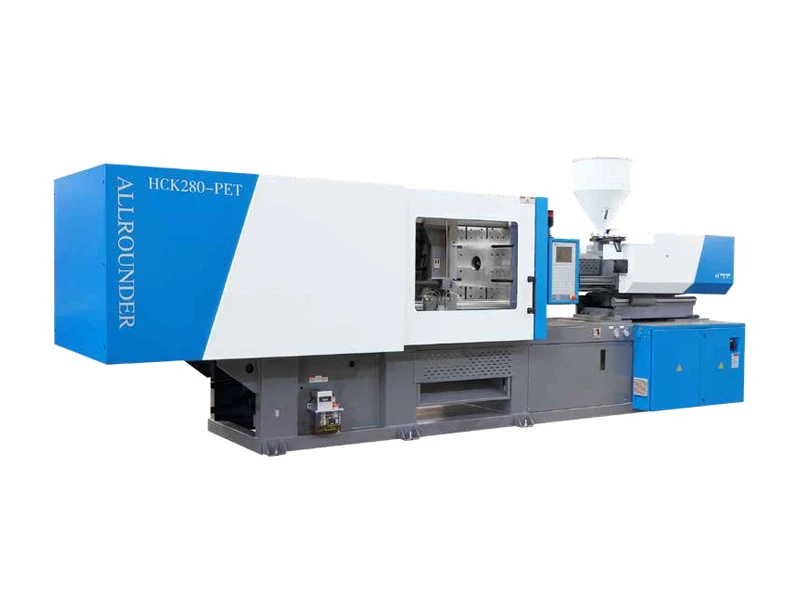
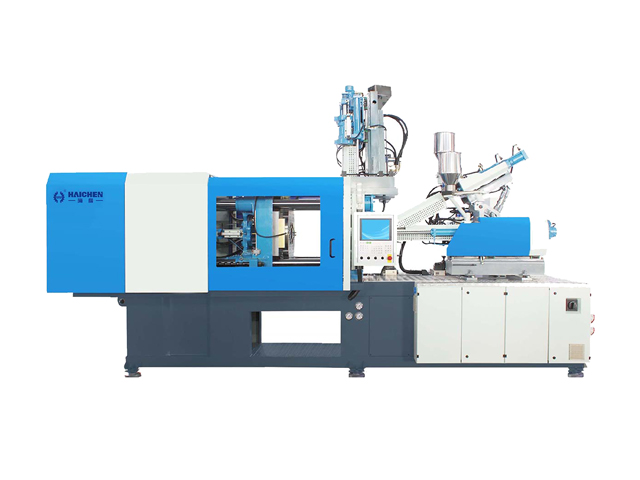
A plastic bucket injection molding machine is the core equipment that turns plastic pellets into buckets, pails, and containers for household, industrial, and paint applications. Choosing the right machine is critical — a 5-liter bucket uses a different model than a 20-liter one. The lid and handle often require a separate bucket making machine to maximize production efficiency.
At Haichen, we have been building plastic bucket injection molding machines for over 20 years. Our HCK series covers clamping forces from 3,100 kN to 8,700 kN, making them suitable for buckets from 5 liters to 20 liters and beyond. This guide explains which HCK model fits which bucket size, how auxiliary equipment boosts efficiency, and why line costs vary — with real case studies from actual production lines.
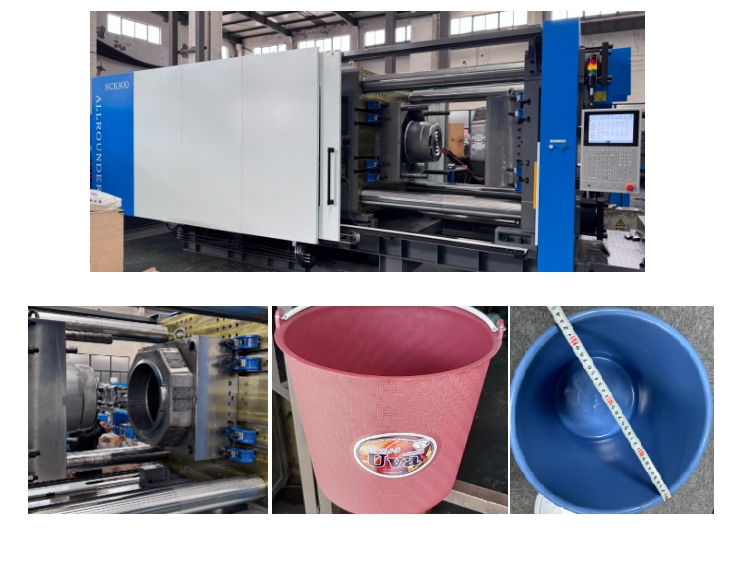
A bucket body needs enough strength and a smooth or textured surface. The lid must fit tightly but also open easily. Getting both to work well requires the right plastic bucket injection molding machine. The HCK310 to HCK800 models handle different bucket sizes, and we have used these machines in hundreds of installations across Asia, the Middle East, and Africa.
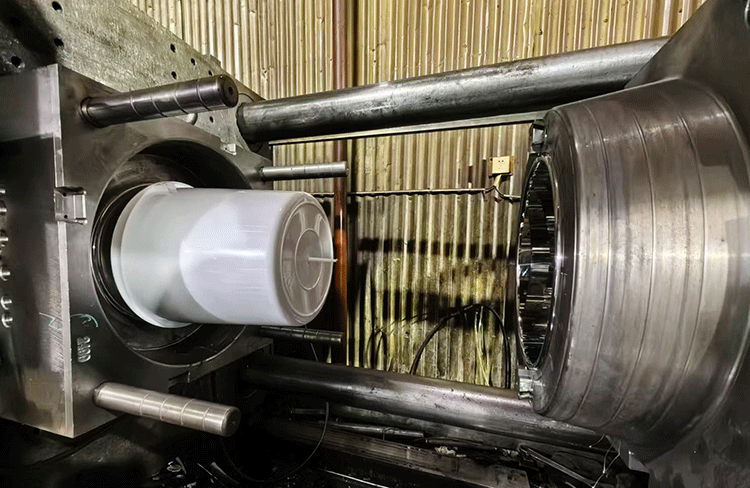
Recommended HCK Models for Different Bucket Sizes
5‑Liter Buckets – HCK310 for the Body, HCK230 for Lid and Handle
For a small 5‑liter bucket (common for household use or small paint cans), we suggest a machine with clamping force around 3,100–3,600 kN. Our HCK310 (3,100 kN) works perfectly for the bucket body. Its tie‑bar spacing is 670×620 mm, opening stroke 610 mm — enough for a 5‑liter mold. For the lid and handle, a smaller machine like HCK230 (2,300 kN) does the job well. You can run the lid in a single cavity and the handle in a four‑cavity mold at the same time.
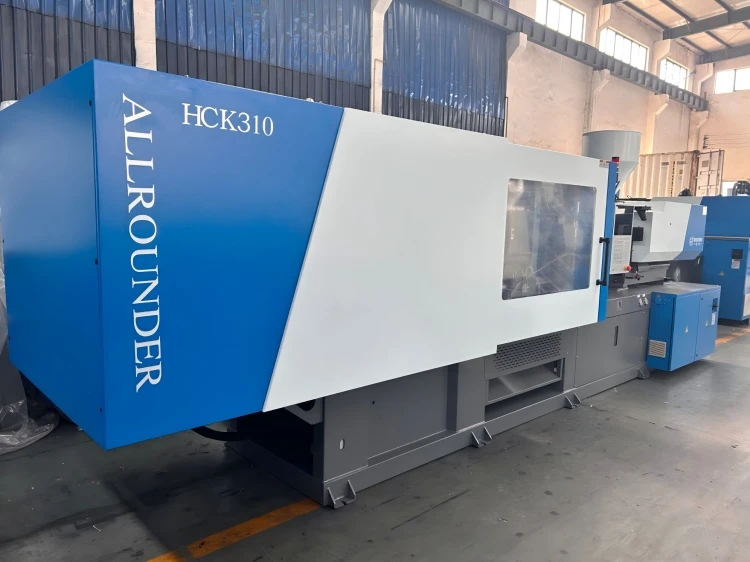
Technical parameters for HCK310:
-
Clamping force: 3,100 kN (310 tons)
-
Tie‑bar spacing: 670×620 mm
-
Opening stroke: 610 mm
-
Shot weight (PS): 1,078–1,251 g
-
Injection pressure: 1,527–2,078 Bar
10‑Liter Buckets – HCK410 for the Body, HCK270 for Lid and Handle
A 10‑liter bucket (e.g., beach pail or medium paint bucket) stands about 300–350 mm tall. We recommend HCK410 (4,100 kN) for the body. It offers an opening stroke of 780 mm — more than twice the bucket height, so removal is easy. The lid and handle can run on HCK270 (2,700 kN class). This combination gives a good balance between cost and daily output.
Technical parameters for HCK410:
-
Clamping force: 4,100 kN (410 tons)
-
Tie‑bar spacing: 770×720 mm
-
Opening stroke: 780 mm
-
Shot weight (PS): 1,313–1,715 g
-
Injection pressure: 1,522–1,988 Bar
18‑20‑Liter Buckets – HCK530 for the Body, HCK360 for Lid and Handle
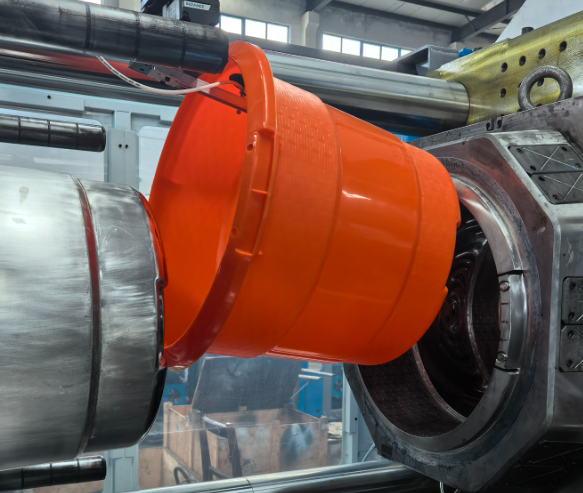
Large buckets (18–20 liters, often used for water or industrial paint) need serious clamping force. We have successfully used HCK530 (6,200 kN) to produce such buckets. Its opening stroke reaches 850 mm, and the tie‑bar spacing is 870×820 mm — plenty of room for big molds. Because the bucket mouth is very wide, we suggest a separate plastic bucket injection molding machine for the lid and handle — HCK360 (3,800 kN) is a good fit. This way you can run body and lid in parallel without changing molds.
Technical parameters for HCK530:
-
Clamping force: 6,200 kN (620 tons)
-
Tie‑bar spacing: 870×820 mm
-
Opening stroke: 850 mm
-
Shot weight (PS): 1,960–2,518 g
-
Injection pressure: 1,510–1,912 Bar
HCK Series Selection Reference Table
| Bucket Size | Body Machine | Clamping Force (kN) | Opening Stroke (mm) | Tie‑bar Spacing (mm) | Lid/Handle Machine |
|---|---|---|---|---|---|
| 5 L | HCK310 | 3,100 | 610 | 670×620 | HCK230 |
| 10 L | HCK410 | 4,100 | 780 | 770×720 | HCK280 |
| 18‑20 L | HCK530 | 6,200 | 850 | 870×820 | HCK360 |
Note: Paint buckets with extra sealing features may need slight adjustments. We can check your mold drawing and give a precise match.
Haichen’s HCK series plastic bucket injection molding machines feature servo energy saving as standard, reducing electricity costs by 30–50%. All HCK series machines come with CE12 robot interfaces and multi‑language control systems (supporting 21 languages).
How to Upgrade Your Bucket Production Line with Auxiliary Equipment
Chiller – Cut Cycle Time, Especially in Summer
Bucket molds have uneven wall thickness (thick bottom and rim, thin sidewall). Cooling often becomes the bottleneck. Adding a water chiller (set to 10–20°C) can reduce cooling time by 20–30%. In hot weather, without a chiller the mold loses heat slowly and your machine waits idle. A chiller usually pays for itself within six months through higher output.
For the HCK530 running 18‑20L buckets, we recommend a chiller capacity of 15–20 TR (tonnes of refrigeration) to maintain stable mold temperatures during continuous operation.
Auto Loader – Stop Manual Feeding and Material Waste
A medium‑sized plastic bucket injection molding machine consumes 30–50 kg of plastic pellets per hour. Manual feeding is dirty, tiring, and risks running the hopper empty. An automatic loader fills the hopper as needed. The operator only checks occasionally. It is a low‑cost device that saves real labor and prevents costly short shots.
Servo Robot – Pick, Trim Sprue, and Stack Automatically
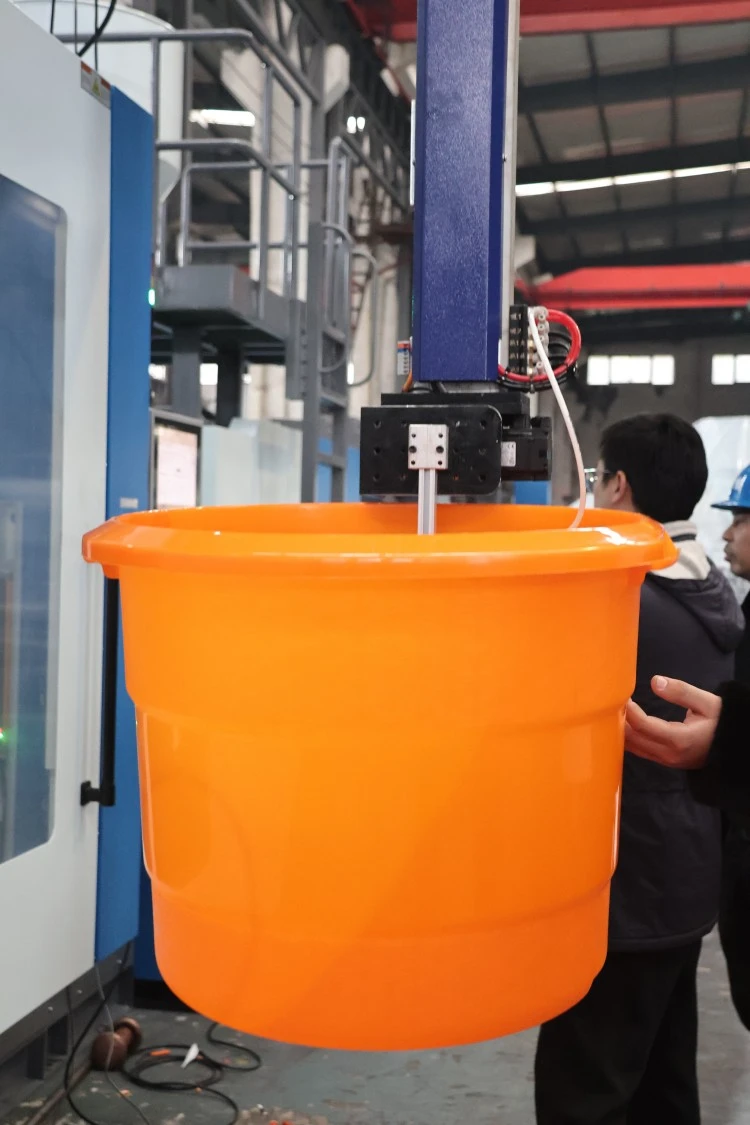
The most labor‑intensive jobs are taking the bucket out of the mold, cutting the sprue, and stacking finished parts. A 3‑axis servo robot can do all three. Our HCK series includes a CE12 open interface — a standard signal protocol that works with most robot brands. No rewiring needed. Many customers now run fully unattended night shifts with this setup.
Mold Temperature Controller – Ensure Consistent Quality
For large buckets with thick walls, a mold temperature controller ensures uniform cooling across the part. This prevents warpage and sink marks — common defects in bucket production. Haichen can recommend the right mold temperature controller capacity based on your mold size and cycle time requirements.
Hydraulic Core‑Pull System – For Handle and Lid Molds
Buckets with handles or lids with undercuts need slider cores in the mold. Our HCK series machines come with multiple independent core‑pull circuits as standard. You can set each core‑pull action independently on the touch screen — very convenient for mold engineers.
Why Total Line Cost Varies for Different Bucket Sizes
Machine Tonnage – Bigger Buckets Need Heavier Plastic Bucket Injection Molding Machines
A 5‑liter bucket uses a HCK310, while a 20‑liter bucket needs a HCK530 or even HCK600. The larger machine has a much higher manufacturing cost — heavier castings, bigger tie‑bars, larger motors. That alone can double or triple the machine price.
Cost reference (approximate):
-
HCK310 (310 tons): $35,000–50,000
-
HCK410 (410 tons): $50,000–70,000
-
HCK530 (530 tons): $70,000–95,000
-
HCK600 (600 tons): $90,000–120,000
Mold Complexity and Number of Cavities
Small buckets often use multi‑cavity molds (e.g., 4 cavities for lids) which reduce per‑part cost but increase mold price. Large buckets usually run single‑cavity molds for the body because the mold size already pushes the machine’s limits. Also, paint buckets with sealing undercuts require sliders or hydraulic core pull, which adds mold cost and may need extra machine interfaces.
Auxiliary Equipment – From Basic to Fully Automated
A simple manual line needs only the machine and a mold. A semi‑automated line adds an auto loader and a chiller. A fully automated line includes a robot, a conveyor, and a stacker. The price difference between a bare machine and a complete turnkey line can be 2‑3 times. But the right level of automation depends on your daily output target and labor cost. We can help you find the most cost‑effective configuration.
Cost breakdown by automation level:
| Automation Level | Equipment Included | Approximate Investment | Labor Required | Payback Period |
|---|---|---|---|---|
| Basic (Manual) | Machine + mold | Base | 4‑5 operators/shift | — |
| Semi‑auto | + Chiller + Loader | Base + 20‑30% | 2‑3 operators/shift | 8‑12 months |
| Fully automated | + Robot + Conveyor + Stacker | Base + 50‑100% | 1 operator/shift | 12‑18 months |
Case Study – Paint Bucket Line Upgrade
A customer producing 18‑L paint buckets with sealing undercuts upgraded from a basic manual line to a semi‑automated line with a robot. The HCK530 body machine and HCK360 lid machine ran with an auto loader and chiller. The customer reduced labor from 4 operators/shift to 2, increased daily output by 25%, and recovered the automation investment within 14 months.
Real Production Cases – Bucket Line Configurations
Case 1 – 5L Household Bucket (HCK310 + HCK230)
A Southeast Asian customer started producing 5‑L household buckets with lids and handles. We supplied a HCK310 for the bucket body (4‑cavity mold) and a HCK230 for the lid (4 cavities) and handle (8 cavities).
Production results:
-
Body cycle time: 18 seconds
-
Lid + handle cycle time: 16 seconds
-
Combined daily output: approximately 32,000 sets (22 hours)
-
Yield rate: 97%
-
Energy saving: 35% compared to previous hydraulic machine
-
Investment recovery: 14 months
Case 2 – 10L Beach Bucket (HCK410 + HCK280)
A Middle Eastern customer needed 10‑L beach buckets with colorful lids for the tourist market. We supplied a HCK410 for the body (6‑cavity mold) and a HCK280 for the lid (4 cavities).
Production results:
-
Body cycle time: 22 seconds
-
Lid cycle time: 18 seconds
-
Combined daily output: approximately 22,000 sets (22 hours)
-
Yield rate: 96%
-
Energy saving: 40% compared to traditional hydraulic machine
-
Key feature: Quick mold change system for seasonal color changes
Case 3 – 20L Industrial Paint Bucket (HCK530 + HCK360)
A European paint manufacturer needed 20‑L buckets with sealing undercuts for paint storage. We supplied a HCK530 for the body (single‑cavity mold with hydraulic core pull) and a HCK360 for the lid (4 cavities with sealing groove).
Production results:
-
Body cycle time: 28 seconds
-
Lid cycle time: 20 seconds
-
Combined daily output: approximately 10,000 sets (22 hours)
-
Yield rate: 98%
-
Energy saving: 30% compared to previous hydraulic machine
-
Key feature: Hydraulic core‑pull system for undercut sealing
Case Data Summary
| Case | Product | Body Machine | Lid/Handle Machine | Daily Output (sets) | Yield Rate | Energy Saving |
|---|---|---|---|---|---|---|
| 1 | 5L household bucket | HCK310 | HCK230 | 32,000 | 97% | 35% |
| 2 | 10L beach bucket | HCK410 | HCK280 | 22,000 | 96% | 40% |
| 3 | 20L industrial paint bucket | HCK530 | HCK360 | 10,000 | 98% | 30% |
Frequently Asked Questions
What is a plastic bucket injection molding machine?
A plastic bucket injection molding machine melts plastic pellets and injects them into a mold to form buckets, pails, and containers. The machine heats the plastic, injects it under high pressure, cools it, and ejects the finished bucket. This process is used to produce billions of buckets annually for household, industrial, and commercial use.
Can one plastic bucket injection molding machine produce both bucket body and lid?
Yes, as long as the clamping force and shot size are enough. But frequent mold changes lower your output. For high volume, two machines running simultaneously are more profitable. Many of our customers run bucket bodies during the day and switch to lid molds at night — just change the tool and adjust the parameters.
What is the difference between producing water buckets and paint buckets?
Paint buckets usually need better sealing (to prevent vapor escape). Their molds often have deeper sealing grooves and may require hydraulic core pull. Also, paint buckets often use HDPE, which has different shrinkage from PP — the screw and process parameters need adjustment.
Which plastic bucket injection molding machine is better for 20‑liter buckets – HCK530 or HCK600?
Both work. HCK530 (6,200 kN) already handles a 400 mm tall bucket well. If your mold is very large or the wall is extra thick, HCK600 (8,700 kN) gives more safety margin. We recommend running a mold simulation before you decide.
How long does it take to recover automation investment?
Automation typically pays back in 12–18 months through lower labor costs and higher output. For our 5L bucket customer, recovery took 14 months; for the 20L paint bucket customer, recovery was 16 months.
Does Haichen offer whole‑line installation and training?
Yes. We provide machine, mold matching advice, auxiliary equipment selection, on‑site installation, and operator training. Our service covers many countries worldwide. We can also provide remote support for troubleshooting.
Haichen Machinery – your plastic bucket injection molding machine partner. From HCK310 to HCK800, from 5L to 20L buckets, we help you get the right machine for your bucket production.
Author: Yang, Senior Engineer, Haichen Machinery