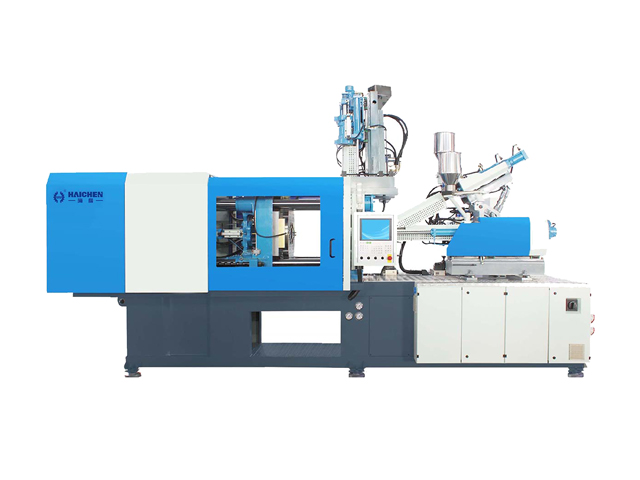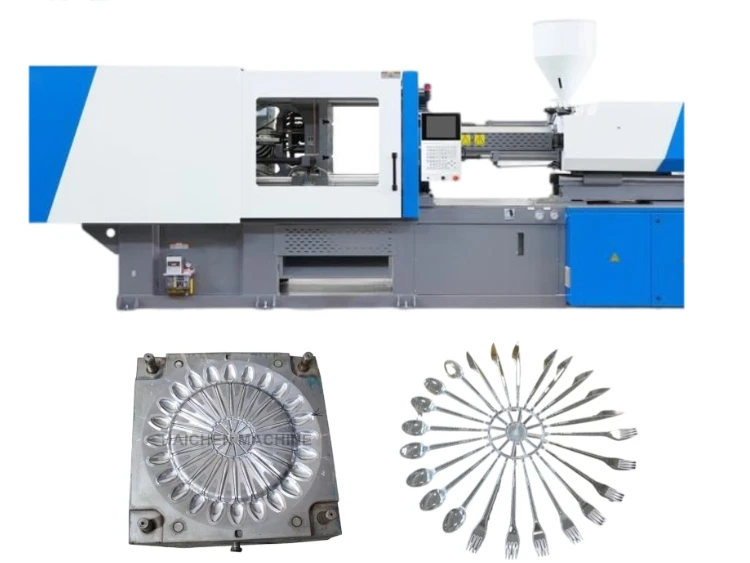
Choosing the right plastic cutlery injection molding machine is the critical step that determines your production efficiency and cost structure. Whether you are producing plastic spoons, plastic forks, or plastic knives, the right injection molding machine keeps your line running smoothly and your per-unit cost at a minimum.
As an injection molding machine buyer, you are probably facing one critical question: how do I choose the right plastic cutlery injection molding machine for my production needs?
Get it right, and you get maximum output, lowest cost, and healthy profit. Get it wrong, and you end up with idle equipment, high scrap rates, and wasted investment.
Today we break down the selection process using three core parameters—combined with Haichen’s real production experience in cutlery molding—so you can make the right decision the first time.
Three Core Parameters for Your Plastic Cutlery Injection Molding Machine
When selecting a plastic cutlery injection molding machine, focus on three numbers: clamping force, injection volume, and cavity count.
Clamping Force – What Keeps the Mold Closed
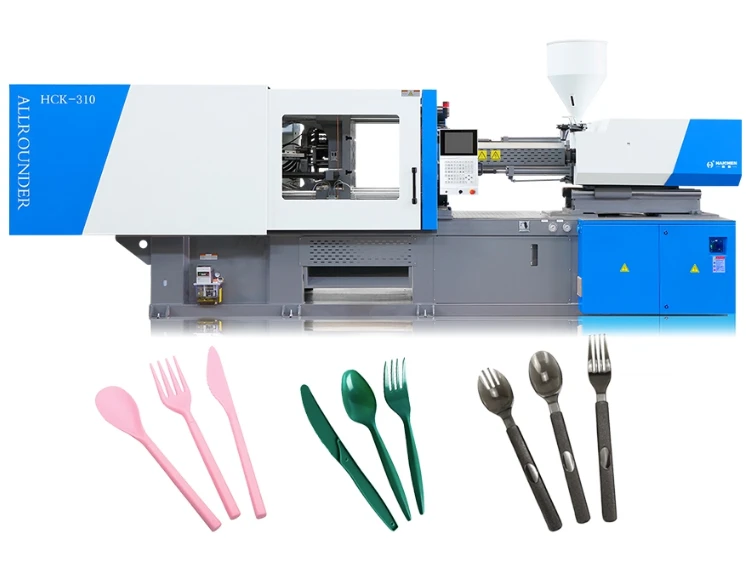
Clamping force is one of the most important parameters of a plastic cutlery injection molding machine. Simply put, it is the force the machine uses to keep the mold closed during injection. If clamping force is insufficient, the molten plastic will push the mold open during high-pressure injection, causing flash—excess plastic around the product edge that wastes material and requires extra labor for trimming.
A general rule of thumb is 3-5 tons of clamping force per square centimeter of projected area. Plastic spoons, plastic forks, and plastic knives are thin-walled and small in size, with a relatively small projected area. The mainstream range for a plastic cutlery injection molding machine is 230 tons to 310 tons. Too little and you get flash; too much and you waste investment and electricity.
Injection Volume – How Much Material Per Cycle
Injection volume is the maximum weight of molten plastic the plastic cutlery injection molding machine can inject in one shot. The calculation is straightforward:
Injection Volume = Single product weight × Cavity count × Safety factor (typically 1.2-1.5)
For example, a 2.6-gram plastic spoon with a 20-cavity mold requires approximately 2.6×20×1.3≈67.6 grams of injection volume. The injection volume should fall within 30%-80% of the machine’s theoretical capacity—below 30% and plasticization quality suffers; above 80% and the machine runs under constant overload.
Cavity Count – Output Per Cycle
Cavity count is the number of products a mold produces in one injection cycle. More cavities mean lower per-unit cost, but the mold itself is more expensive and requires a larger plastic cutlery injection molding machine.
Haichen offers cutlery molds ranging from 8, 20, 24, 40, to 48 cavities, allowing you to choose the optimal configuration based on your target production volume.
Thin-Wall High-Speed Injection – What Makes Cutlery Different
Plastic knives, plastic forks, and plastic spoons are different from most plastic products—they are predominantly thin-walled, with the thinnest sections possibly as little as 1 millimeter. This places special demands on your plastic cutlery injection molding machine.
Why Cutlery Requires High-Speed Injection
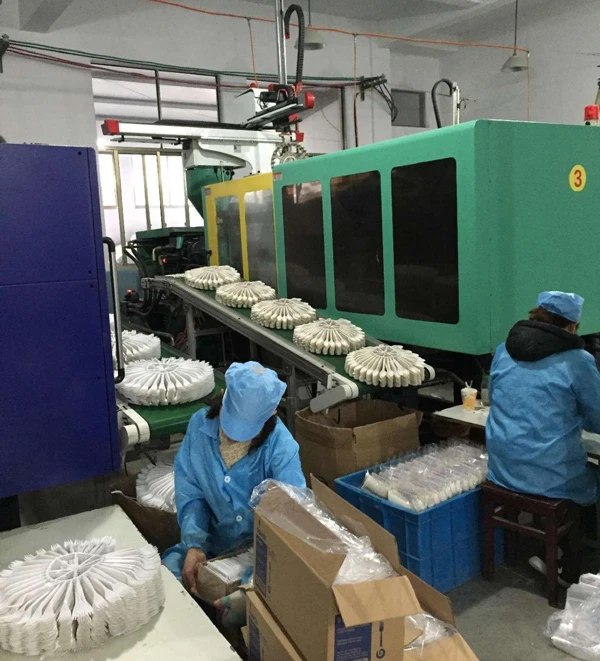
Thin walls mean the molten plastic cools extremely fast inside the cavity. If the injection speed is not fast enough, the plastic begins to solidify before the cavity is fully filled—causing short shots or flow marks. That is why cutlery molding requires high-speed injection—pushing the molten plastic into every corner of the mold in a fraction of a second.
Equipment Requirements for High-Speed Molding
High-speed injection is not just about turning up the speed dial—the plastic cutlery injection molding machine itself must be capable:
- High injection speed: the machine must deliver fast shot speeds
- High-precision clamping system: high-speed injection creates significant impact force; the clamping system must remain stable
- Fast-response servo control: closed-loop control of temperature, pressure, and speed must be precise
Haichen’s Actual Production Data in Thin-Wall Molding
Haichen has accumulated extensive hands-on experience in thin-wall cutlery molding. Take plastic spoon production as an example:
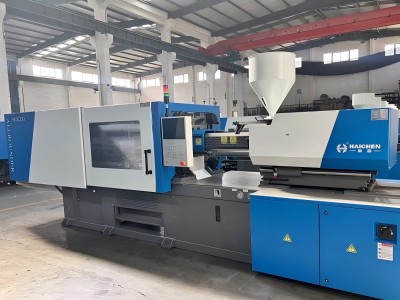
Haichen’s plastic cutlery injection machine configuration: HCK230 paired with a 20-cavity spoon mold. Each plastic spoon weighs 2.6g, measures 16cm in length, uses PP material, and the full cycle time is just 9 seconds.
That means a single plastic cutlery injection machine can consistently produce approximately 8,000 plastic spoons per hour—that is the efficiency of thin-wall high-speed injection in action. Learn more about Haichen’s cutlery injection molding solutions.
Three Details Most Buyers Overlook
You understand the parameters. You know the special requirements. But there are three details that trip up most buyers when purchasing a plastic cutlery injection molding machine.
Mold-Machine Compatibility
This is the most common mistake: spending a fortune on a 48-cavity mold, only to realize the largest plastic cutlery injection molding machine in the factory is only 160 tons—insufficient clamping force to run the mold properly.
Always finalize the mold solution first, then select the machine. The mold size and cavity count determine the tonnage of the plastic cutlery injection machine you need.
Screw Configuration for Different Materials
The most common materials for cutlery are PP (polypropylene) and PS (polystyrene). PP offers good flow and toughness; PS provides rigidity and high surface gloss. But these two materials have different requirements for screw compression ratio and L/D ratio. Using the wrong screw leads to poor plasticization and inconsistent product strength.
Always specify your material when purchasing a plastic cutlery injection machine so the manufacturer can provide the correct screw configuration.
Haichen’s Customized Selection Support
With over 20 years of plastic cutlery injection molding machine manufacturing experience, Haichen has accumulated extensive practical data in cutlery molding:
- Plastic spoon production: 20-cavity spoon mold + HCK230 + 9-second cycle
- Plastic knife, fork and spoon 3-in-1 production: 24-cavity mold + HCK230 + 9-second cycle
- Plastic spoon and fork 2-in-1 production: 48-cavity mold + HCK310 + 10-second cycle
Haichen’s plastic cutlery injection machine control system supports 21 languages, serving customers worldwide. Browse Haichen’s product center for more machine options.
Read Haichen’s official case study on plastic cutlery injection molding to see how Haichen helps global customers achieve efficient production.