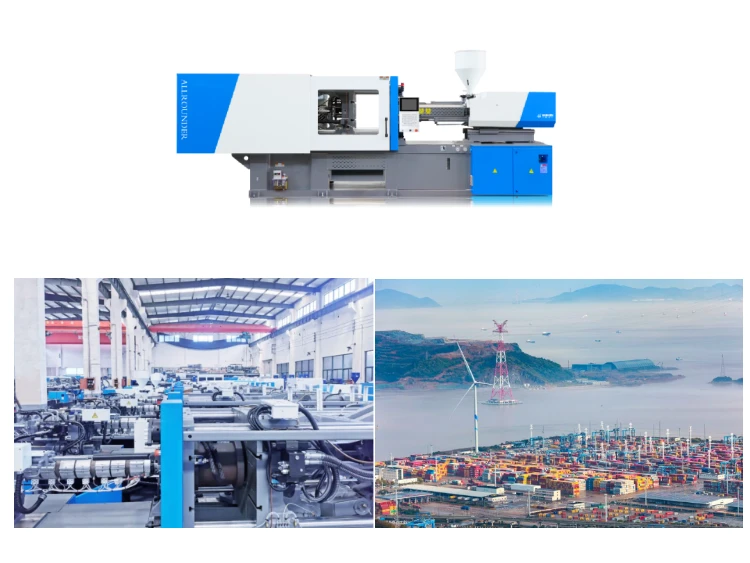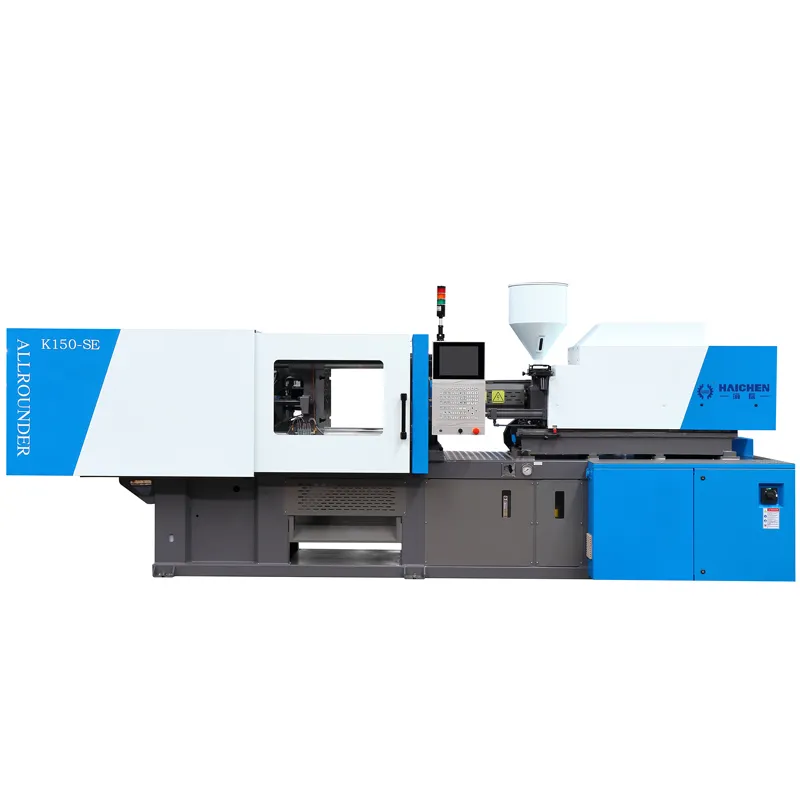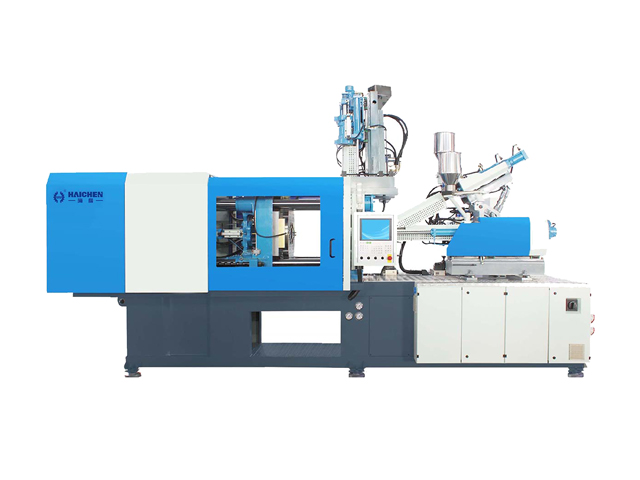
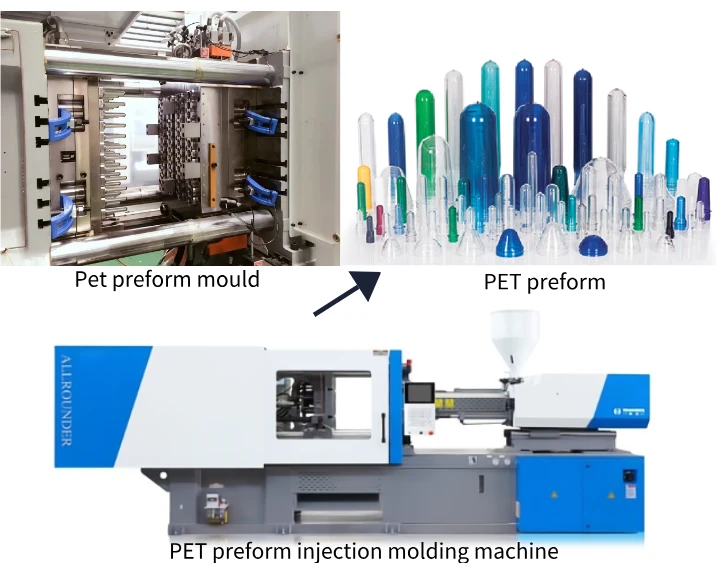
The three technical levels of PET Preform Injection Molding Machine are designed based on the machine’s production capacity: basic PET, increased injection volume, and high-speed, high-volume heavy-duty PET injection molding machines.
PET preform injection molding machines come in three distinct technical levels. Each level is designed to solve specific production challenges: large shot weight per cycle, long cooling time, and high part precision. The right level for your business depends on your output targets, budget, and quality requirements. This guide explains each level in detail — from entry‑level to high‑speed heavy‑duty machines — and helps you choose the one that fits your production needs.
The global PET preform injection molding system market was valued at approximately US963millionin2024∗∗andisprojectedtoreach∗∗US 1,425 million by 2031, growing at a CAGR of 5.1%.
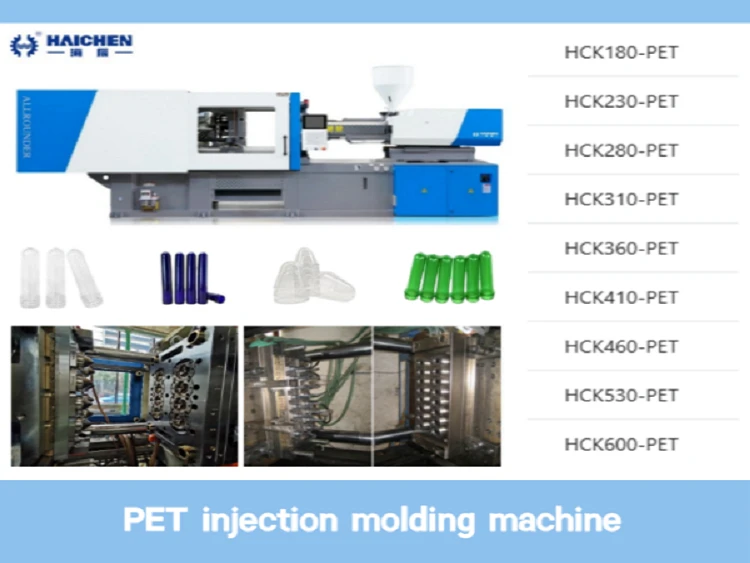
A PET preform injection molding machine is the core equipment that turns PET pellets into bottle preforms — the starting shape for water bottles, juice bottles, and oil containers. Choosing the right machine level is one of the most critical decisions for any PET packaging manufacturer.
- Why PET Preform Production Has Three Technical Levels
- Level 1 – Enlarged Barrel: Entry‑Level Solution
- Level 2 – Independent Plasticizing Unit: Mid‑Level Solution
- Level 3 – Dual‑Screw System: High‑End Solution
- PET Preform Injection Molding Machine – How to Choose the Right Level
- Market Data and Industry Trends
- Comparison Table – Three Levels at a Glance
Why PET Preform Production Has Three Technical Levels
PET preform production is not like standard injection molding. It has three unique requirements that force machine designers to make specific trade‑offs.
- Large Shot Weight Per Cycle
- Long Cooling Time
- High Part Precision
Large Shot Weight Per Cycle
PET preforms are not small parts. A single 18g preform may not seem heavy, but a 48‑cavity mold produces nearly 900g of parts per cycle — plus the runner system. This means the machine must melt and inject a large volume of material in every cycle. Standard injection machines simply cannot handle this volume without extended cycle times.
Long Cooling Time
PET preforms need thorough cooling before ejection. Cooling typically accounts for 50–70% of the total cycle time. If the machine cannot overlap cooling with other operations, cycle times become unacceptably long. This is why advanced machines use external cooling stations to cool preforms outside the mold while the mold starts the next cycle.
High Part Precision
PET preforms must meet tight dimensional tolerances. The neck finish must seal perfectly against the bottle cap. The wall thickness must be uniform for consistent blow molding. A PET preform injection molding machine must deliver consistent shot weight and melt temperature — cycle after cycle, hour after hour.
Level 1 – Enlarged Barrel: Entry‑Level Solution
This entry‑level PET preform injection molding machine starts with a standard servo injection machine. The manufacturer enlarges the screw and barrel diameter, allowing the machine to melt more plastic in one cycle.
- How It Works
- Key Specifications
- Who Should Choose Level 1?
How It Works
The machine operates in a serial sequence: inject, then cool, then melt for the next shot. There is no overlap between these operations. The enlarged barrel simply provides more melt capacity per cycle, but the machine still waits for cooling to finish before starting the next melt cycle.
Key Specifications
| Parameter | Typical Range |
|---|---|
| Clamping Force | 200–400 tons |
| Shot Weight (PET) | 500–1,200g |
| Cycle Time | 30–40 seconds |
| Cavity Count | 16–32 cavities |
| Relative Cost | Low |
Who Should Choose Level 1?
This level suits:
-
Small processing shops entering the PET packaging industry
-
Customers in trial production or with unstable orders
-
Businesses that produce their own packaging with low output requirements
-
Startups with limited capital who want to get started without a big investment
Haichen’s Level 1 machines use the HCK platform with an enlarged screw and barrel. They are the most cost‑effective entry point for PET preform production. We offer screw and barrel upgrade kits for standard injection machines as well.
Level 2 – Independent Plasticizing Unit: Mid‑Level Solution
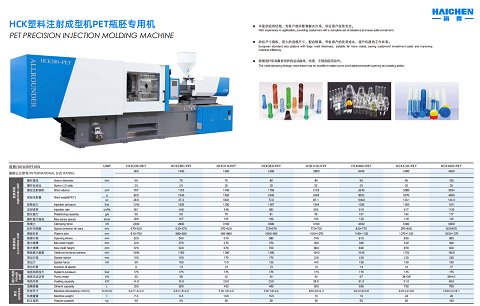
The mid‑level PET preform injection molding machine adds a separate plasticizing unit — an extra set of oil circuits and control systems. During the cooling phase of one shot, the other unit starts melting material for the next shot.
- How It Works
- Key Specifications
- Who Should Choose Level 2?
How It Works
Injection and melting overlap. While the mold cools one set of preforms, the independent plasticizing unit prepares the melt for the next shot. This parallel processing cuts the total cycle time significantly. The two operations do not interfere with each other because they use separate control logic.
Key Specifications
| Parameter | Typical Range |
|---|---|
| Clamping Force | 300–600 tons |
| Shot Weight (PET) | 800–2,000g |
| Cycle Time | ~25 seconds |
| Cavity Count | 32–48 cavities |
| Relative Cost | Medium (15–25% more than Level 1) |
Who Should Choose Level 2?
This level fits:
-
Regional water or beverage brands that blow their own bottles
-
Medium‑sized packaging factories with steady order volumes
-
Customers who want better efficiency but have a mid‑range budget
-
Companies with annual production of 5–10 million preforms
Haichen’s Level 2 machines feature an independent plasticizing unit with separate hydraulic valves and control logic. Many customers find this the best value for money because the cycle time improvement is significant while the cost increase is modest.
Level 3 – Dual‑Screw System: High‑End Solution
The high‑end PET machine is a complete redesign. It starts with thicker platens and tie‑bars, larger motors, and more efficient oil circuits. The key feature is two independent screw units — one screw melts plastic continuously, while the other handles fast injection.
- How It Works
- Key Specifications
- Who Should Choose Level 3?
How It Works
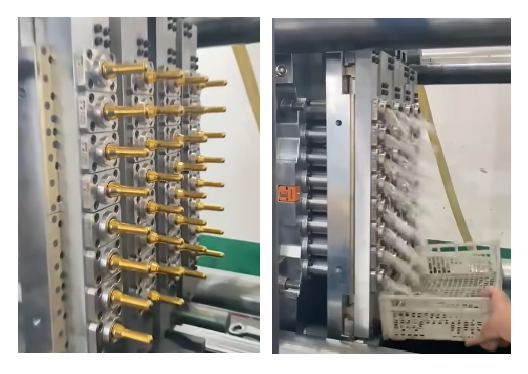
One screw plasticizes material continuously, feeding a reservoir. The other screw injects the melt into the mold. This separation of functions allows both operations to run at optimal speeds. With a high‑precision thin‑wall PET preform mold and an external robot cooling station, the cycle time can drop to around 9 seconds. Preforms are cooled outside the mold, so the mold does not wait.
Key Specifications
| Parameter | Typical Range |
|---|---|
| Clamping Force | 500–800+ tons |
| Shot Weight (PET) | 1,500–4,000g |
| Cycle Time | ~9 seconds |
| Cavity Count | 48–96+ cavities |
| Relative Cost | High |
Who Should Choose Level 3?
This level fits:
-
Large packaging groups and core suppliers to global beverage brands
-
Factories that demand maximum output and the lowest per‑unit cost
-
Customers producing high‑precision preforms for hot‑fill or carbonated drinks
-
Companies with annual production of 20+ million preforms
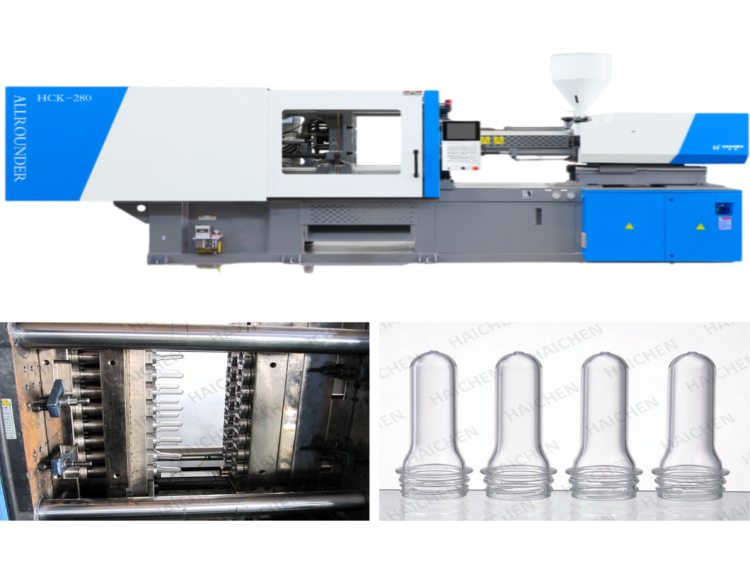
Haichen’s Level 3 machines are built from the ground up. They feature dual independent screws, heavy‑duty platens, upgraded pump motors, and external robot cooling stations. The complete package makes 9‑second cycles possible.
PET Preform Injection Molding Machine – How to Choose the Right Level
Selecting the right PET preform injection molding machine level depends on three factors: your annual output, your preform weight, and your quality requirements.
- Output-Based Selection Guide
- Preform Weight Considerations
- Quality Requirements
Output-Based Selection Guide
| Annual Output | Recommended Level | Typical Cavities | Haichen Model Range |
|---|---|---|---|
| < 3 million | Level 1 | 16–24 | HCK 250–350 |
| 3–10 million | Level 2 | 32–48 | HCK 380–500 |
| 10–20 million | Level 2 or Level 3 | 48–72 | HCK 530–650 |
| > 20 million | Level 3 | 72–96+ | HCK 700+ |
Preform Weight Considerations
Preform weight directly affects shot size and cycle time. Heavier preforms need more cooling time, which increases cycle time. For preforms over 30g, Level 2 or Level 3 machines are recommended because their independent plasticizing and external cooling systems can handle the longer cooling requirements.
Quality Requirements
If you produce preforms for carbonated beverages or hot‑fill applications, you need tighter dimensional tolerances and lower IV loss. Level 3 machines with dual‑screw designs deliver more consistent melt quality and lower IV degradation.
[INSERT IMAGE: PET preform quality inspection showing dimensional tolerances, ALT: PET preform injection molding machine quality control]
Market Data and Industry Trends
The PET preform injection molding machine market is growing steadily, driven by increasing demand for bottled beverages and sustainable packaging.
- Market Size and Growth
- Technology Trends
- Cost Considerations
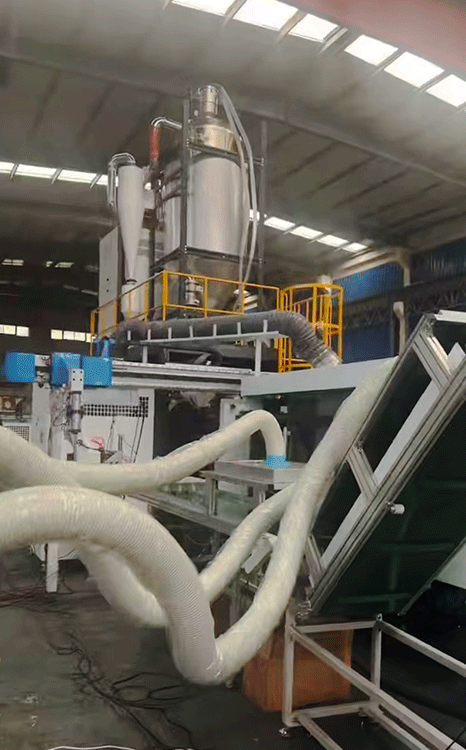
Market Size and Growth
| Metric | Value |
|---|---|
| Global PET Preform Injection Molding System Market (2024) | US$ 963 million |
| Projected Market Size (2031) | US$ 1,425 million |
| CAGR (2025–2031) | 5.1% |
| Global PET Preform Machines Market (2025) | US$ 9.9 billion |
| Projected Market Size (2035) | US$ 17.3 billion |
| CAGR (2025–2035) | 5.7% |
Technology Trends
High‑speed production is the dominant trend. Modern PET preform injection molding machines can achieve cycle times as low as 8–10 seconds. Advanced machines use external cooling stations that keep the mold active for up to 85% of the overall cycle.
Multi‑cavity molds are also advancing. Chinese manufacturers now produce PET preform molds with up to 144 cavities. Higher cavity counts require larger machines but deliver significantly lower per‑unit costs.
Cost Considerations
PET preform injection molding machine prices vary widely by level and configuration:
-
Level 1 machines: Typically $25,000–$60,000 for basic configurations
-
Level 2 machines: Typically $50,000–$100,000 for mid‑range configurations
-
Level 3 machines: Can exceed $150,000 for high‑speed, heavy‑duty systems
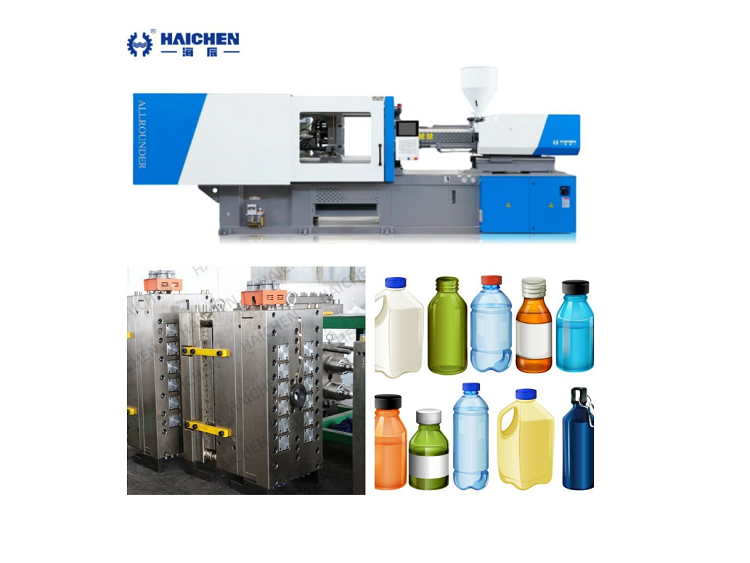
Comparison Table – Three Levels at a Glance
| Comparison | Level 1 | Level 2 | Level 3 |
|---|---|---|---|
| Core Design | Enlarged barrel | Independent plasticizing unit | Dual‑screw + external cooling |
| Cycle Time | 30–40 seconds | ~25 seconds | ~9 seconds |
| Typical Cavities | 16–32 | 32–48 | 48–96+ |
| Shot Weight (PET) | 500–1,200g | 800–2,000g | 1,500–4,000g |
| Clamping Force | 200–400 tons | 300–600 tons | 500–800+ tons |
| Relative Cost | Low | Medium | High |
| Best For | Startups, small orders | Medium‑scale, in‑house brands | Large packaging enterprises |
| Haichen Series | HCK 270–360 | HCK 360–530 | HCK 530+ |
Haichen Machinery has been building PET preform injection molding machines for over 20 years. Our HCK series covers all three technical levels, from entry‑level machines for small producers to high‑speed systems for large packaging enterprises. Each machine is designed with specific configurations for PET preform production — including specialized screws, temperature control systems, and automation interfaces.
Frequently Asked Questions
I need 5 million preforms per year. Which level should I choose?
Level 1 will work, but if you expect your volume to double in two years, Level 2 gives you better value for the long term. Level 2’s 25‑second cycle time and 48‑cavity capacity can produce nearly 170,000 preforms per day, which comfortably covers 5 million per year.
To run a 9‑second cycle on a Level 3 machine, what else do I need?
You need a thin‑wall high‑precision mold with optimized cooling channels, plus an external robot cooling station. Your chiller and dryer must also have fast response times. We recommend a complete package solution.
Does the independent plasticizing unit on Level 2 affect product stability?
No. Independent plasticizing only prepares melt during cooling – it does not affect injection pressure or speed. Our control system switches precisely between phases, and real‑world results prove it is very stable.
H3: What is the average cycle time for a PET preform injection molding machine?
Typical cycle times range from 5 to 14 seconds, depending on preform weight and wall thickness. Level 1 machines run 30–40 seconds. Level 2 machines run ~25 seconds. And Level 3 machines can achieve ~9 seconds.
How many cavities do I need for my production target?
A 48‑cavity mold running 18g preforms at a 25‑second cycle produces about 7,000 preforms per hour. A 72‑cavity mold on a Level 3 machine can exceed 20,000 preforms per hour. Match your cavity count to your daily output target.
Can I upgrade my standard injection machine to a Level 1 PET machine?
Yes. We offer screw and barrel upgrade kits. However, you must check whether your existing machine has enough clamping force and opening stroke for your PET preform mold. Send us your mold drawing, and we will evaluate.
Haichen Machinery – your PET preform injection molding machine partner. From Level 1 to Level 3, from 16 cavities to 96+ cavities, we help you get the right machine for your preform production.