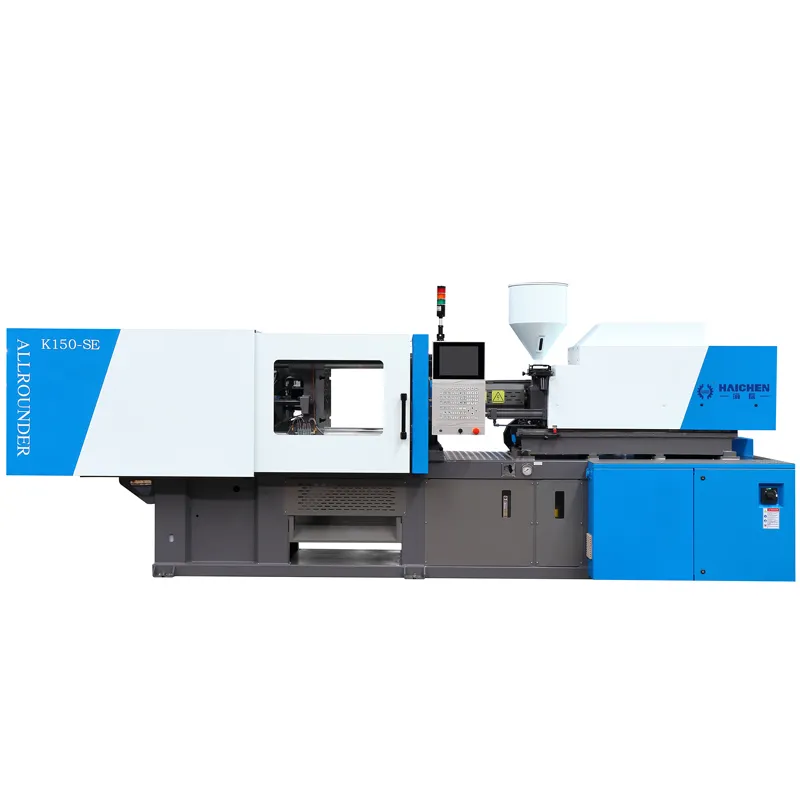
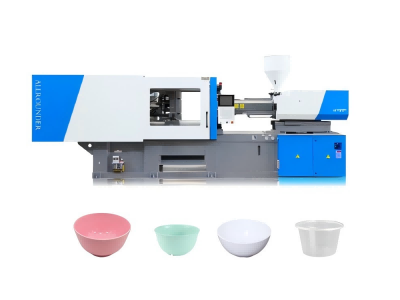
Plastic bowls are produced by injection molding in a complete production line that includes an injection molding machine, bowl mold, drying and feeding equipment, chillers, and part-removal robots.
Common bowl capacities range from 150ml to 1500ml, with wall thickness varying from thin rims to thicker bases. Choosing the right material, mold design, and machine configuration determines output, quality, and cost per piece.
A plastic bowl injection molding production line consists of a high-speed injection molding machine (typically 200–400 tons for bowls), a multi-cavity bowl mold, material drying and feeding equipment, mold temperature controllers, and part-removal automation. PP is the most common material for food-contact bowls, processed at melt temperatures of 200–270°C and mold temperatures of 20–90°C.
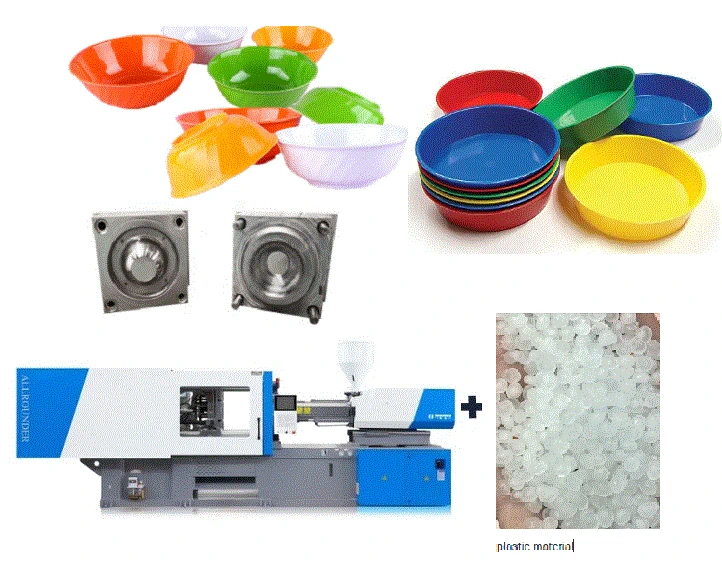
This production line turns plastic pellets into finished bowls through an automated process. The line includes the plastic bowl injection molding machine as the core equipment. The bowl mold shapes the bowls. The auxiliary equipment supports the main machine with drying, feeding, cooling, and part removal. A complete line produces thousands of bowls per day.
The three main directions we discuss:
-
Plastic Bowl types and material choices
-
Technical steps for designing a bowl production line
-
How we pick the right injection molding machine – Haichen’s field method
Why plastic bowls need specialized production lines:
Bowls have a unique circular shape with varying wall thickness from the rim to the base. The molding process must handle both thin rims and thicker bases without defects. Common bowl capacities range from 150ml to 1500ml. The plastic bowl injection molding process ensures consistent wall thickness and smooth surfaces for food contact applications. A well-designed production line minimizes material waste and cycle time.
What Types of Plastic Bowls Can Be Produced by Injection Molding?
Injection molding produces three main types of plastic bowls: home-use bowls (PP, prioritizing aesthetics and food safety), takeout/disposable bowls (PP or PS, optimizing cost and speed), and premium bowls (PC, offering glass-like transparency and high impact resistance).
Home-Use and Takeout Plastic Bowls
Home-use bowls prioritize aesthetics and food safety. Food-grade PP is the standard choice. Takeout bowls focus on cost-effectiveness. Disposable bowls often use PP or PS. The production line for takeout bowls typically runs at higher speeds with multi-cavity molds. Some bowls use PS for lower cost, but PP offers better heat resistance for microwave use.
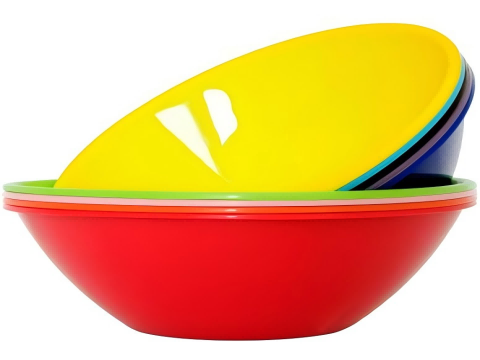
Microwave-safe PP plastic bowls
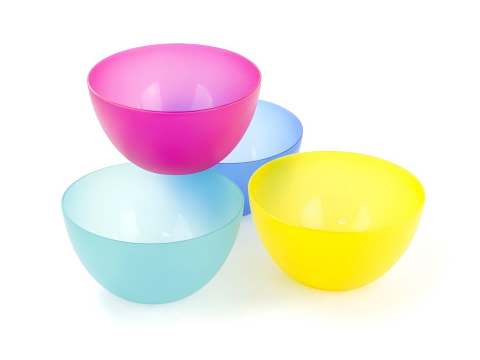
PP bowls represent the most common plastic bowl type. As PP is a non-polar crystalline polymer with good heat resistance and chemical stability . Moreover, PP bowls can be heated directly in microwave ovens. The material is easy to clean and has a smooth surface. PP also offers excellent chemical resistance. The material density ranges from 0.89 to 0.91 g/cm³. Cycle times are relatively short at 15-20 seconds per part.
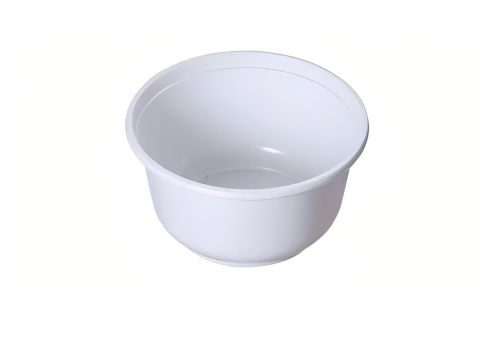
PP Plastic bowls material
Premium PC Bowls
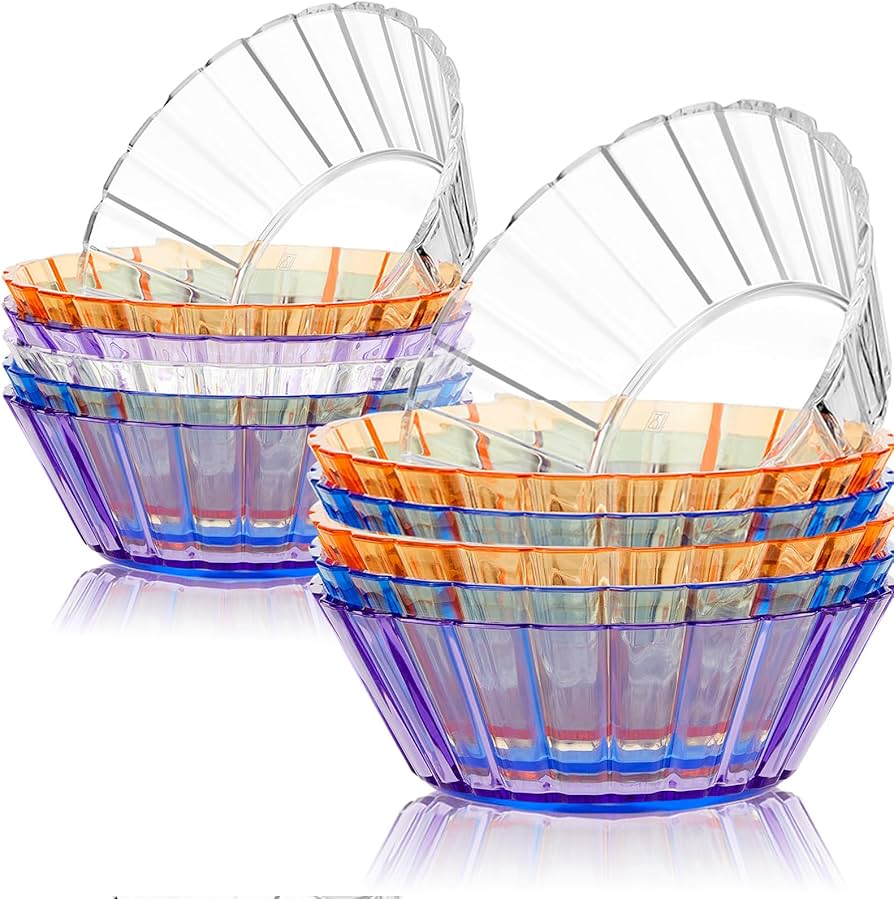
PC provides high transparency and impact resistance but costs more than PP. PC bowls have a crystal-clear appearance like glass and maintain their shape under varying temperatures and loads. Premium bowl manufacturers choose PC for high-end product lines. PC requires higher melt temperatures and higher injection pressure than PP.
PC Plastic bowls material
What Are the Recommended Injection Molding Parameters for PP Bowls?
PP bowls are molded at melt temperatures of 200–270°C, mold temperatures of 20–90°C, and injection pressures of 80–140 MPa. Maximum moisture content should be below 0.10%. PP’s high flowability enables thin-wall bowl production with cycle times of 15–25 seconds depending on wall thickness and cavity count.
Processing Parameters for PP Bowls
| Parameter | Recommended Range | Notes |
|---|---|---|
| Melt temperature | 200–270°C | PP melting point: 160–170°C |
| Rear barrel zone | 180–200°C | Feed zone |
| Middle barrel zone | 200–230°C | Compression zone |
| Front barrel zone | 220–250°C | Metering zone |
| Nozzle temperature | 230–260°C | Slightly higher than front zone |
| Mold temperature | 20–90°C | Higher temp improves surface finish |
| Injection pressure | 80–140 MPa | Higher for thin-wall bowls |
| Max moisture content | <0.10% | PP has low moisture absorption |
| Shrinkage rate | 1.5–2.5% | Affects mold dimension compensation |
PP’s density range is 0.89–0.91 g/cm³, and it is a non-polar crystalline polymer with good heat resistance and chemical stability. Recommended processing temperatures for high-fluidity PP grades used in bowl production are 190–250°C.
Key Processing Considerations for PP Bowls
Shrinkage compensation: PP shrinkage is 1.5–2.5%, affected by mold temperature, holding pressure, and cooling time. Higher mold temperature increases shrinkage. Mold dimensions must compensate for this.
Flowability: PP has superior flowability for complex geometries. This allows thinner wall sections and longer flow lengths, making it suitable for thin-wall bowl designs.
Warpage control: PP is prone to warpage if cooling is uneven. Balanced cooling channels and uniform mold temperature are essential.
What Are the Recommended Injection Molding Parameters for PC Bowls?
PC bowls require melt temperatures of 260–300°C, mold temperatures of 100–120°C, and injection pressures of 80–145 MPa. PC must be dried at 120°C for 4–6 hours before processing. Its transparency and impact resistance make it suitable for premium bowls.
Processing Parameters for PC Bowls
| Parameter | Recommended Range | Notes |
|---|---|---|
| Melt temperature | 260–300°C | PC requires high heat |
| Mold temperature | 100–120°C | Higher temp for transparency |
| Injection pressure | 80–145 MPa | 120–145 MPa for thin-wall |
| Drying condition | 120°C / 4–6 h | PC absorbs moisture readily |
| Shrinkage rate | 0.5–0.8% | Lower than PP |
PC resin temperature during injection molding is typically 240–300°C, preferably 260–280°C. PC injection pressure is generally controlled between 80–120 MPa; for thin-wall, long-flow, complex shapes, higher injection pressure of 120–145 MPa is used. PC mold temperature of 100–120°C ensures uniform material flow and reduces internal stress.
How Do You Calculate the Required Clamping Force for Plastic Bowl Molds?
Required clamping force = total projected area × material factor × safety factor. For PP bowls, material factor is typically 3–4 tons/cm². For PC bowls, 4.5–6 tons/cm². Add 10–20% safety margin. A 6-cavity PP bowl mold with 50 cm² projected area per bowl requires approximately 990–1,440 tons.
Step-by-Step Calculatio
Required Clamp Force = Total Projected Area × Material Factor × (1.1 to 1.2)
| Material | Material Factor (tons/cm²) | Notes |
|---|---|---|
| PP | 3–4 | Low viscosity, high flowability |
| PS | 3–4 | Similar to PP |
| PC | 4.5–6 | High viscosity, needs more force |
Worked example: A 6-cavity PP bowl mold with 50 cm² projected area per bowl and 15 cm² runner area:
Total projected area = (50 × 6) + 15 = 315 cm²
Required clamp force = 315 × 3.5 × 1.15 = 1,268 tons
A 1,300-ton machine would be suitable.
For thin-wall PP bowls with wall thickness under 1.0mm, the material factor should be taken at the higher end (4 tons/cm²) due to higher injection pressure requirements.
How Do You Match Shot Size to Bowl Production?
Total shot weight = bowl weight × cavities + runner weight. The machine’s maximum shot weight should be 1.2–6.7 times the total shot weight. For a 6-cavity PP bowl mold with 30g bowls and 15g runner, total shot weight is 195g, so choose a machine with 234–1,300g shot capacity.
Shot Size Calculation
Total Shot Weight = Bowl Weight × Cavities + Runner Weight
Worked example: A 6-cavity bowl mold with 30g bowls and 15g runner:
Total shot weight = (30 × 6) + 15 = 195 g
Minimum machine shot weight: 195 ÷ 0.8 = 244 g
Maximum machine shot weight: 195 ÷ 0.15 = 1,300 g
Recommended range: 244–1,300 g
What Is the Optimal Mold Design for Plastic Bowls?
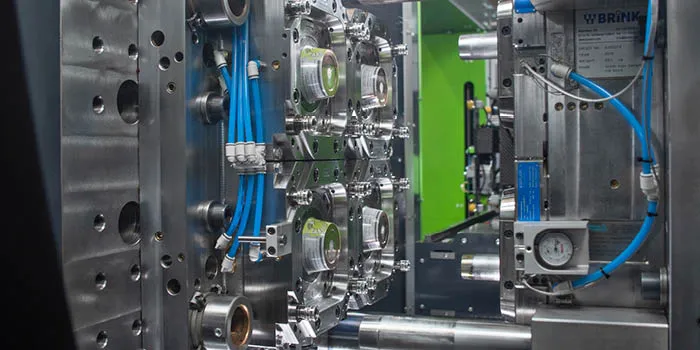
Bowl molds should use center-bottom gate location with hot runner systems to reduce material waste. Mold temperature should be controlled at 20–90°C for PP and 100–120°C for PC. Cooling channels of 8mm diameter arranged around the cavity reduce cooling time. Proper venting at the rim allows trapped air to escape.
Gate Location and Hot Runner Systems
A well-designed gate prevents flow lines and weak spots. The mold also requires proper venting to allow trapped air to escape. Bowl molds often use hot runners to reduce material waste. The mold surface needs a high polish finish for smooth bowl surfaces.
For high-quality bowls, a valve gate at the center of the bottom of the product avoids welding marks on the surface. Circular cooling water channels with a diameter of 8mm arranged around the cavity reduce cooling time to 10 seconds.
Mold Steel Selection
| Steel Grade | Application | Mold Life |
|---|---|---|
| H13 | General bowl molds | 500,000–1,000,000 shots |
| S136 | High-polish, food-contact bowls | 1,000,000+ shots |
| 1.2344 | High-wear applications | 800,000–1,200,000 shots |
Mold steel must withstand millions of cycles. H13, S136, and 1.2344 offer good wear resistance and long service life.
Multi-Cavity Mold Configurations
| Bowl Capacity | Common Cavities | Typical Cycle Time | Recommended Tonnage |
|---|---|---|---|
| 150–300 ml | 8–16 | 10–15 s | 200–350 T |
| 500–750 ml | 4–8 | 15–20 s | 350–500 T |
| 1000–1500 ml | 2–6 | 20–30 s | 500–800 T |
| Thin-wall takeout bowl | 6–12 | 4.5–8 s | 300–500 T |
A 750ml bowl mold with 6 cavities runs at 4.5–5 seconds per mold cycle. Disposable round bowl multi-cavity integrated molds can achieve cycle times of 5.5 seconds for thin-wall designs (0.38mm thickness).
How Do You Select the Right Injection Molding Machine for Bowl Production?
For plastic bowl production, choose a machine with clamping force matched to your mold’s projected area (typically 200–800 tons), shot weight within 15–80% of capacity, and injection rate high enough for thin-wall bowls. Servo-hydraulic machines save 30–50% energy compared to conventional hydraulic.
Machine Configuration Guide
| Bowl Type | Recommended Tonnage | Screw Diameter | Typical Cavities | Cycle Time |
|---|---|---|---|---|
| Small takeout bowl (150–300ml) | 200–350 T | 35–45 mm | 8–16 | 10–15 s |
| Medium bowl (500–750ml) | 350–500 T | 40–50 mm | 4–8 | 15–20 s |
| Large bowl (1000–1500ml) | 500–800 T | 45–60 mm | 2–6 | 20–30 s |
| Thin-wall disposable bowl | 300–500 T | 35–45 mm | 6–12 | 4.5–8 s |
Pre-Purchase Checklist
-
Clamping force: Machine tonnage ≥ calculated requirement × 1.15 safety factor
-
Shot weight: Total shot weight falls between 15% and 80% of machine capacity
-
Tie-bar spacing: Larger than mold dimensions
-
Mold height: Within machine’s min/max range
-
Opening stroke: Sufficient to eject bowls and allow robot access
-
Ejection system: Matched to bowl depth and mold design
-
Screw diameter and L/D ratio: Suitable for PP (L/D 18–22) or PC (L/D 20–24)
-
Specific energy consumption: Ask for kWh/kg data under your material
Auxiliary equipment
Besides the main press, bowl production often needs extra gear:
-
Dryer – removes moisture from PP and PC pellets
-
Auto loader – feeds dry pellets into the machine
-
Chiller – provides cold water for mold cooling
-
Robot – removes finished bowls from the mold
For customers producing many different bowl types, quick mold change systems reduce changeover time. Servo-driven hydraulic systems save 30-60% on electricity.
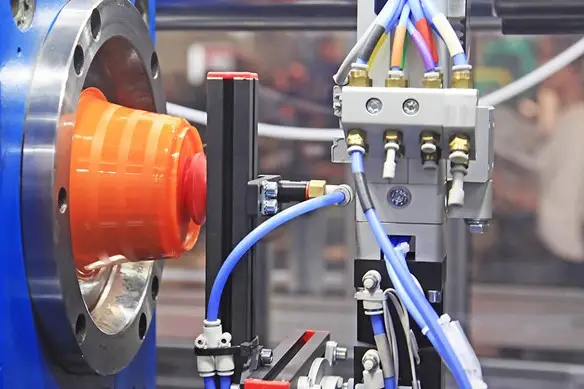
Haichen Machinery’s for plastic Bowl injection molding Production Solutions
-
Complete line configuration
-
Real production examples
-
Technical support services
Complete line configuration
Haichen Machinery provides complete plastic bowl production lines. Our line includes a dehumidifying dryer for material preparation. We supply HCK series different production capacities of plastic bowl injection molding machines with clamping force from 120 to 500 tons.
For standard bowls, we recommend HCK180 to HCK310 models. These machines feature large platens to accommodate multi-cavity bowl molds. We also provide mold recommendations based on your bowl specifications. Auxiliary equipment includes auto loaders, chillers, and take-out robots.
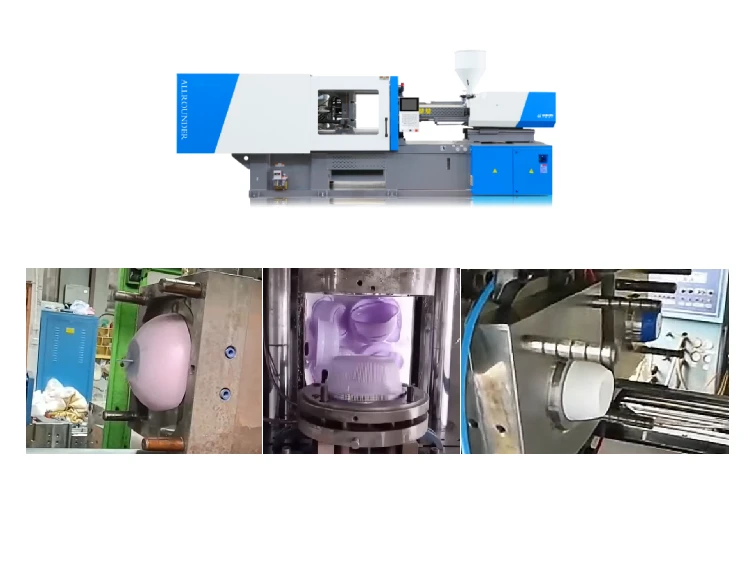
Production case
A plastic bowl manufacturer uses Haichen HCK180 machine to produce 500ml PP bowls. The mold has 4 cavities. Each bowl weighs 25g. Cycle time is 16 seconds per batch. Our high output plastic bowl production injection molding machine features, for instance, this produces about 4,500 bowls per hour. Another customer produces disposable bowls using a 6-cavity mold on Haichen HCK280. Each bowl weighs 15g. Cycle time is 18 seconds. Both customers report consistent quality and low defect rates.
Our advantages of plastic bowl injection molding production
Haichen offers full technical support for plastic bowl production lines. We help you select the right drying and feeding equipment. Our team provides layout drawings for your factory floor. We train your operators on plastic bowl injection molding machine settings and maintenance. For customers with existing molds, we perform mold trials before machine delivery. Haichen has over ten years of experience in plastic bowl injection molding production.
The plastic bowl injection molding production line has three main components. The injection molding machine provides 120-500 tons of clamping force. The bowl mold shapes the plastic bowl with proper gate location and cooling channels. The auxiliary equipment includes dryers, auto loaders, chillers, and robots. And we know well about plastic bowls injection molding cost reduction strategies.
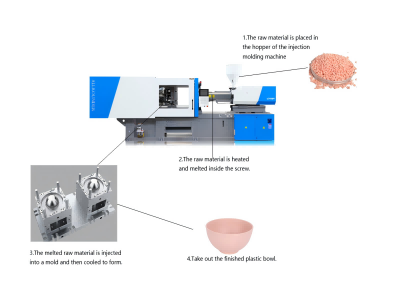
Haichen produce different sereis of plastic bowl injection molding machine. Welcome contact us to discuss your plastic bowl production needs.
FAQ
What is the best material for plastic bowl injection molding?
PP is the most common material for food-contact bowls due to its heat resistance, chemical stability, and microwave-safe properties. PS is used for lower-cost disposable bowls. PC is chosen for premium bowls requiring glass-like transparency and high impact resistance.
What injection molding machine tonnage is needed for plastic bowls?
It depends on bowl size and cavity count. Small takeout bowls (150–300ml) with 8–16 cavities typically require 200–350 tons. Large bowls (1000–1500ml) with 2–6 cavities may require 500–800 tons. Use the formula: Required Clamp Force = Total Projected Area × Material Factor × Safety Factor.
What is the cycle time for plastic bowl injection molding?
Cycle times range from 4.5–30 seconds depending on bowl size, wall thickness, and cavity count. Thin-wall disposable bowls (0.38mm) can run at 4.5–8 seconds. Standard PP bowls run at 15–25 seconds. Large PC bowls may require 25–35 seconds.
What causes warping in plastic bowl molding?
Warping is caused by uneven cooling due to inconsistent wall thickness. High temperature gradients during material flow create residual stress. Solutions include mold flow analysis, optimized cooling system design, and avoiding abrupt wall thickness changes.
How many cavities should a plastic bowl mold have?
Common configurations are 2, 4, 6, 8, 12, or 16 cavities. For thin-wall takeout bowls, 6–12 cavities are common. For larger bowls (1000ml+), 2–6 cavities. The choice depends on machine shot capacity, clamping force, and order volume.
Can PP and PC be molded on the same machine?
PP processes at 200–270°C melt temperature and 20–90°C mold temperature. PC requires 260–300°C melt temperature and 100–120°C mold temperature. A machine capable of reaching PC’s higher temperature range can process both materials, but mold temperature controllers must be capable of both ranges.