Getting Started: Pick the Right Machine for Your Handle
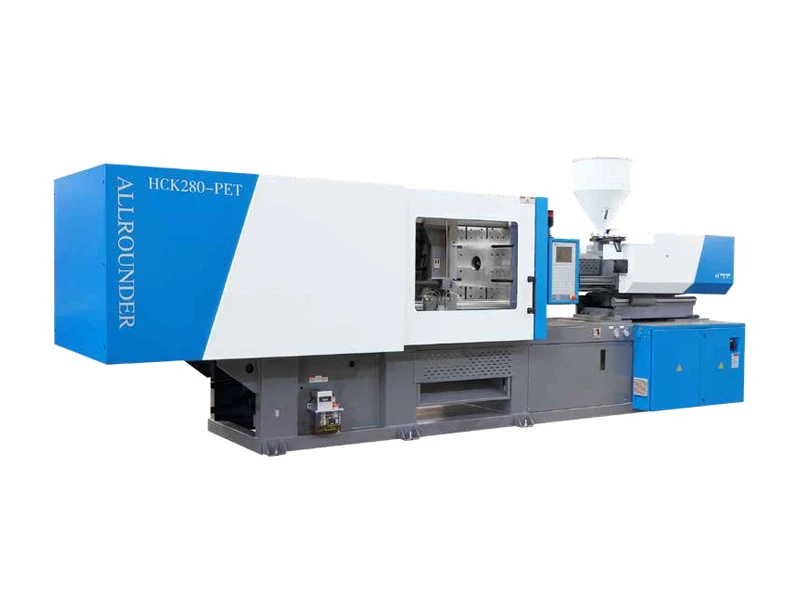
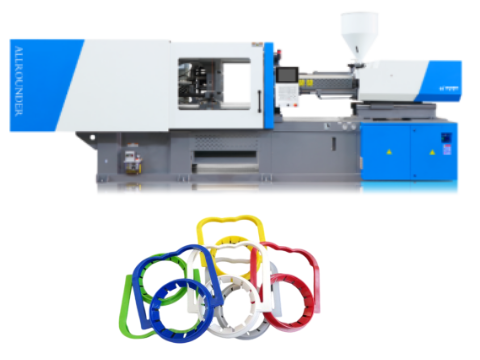
Ring handles and jug bottle handles are two common types of external handles on liquid bottle packaging.Their different design philosophies require the selection of different Plastic Handle injection molding machine for production. Ring handles are mainly used for lifting and transporting, while horizontal insert handles are the actual point of force when pouring liquid after opening. Plastic bottle handles transform ordinary containers into portable everyday items. You’ll see them on water bottles, juice jugs, cooking oil jugs, and milk jugs.
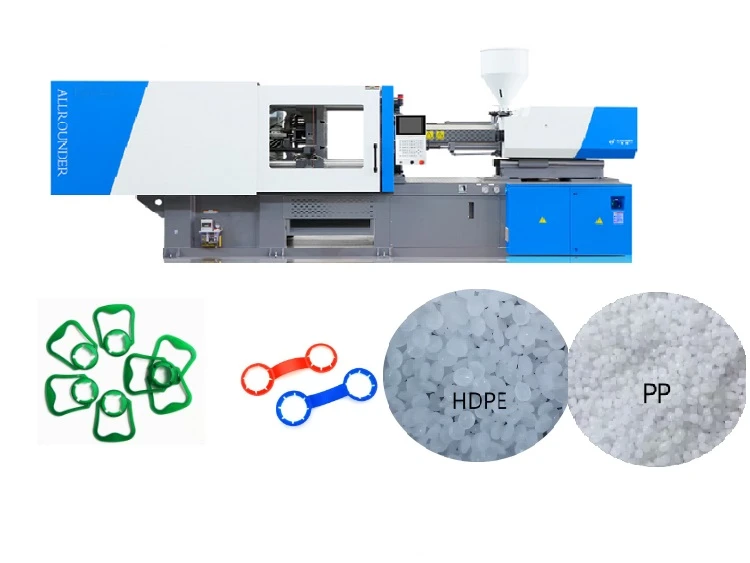
Ring handles are simply circular rings on the neck of a PET bottle. They are inserted into the bottle body after molding. Examples include large water bottles or cooking oil jugs. These handles are thin and light (1-3 grams), making them ideal for high-speed production with 16 to 32 cavities per mold.
Bottle handles, on the other hand, are integrated directly into the bottle body. They are thicker, stronger, and heavier (5-15 grams). You’ll see them on milk jugs and large water jugs. These handles need to withstand greater weight, so they use thicker walls and stronger materials, such as high-density polyethylene (HDPE).
Picking an injection molding machine isn’t just about “can it make the part?” It’s about “can it make the part profitably?” Let’s break down what matters for each handle type.
- Bottle Handle Material Choice Drives machine Injection Unit Design
- Mold Design Determines What Your Bottle Handle injection Machine Needs
- Figuring Out Plastic Handle injection molding machine Clamping Force and Tonnage
- Output Targets Drive Bottle Handle Automation line Choices
- What We’ve Learned at Haichen: Practical Takeaways
Bottle Handle Material Choice Drives machine Injection Unit Design
- Ring Handles: Thin-Wall, Multi-Cavity Speed
- Jug Handles: Thicker Parts, Bigger Shots
- Matching Injection Unit to Material
Ring Handles: Thin-Wall, Multi-Cavity Speed
Ring handles usually use PP, PE, or HDPE. These materials flow well and work great for high-speed production. Each handle weighs only 1–3 grams with wall thickness around 1.5–2.5mm.
The injection unit needs good speed rather than huge shot size. You want fast injection to fill thin walls before the melt cools. Multi-cavity molds (16–32 cavities) need consistent plasticizing so every cavity fills evenly.
Jug Handles: Thicker Parts, Bigger Shots
Jug handles typically use HDPE or PP. Each one weighs 5–15 grams with wall thickness of 3–5mm. HDPE has a lower melt index, so it needs more torque and tighter temperature control.
These thicker parts need bigger shots and stronger plasticizing. You’ll need a larger screw diameter (40–55mm) to melt enough material quickly. HDPE also shrinks more, so holding pressure control is critical.
Matching Injection Unit to Material
| Feature | Ring Handle | Jug Handle |
|---|---|---|
| Typical Material | PP, PE, HDPE | HDPE, PP |
| Part Weight | 1–3g | 5–15g |
| Wall Thickness | 1.5–2.5mm | 3–5mm |
| Screw Size | 35–45mm | 40–55mm |
| Injection Speed | High | Medium |
| Plasticizing Power | Medium | High |
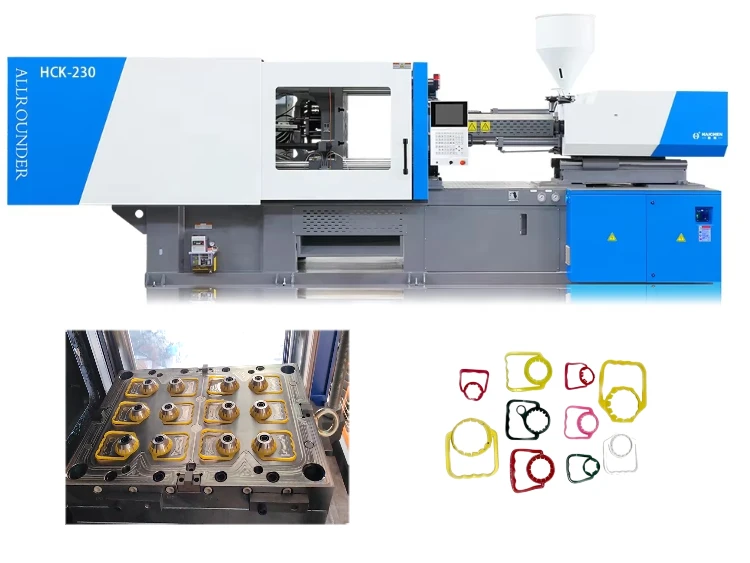
Haichen HCK series machines come with different screw options. We help you match the screw to your specific handle material and weight.
Mold Design Determines What Your Bottle Handle injection Machine Needs
- Ring Handle Molds: More Cavities = Lower Cost
- Jug Handle Molds: Bigger Shots, Fewer Cavities
- How Cavity Count Affects Machine Choice
Ring Handle Molds: More Cavities = Lower Cost
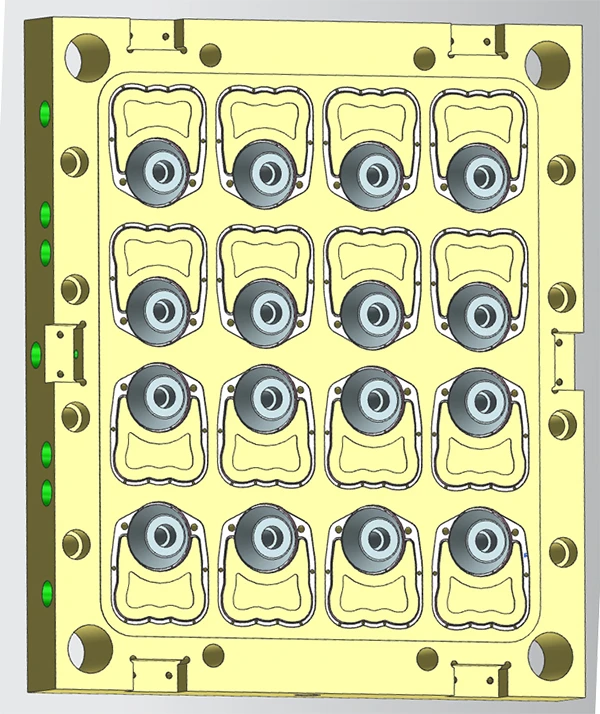
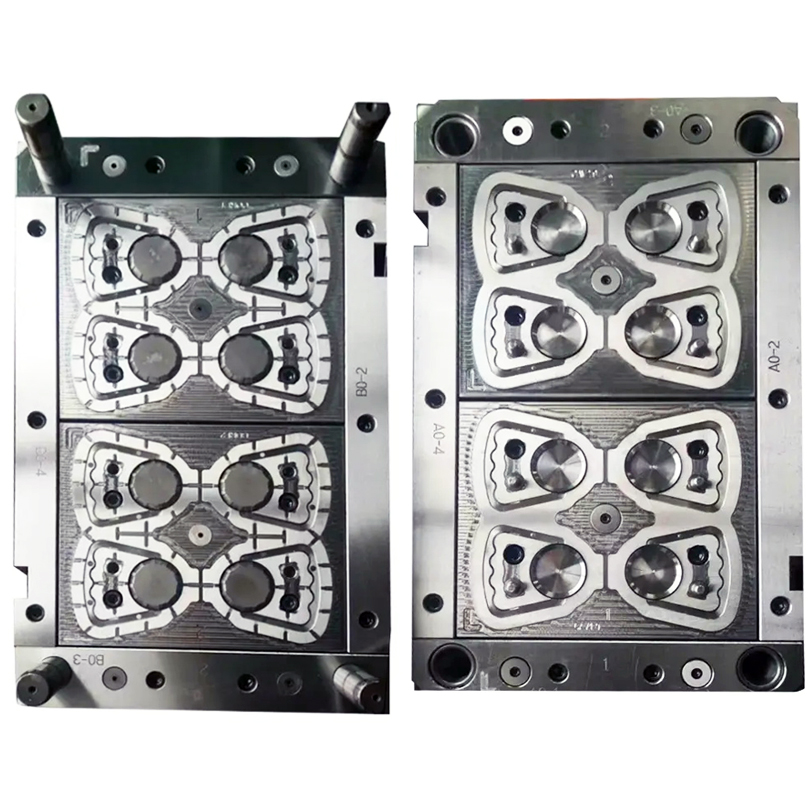
Multi-cavity molds are how you make ring handles cost-effective. Most ring handle molds run 16 to 32 cavities. More cavities mean more parts per cycle, but you need precise engineering to fill and cool every cavity evenly.
Key mold design points:
-
Balanced runners so each cavity fills at the same speed
-
Cooling channels that work uniformly across all cavities
-
Sliders or lifters to release the ring shape
These molds need fast injection, good plasticizing capacity, and stable clamping to keep all cavities consistent.
Jug Handle Molds: Bigger Shots, Fewer Cavities
Jug handle molds usually run 8 to 16 cavities because each part is bigger. The design focuses on filling thicker areas completely and controlling sink marks. Gate placement matters a lot.
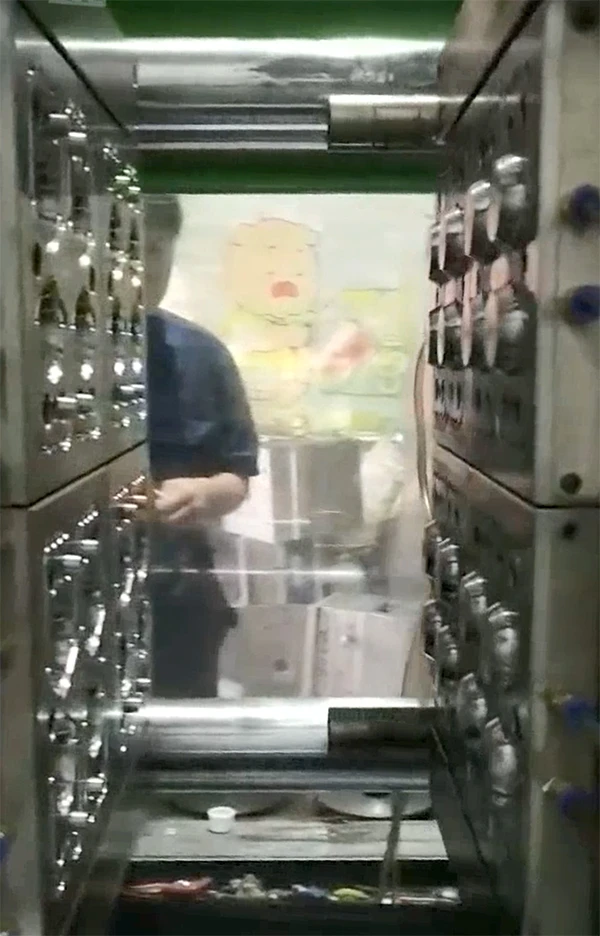
Key mold design points:
-
Gate at the thickest section so material flows from thick to thin
-
Zone cooling for thicker sections that need more cooling time
-
Strong ejection because thicker parts stick harder
How Cavity Count Affects Machine Choice
| Mold Type | Typical Cavities | What the Machine Needs |
|---|---|---|
| Ring handle | 16–32 | Fast injection, good consistency |
| Jug handle | 8–16 | Strong clamping, bigger shots |
Haichen has lots of experience matching molds to machines. Tell us your cavity count and part size, and we’ll point you to the right HCK model.
Figuring Out Plastic Handle injection molding machine Clamping Force and Tonnage
- The Basic Clamping Force Formula
- Ring Handle Tonnage Example
- Jug Handle Tonnage Example
- Quick Comparison between them
The Basic Clamping Force Formula
Clamping force keeps the mold closed during injection. Here’s the simple formula:
Clamping Force (tons) = Projected Area (cm²) × Cavity Pressure (kg/cm²) ÷ 1000 × Safety Factor
Cavity pressure depends on your material. For PP and PE, figure 350–450 kg/cm². For HDPE, use 400–500 kg/cm². Add 15–20% safety margin.
Ring Handle Tonnage Example
Take a 32‑cavity ring handle mold:
-
Each handle projected area ≈ 8–12 cm² (including runner)
-
Total area ≈ 350–400 cm²
-
PP cavity pressure at 400 kg/cm²
-
Math: 400 × 400 ÷ 1000 = 160 tons
-
Add 15% margin ≈ 185 tons
So a 32‑cavity ring handle mold works well on HCK 180–HCK 230.
Jug Handle Tonnage Example
Take an 8‑cavity jug handle mold:
-
Each handle projected area ≈ 50–80 cm² (including runner)
-
Total area ≈ 400–640 cm²
-
HDPE cavity pressure at 450 kg/cm²
-
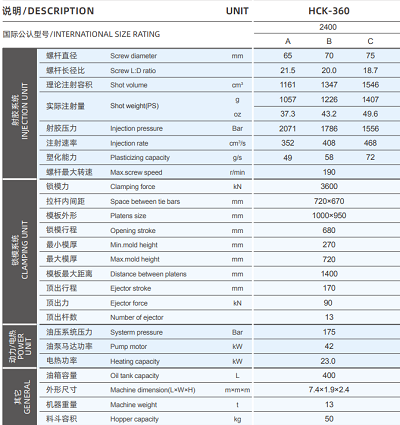
Math: 640 × 450 ÷ 1000 = 288 tons
-
Add 15% margin ≈ 330 tons
So an 8‑cavity jug handle mold typically needs HCK 230–HCK 360.
Quick Comparison between them
| Selection Factor | Ring Handle | Jug Handle |
|---|---|---|
| Typical Cavities | 16–32 | 8–16 |
| Recommended HCK | HCK 180–HCK 230 | HCK 230–HCK 360 |
| Clamping Force | 180–230 tons | 230–360 tons |
| Shot Size Need | Medium | Large |
Haichen HCK machines cover 110 to 3000 tons, so we’ve got a model for whatever you’re making. All come with servo energy-saving as standard.
Output Targets Drive Bottle Handle Automation line Choices
- Ring Handles: Full Automation Pays Off
- Jug Handles: Semi-Auto Works for Many
- Automation Recommendations
Ring Handles: Full Automation Pays Off
Ring handles are high-volume, low-margin parts. Full automation is how you stay competitive. Three key automation steps:
-
Robot removal and sprue cutting – HCK machines come with CE12 robot interface, plug-and-play with most robot brands
-
Conveying and stacking – robots place handles on belts, then stack automatically
-
Vision inspection – CCD cameras check for defects and kick out bad parts
Jug Handles: Semi-Auto Works for Many
Jug handles have lower volumes and higher value per piece. The payback on full automation takes longer. Many shops run semi-auto setups: robot removes parts, then workers trim sprues and pack.
For high-volume jug handle lines (50,000+ per day), full automation makes sense too.
Automation Recommendations
| Daily Output | Ring Handle | Jug Handle |
|---|---|---|
| Under 50k | Semi-auto (robot removal) | Manual / semi-auto |
| 50k–150k | Full auto + conveying + inspection | Semi-auto (robot removal) |
| Over 150k | Full auto + online packing | Full auto + conveying + inspection |
HCK machines come with CE12 and Euromap interfaces, so you can start basic and add automation later.
What We’ve Learned at Haichen: Practical Takeaways
We’ve been building injection molding machines in Ningbo for over a decade. We’ve helped lots of customers set up handle production lines, and we’ve learned a few things along the way.
Here’s the Bottom Line
| Comparison | Ring Handle | Jug Handle |
|---|---|---|
| Material | PP, PE, HDPE | HDPE, PP |
| Part Weight | 1–3g | 5–15g |
| Wall Thickness | 1.5–2.5mm | 3–5mm |
| Typical Cavities | 16–32 | 8–16 |
| HCK Model | HCK 180–HCK 230 | HCK 230–HCK 360 |
| Clamping Force | 180–230 tons | 230–360 tons |
| Injection Speed | High | Medium |
| Plasticizing Power | Medium | High |
| Automation | Full auto standard | Semi-auto / full auto |
Four Things We Always Tell Customers
First, start with your product. Ring handles need speed and multi-cavity capability. Jug handles need bigger shots and stronger clamping. Same “handle” category, completely different machine logic. We always start by understanding your part, then work backward to the right machine.
Second, mold and machine need to be designed together. Multi-cavity ring handle molds need fast injection and consistent filling. Thick jug handle molds need strong holding pressure and good cooling. Haichen’s engineers review your mold design early, so we can match the machine perfectly.
Third, material matters. PP, PE, and HDPE all behave differently. HCK Plastic Handle injection molding machine offer different screw options, so you get the right compression ratio and L/D for your specific material.
Fourth, automation saves money long-term. For high-volume ring handles, full automation is the way to go. HCK’s CE12 and Euromap interfaces give you room to add automation as you grow.
Common Questions
Q1: What injection speed do I need for ring handle molds?
Aim for 80–120 mm/s. Ring handles are thin, so you need to fill the cavity before the melt cools. HCK machines let you set multi-stage speed profiles.
Q2: How do I stop sink marks on thick jug handles?
Sink marks usually come from low holding pressure or uneven cooling. Use multi-stage holding pressure (high to medium to low) and add extra cooling channels in thick sections.
Q3: Can one machine run both ring handles and jug handles?
Yes, but you’ll change molds and adjust settings. If you make both in high volume, better to have dedicated machines so you’re not losing time on changeovers.
Q4: What changes for recycled materials like rPET or rHDPE?
Recycled materials flow differently. Go with a bimetallic screw and barrel for better wear resistance, and use closed-loop pressure control to handle viscosity changes between batches.
Q5: What automation interfaces do HCK machines support?
HCK series comes with CE12 robot interface and Euromap 12/67 interfaces. Plug and play with most robot brands.
Haichen Machinery – Your partner for plastic bottle handle injection molding. From ring handles to jug handles, from 8 to 32 cavities, we deliver the right machine with full technical support.