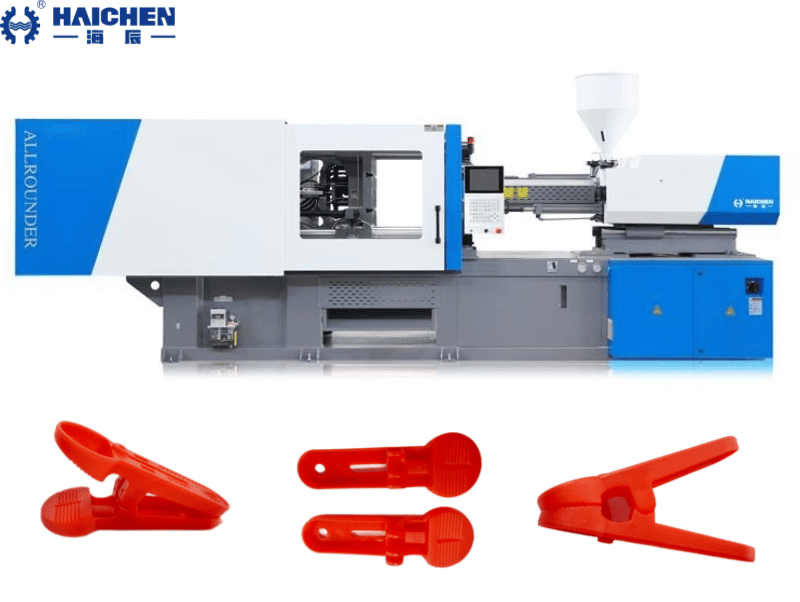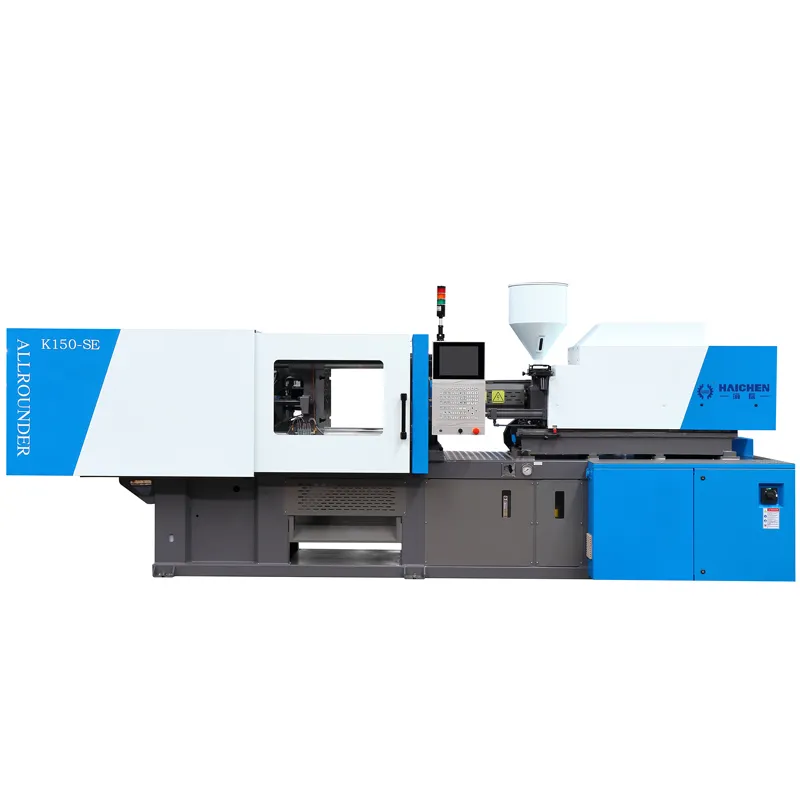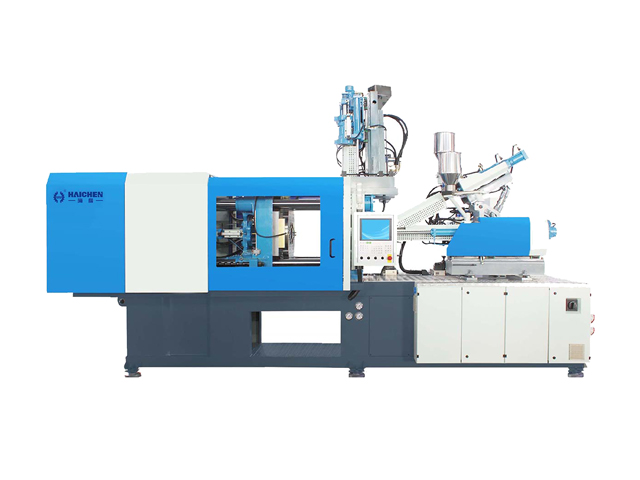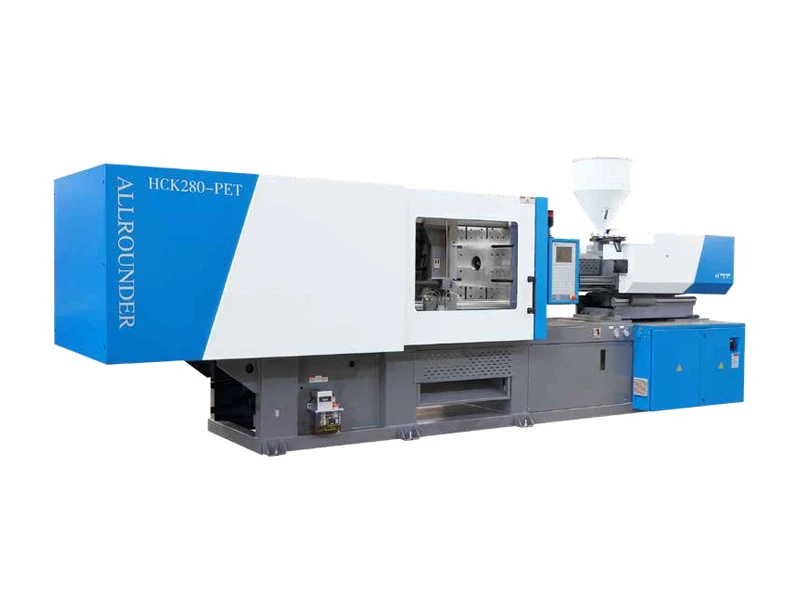
A plastic clothespin production line requires a fully integrated system of raw material processors, forming equipment, and automated assembly machinery. As an injection molding machine manufacturer, we offer complete systems from raw material handling to finished packaging, covering dryers, injection machines, multi-cavity molds, chillers, spring coilers, vibratory bowls, assembly units, and packing equipment.
This guide breaks down each stage of the plastic clothespin production line — from drying and injection molding to spring making, high-speed assembly, and packaging — with real production data from our HCK-110 servo machine.
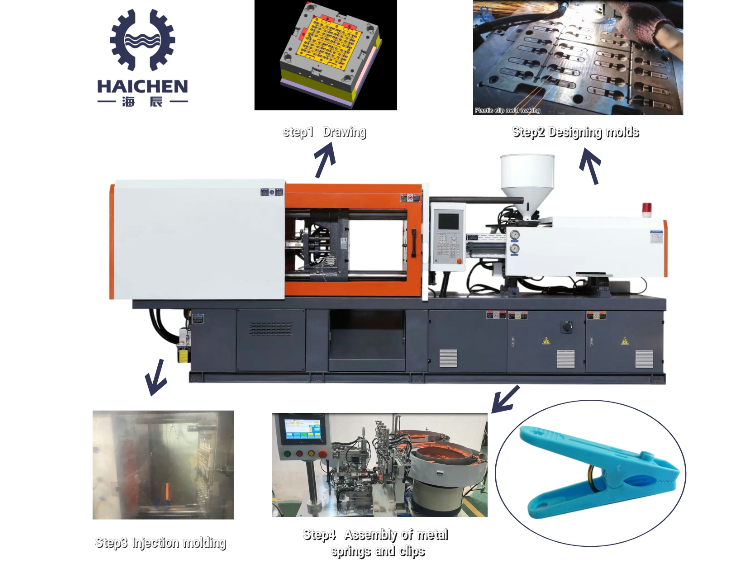
Raw Material Processing and Injection Molding in a Plastic Clothespin Production Line
The first step of any plastic clothespin production line is converting raw polymer pellets (typically PP or HIPS) into rigid plastic halves. This involves several key pieces of equipment working together.
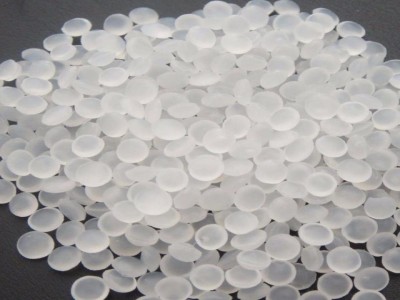
Drying and Feeding
A dehumidifying hopper dryer preheats and removes moisture from the raw granules to prevent structural defects or surface bubbles in the final parts. Dried pellets are then fed into the injection machine hopper for stable melting.
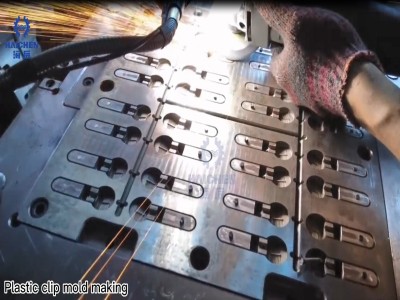
Injection Molding and Multi‑Cavity Mold
The injection molding machine melts the dried pellets and injects the molten material under high pressure into a multi‑cavity tool. We use custom‑engineered hardened steel molds. For example, our HCK‑110 injection molding machine is paired with a 32‑cavity clothespin‑specific mold. Each part weighs only 5.5g, using PP or PS material, and the total cycle time is just 15 seconds. Multi‑cavity design significantly boosts output per hour while maintaining precision.
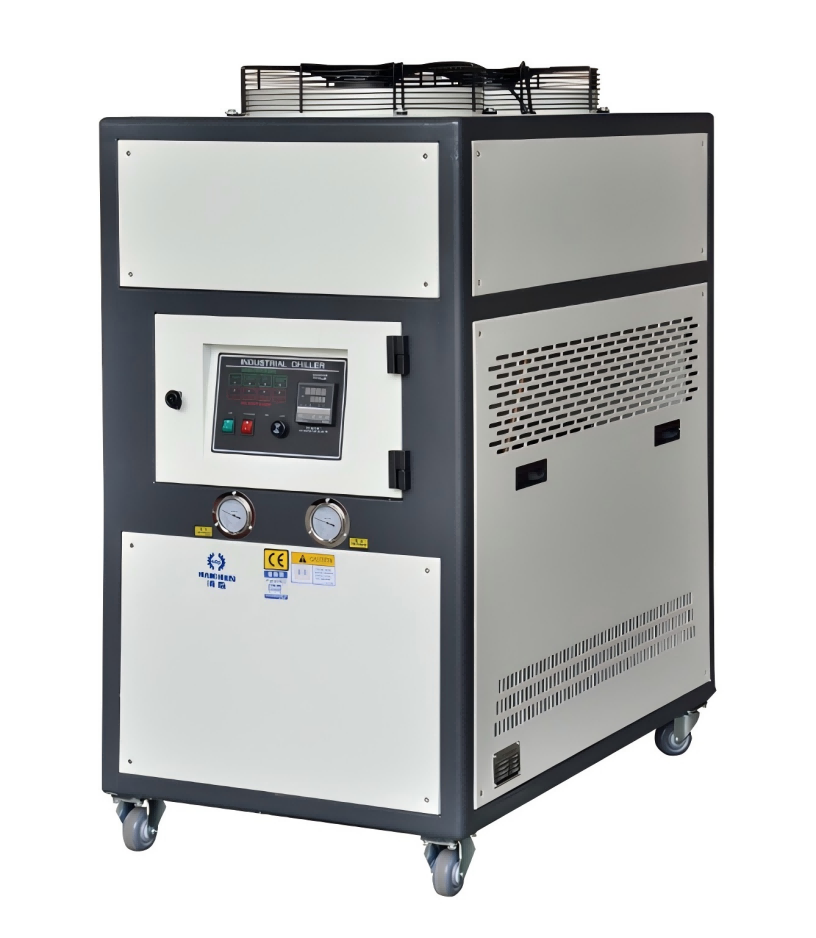
Mold Cooling System
A water chiller continuously circulates cold water through the mold core to rapidly cool the hot plastic, shortening the cycle time and improving productivity. Proper cooling design also reduces warpage and increases yield.
Tension Spring Manufacturing
The gripping force of a clothespin comes from a metal spring. This section of the line processes galvanized steel wire into the required spring shape, typically a torsion spring or U-clip.
Wire Pay‑off and Straightening
A wire pay‑off stand holds heavy coils of high‑tensile steel wire and feeds them smoothly without tangling. A straightening device ensures the wire is flat for accurate subsequent coiling.
CNC Automatic Coiling
A CNC spring coiling machine automatically straightens, loops, coils, and cuts the wire into uniform torsion springs or custom‑shaped clips. The machine allows quick changeovers to accommodate different size requirements.
High‑Speed Automated Assembly for Plastic Clothespin Production Line
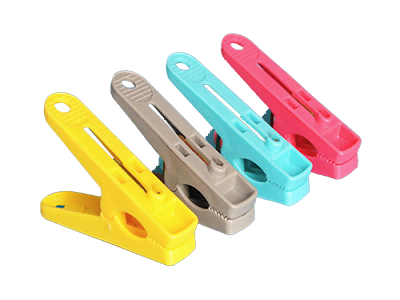
Manual assembly is cost-prohibitive, so we use specialized automation to merge plastic parts and metal springs into finished products. This stage directly determines the overall line output.
Vibratory Bowl Feeding and Orientation
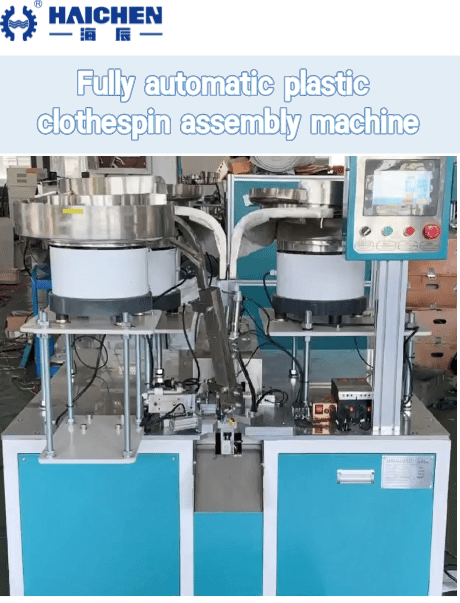
Three separate vibratory bowls sort and orient the parts. Two bowls align the left and right plastic halves in the correct direction, while the third bowl aligns the metal springs, ensuring a continuous and accurate supply.
Automatic Assembly and Pressing
Mechanical arms of the automatic assembly machine pick up the oriented plastic prongs, insert the spring into the center grooves, and lock the pieces together. High‑efficiency systems run at 60 to 100 pieces per minute – far faster than manual work.
In‑line Inspection and Rejection
Optoelectronic sensors detect any misaligned or incomplete clothespins before they exit the line and automatically reject defective units. Real‑time feedback also helps reduce scrap.
End‑of‑Line Packaging
Finished clothespins are automatically counted, bundled, and packaged for shipping. Packaging also emphasizes efficiency and accuracy.
Counting and Batching
A counting system precisely counts the exact number of pegs required per retail pack (e.g., 12, 24, or 48 pieces) and batches them, eliminating manual counting errors.
Flow Wrap or Bagging Machine
The batched clothespins are sealed into printed plastic bags or stapled onto hanging cardboard display sheets. The machine seals and labels automatically, speeding up delivery.
Frequently Asked Questions About Plastic Clothespin Production Lines
Q: What core equipment is needed for a complete plastic clothespin production line?
A: A full plastic clothespin production line includes: a dehumidifying dryer, injection molding machine, multi‑cavity mold, water chiller, wire pay‑off stand, CNC spring coiler, vibratory bowls, automatic assembly machine, in‑line inspection sensors, and counting/packaging units. Haichen can provide a one‑stop turnkey solution – from equipment selection to commissioning and training.
Q: How does the Haichen HCK‑110 perform in actual clothespin production?
A: The HCK‑110 is our servo‑energy‑saving model designed for small thin‑walled parts. For clothespin applications, with a 32‑cavity dedicated mold, each part weighs only 5.5g, uses PP/PS material, and achieves a 15‑second cycle time. The machine footprint is just 9×2.8×1 meters, saving factory floor space. It is CE certified, energy‑efficient, and highly stable – ideal for high‑volume continuous production.
Q: Can you design multi‑cavity molds and provide after‑sales support?
A: Yes. Besides injection machines, we also design and manufacture multi‑cavity molds (e.g., 24, 32, or 48 cavities) according to your product requirements. We offer a one‑year warranty, rapid response, and remote assistance. For a detailed quote or technical proposal, please submit your inquiry via our contact page – we reply within 24 hours.
Q: What is the delivery lead time and installation period for a full line?
A: The standard lead time for a complete line (including injection machine, auxiliary equipment, assembly, and packing) is typically 30‑45 days. We can send our engineers on‑site for installation, commissioning, and operator training to get your line running quickly. For more details, visit our injection molding machine page or about us.