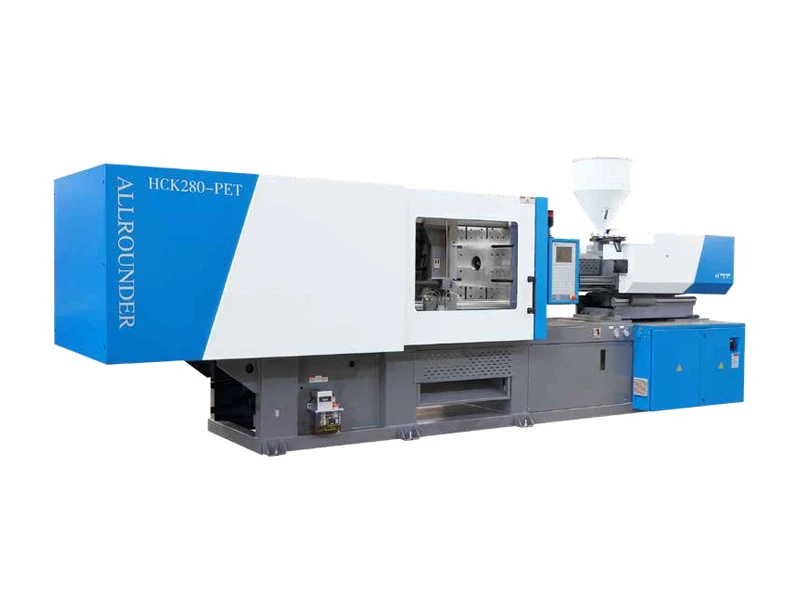
Problems and solutions in the production of plastic buckets: common problems in plastic bucket production — including bottom weld line leakage, oval mouth, insufficient filling of deep cavities, and demolding suction — can be systematically solved by high injection rate, multi-stage holding pressure, localized cooling, and air blow assistance, whether you are making small buckets plastic or large plastic bucket.
Four main problems in plastic bucket production and their corresponding solutions are summarized below:
| Problem | Solution |
|---|---|
| Bottom weld line leakage | High injection rate |
| Oval mouth | Zone-specific holding pressure |
| Insufficient deep-cavity filling | Localized cooling |
| Demolding suction | Air blow + robotic pick |
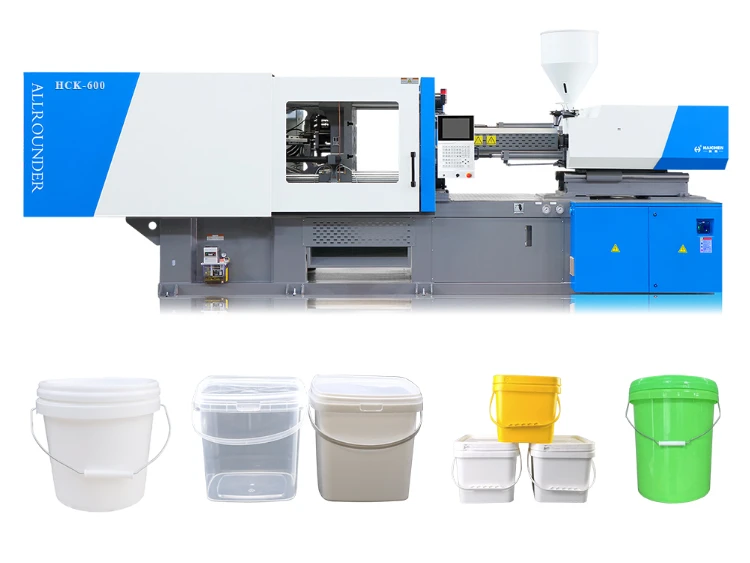
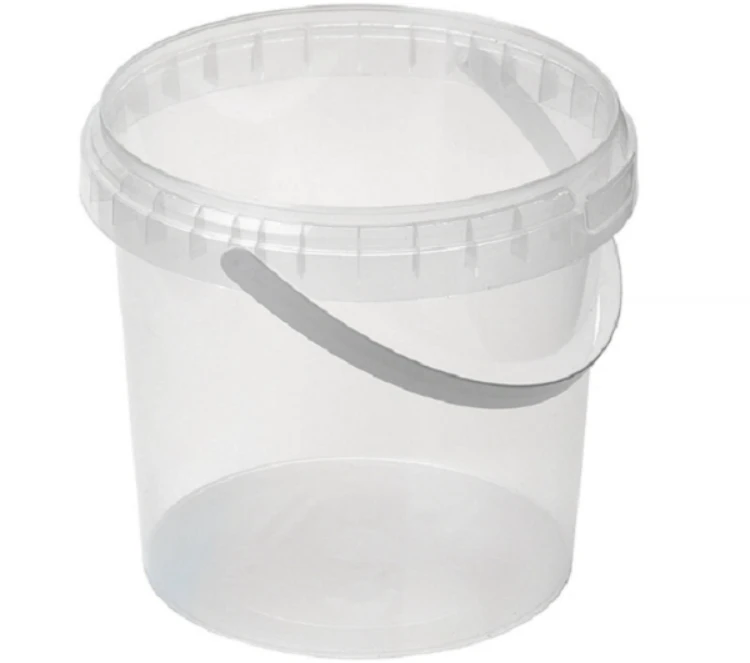
Plastic buckets are deep-cavity, thin-wall containers. Wall thickness is usually only 0.7-1.5mm, while height exceeds 100mm. From 1 gallon plastic buckets to 2 gallon plastic buckets and 5 gallon plastic buckets, the structure imposes special requirements on injection molding. A plastic bucket with lid or plastic bucket with handle demands even higher precision.
Plastic buckets must withstand hydrostatic pressure and drop impact. If the bottom weld line is weak, slow leakage will occur. This is critical for large plastic bucket used for industrial contents, or plastic drink buckets for beverages. Excessive ovality of the bucket mouth prevents the lid from sealing properly, especially for plastic buckets with lids.
Different plastic buckets 5 gallon and 2 gallon plastic buckets with lids need different solutions. Small buckets plastic like mini plastic buckets require high-speed filling. Square plastic buckets and colored buckets plastic need precise holding pressure and texture control. Choosing the right plastic bucket making machine and optimizing parameters greatly improves yield and efficiency.
Common Problems in Plastic Bucket Production
- Bottom weld line leakage
- Oval mouth and stress whitening at handle area
- Insufficient filling of deep thin-wall cavity
- Sticking to the stationary mold half during demolding
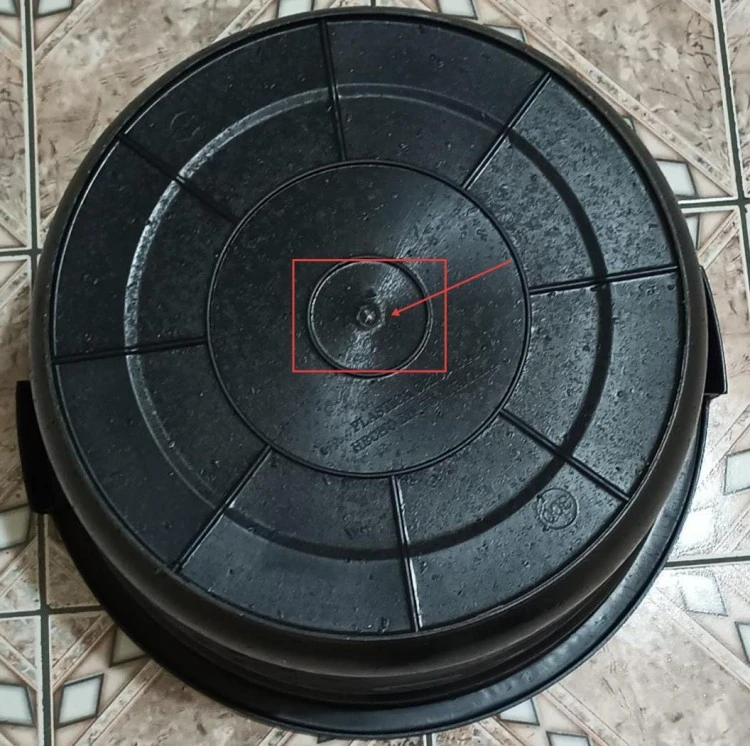
Bottom weld line leakage
The gate is usually located at the center of the plastic bucket bottom.
Melt flows radially outward, then moves up the sidewall.
At the bottom circumference, two melt streams meet to form a circular weld line.
If the weld line is weak, water pressure causes micro-hole leakage.
In drop tests, most failures occur at the weld line — whether it is a 5 gallon plastic bucket or a 10 gallon plastic pail.
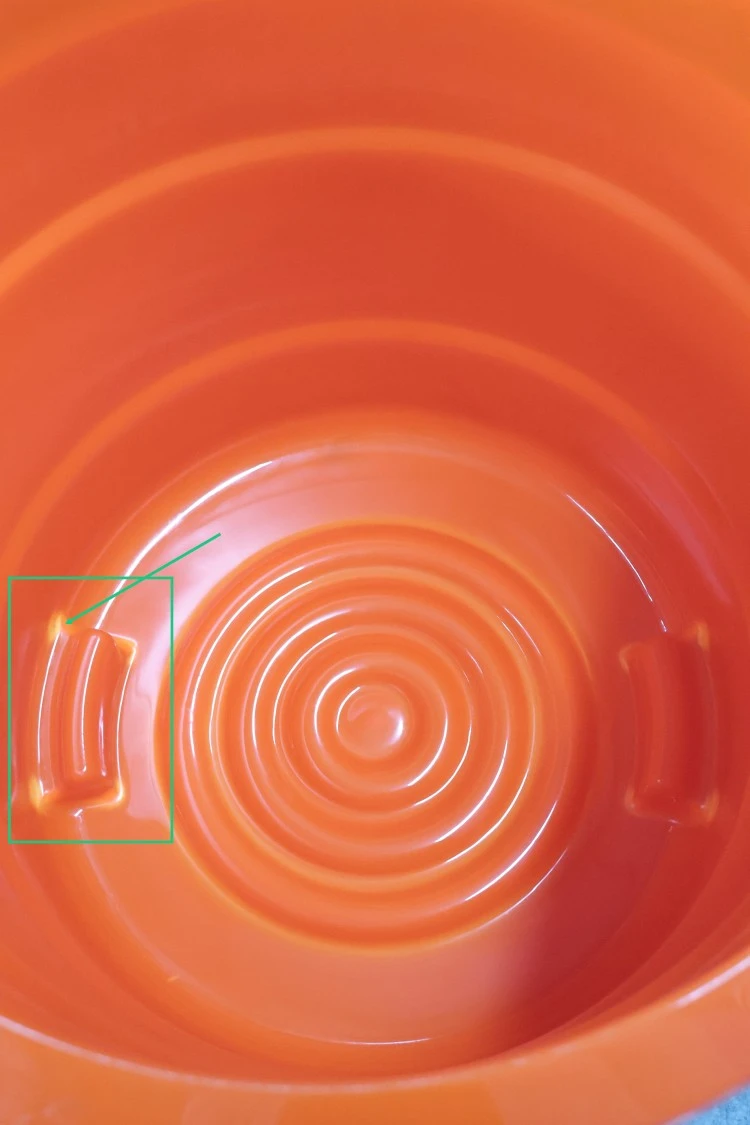
Oval mouth and stress whitening at handle area
The mouth is the last area to fill and pack.
Insufficient holding pressure causes the mouth to become oval after cooling, preventing proper lid sealing — a common defect in plastic buckets with handles and plastic pails with lids.
The handle lug is a thick-wall transition zone, creating tensile stress during cooling and leading to surface stress whitening, often seen in plastic large buckets with heavy-duty handles.
Insufficient filling of deep thin-wall cavity
A plastic bucket of 1 gallon has a 0.7mm wall thickness and 115mm height.
For 2 gallon plastic buckets and big plastic bucket, the melt travels an even longer distance from bottom to top, cooling rapidly.
If the injection rate is below 200g/s, short shots or cold slugs appear at the mouth edge.
This is especially challenging for square plastic buckets where flow paths are less uniform.
Sticking to the stationary mold half during demolding
When the mold opens, a near-vacuum negative pressure forms between the inner plastic bucket surface and the core.
The product sticks to the stationary mold half instead of the moving half.
Ejector pins alone cannot solve this; air blow assistance is necessary.
This issue is common in plastic buckets 5 gallon and plastic water pails due to their deep cavity geometry.
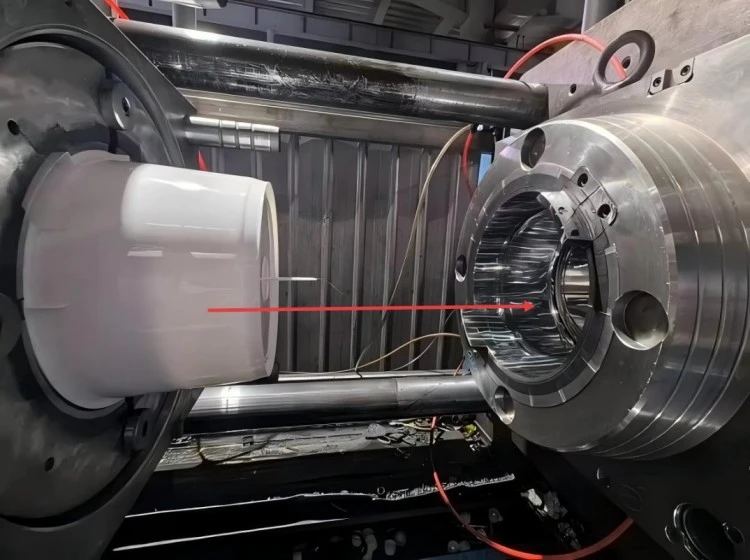
Solutions for Plastic Bucket Production Problems
- High injection rate + profile injection
- Zone-specific holding pressure (bottom vs. mouth)
- Localized cooling for ribs and lugs
- Air blow assistance + robotic pick-and-place
High injection rate + profile injection
For thin-wall plastic buckets (e.g., 1 gallon plastic buckets or mini plastic buckets), injection rate must reach 250-300g/s.
This ensures the cavity is filled before the melt freezes.
Use profile injection: low speed at gate → high speed for sidewall → reduced speed for sealing.
A modern plastic bucket injection moulding machine can precisely control these stages.
Zone-specific holding pressure
The bottom weld line needs high holding pressure (80-100 bar).
Too much pressure at the mouth causes flash and ovality — a frequent problem in plastic buckets with lids where sealing is critical.
Use two-stage holding: first stage high pressure for 1-2 seconds, second stage at 60% pressure until cooling ends.
This applies equally to plastic pails and plastic beer cask production.
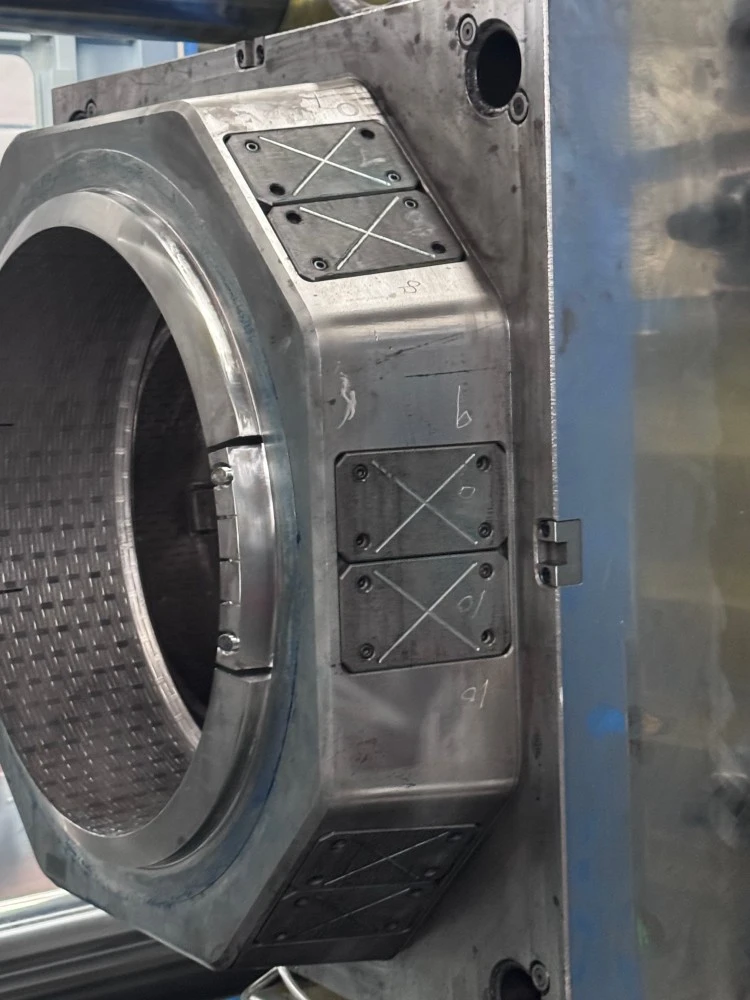
Localized cooling for ribs and lugs
Thick areas like handle lugs cool slowly, causing stress whitening — often seen in plastic buckets with handle or large plastic bucket designs.
Design independent cooling channels in the mold.
Reduce local cooling time from 8 seconds to 5 seconds.
For colored buckets plastic, uniform cooling also prevents color variation.
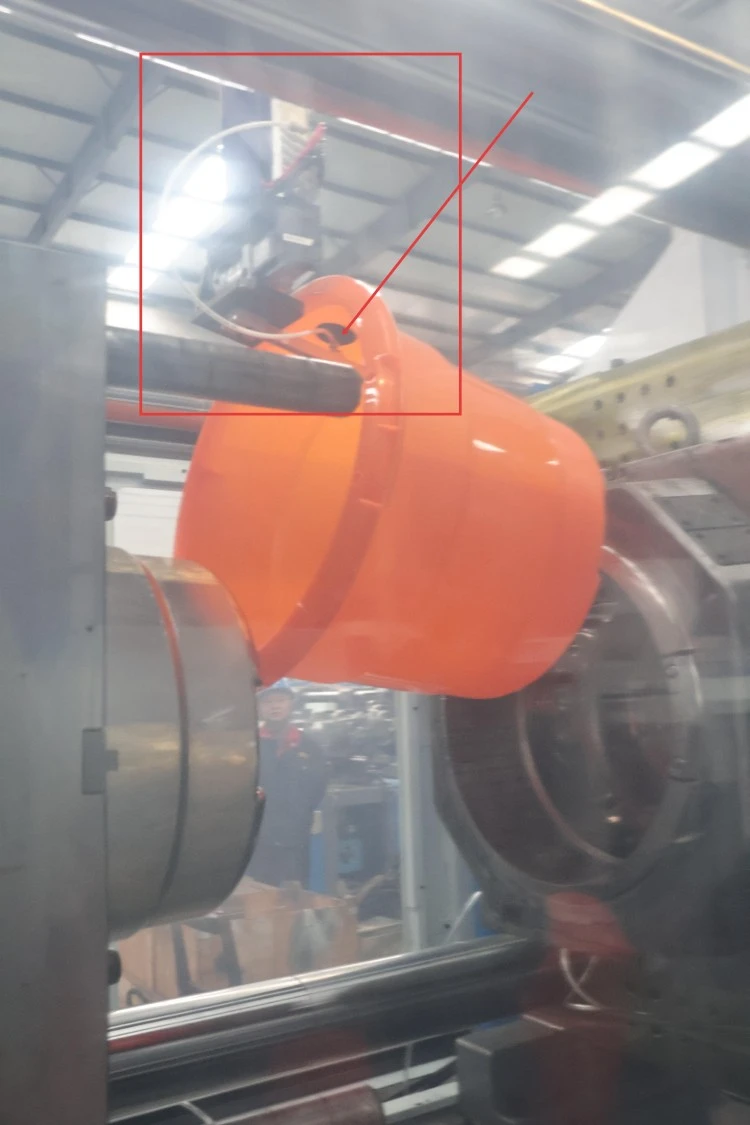
Air blow assistance + robotic pick-and-place
Immediately after mold opening, inject 0.4-0.6MPa compressed air through the core’s air blow valve.
Maintain for 0.5-1 second to break the vacuum.
For big plastic bucket and plastic large buckets, use a robot to grip the mouth edge for removal, avoiding manual tapping.
This is standard for plastic bucket manufacturing machine lines aiming for full automation.
Haichen Machinery Practical Cases for Plastic Bucket Production
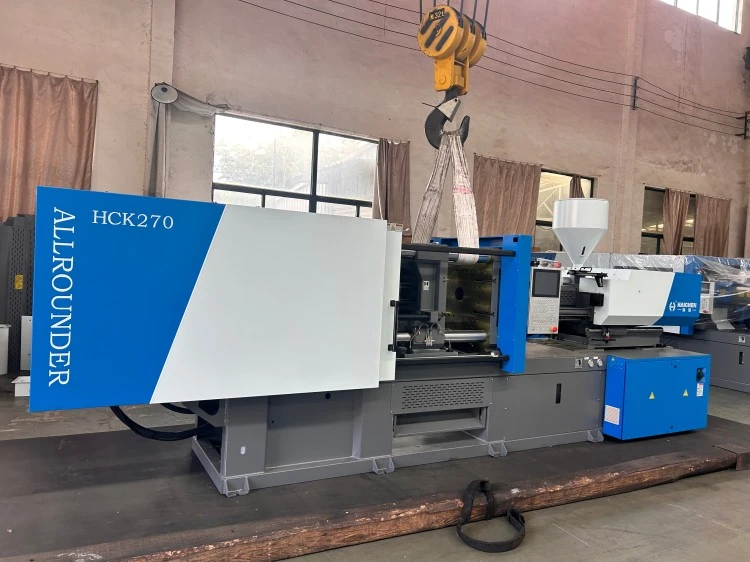
- 1L thin-wall water bucket – 270Ton high-speed plastic bucket making machine
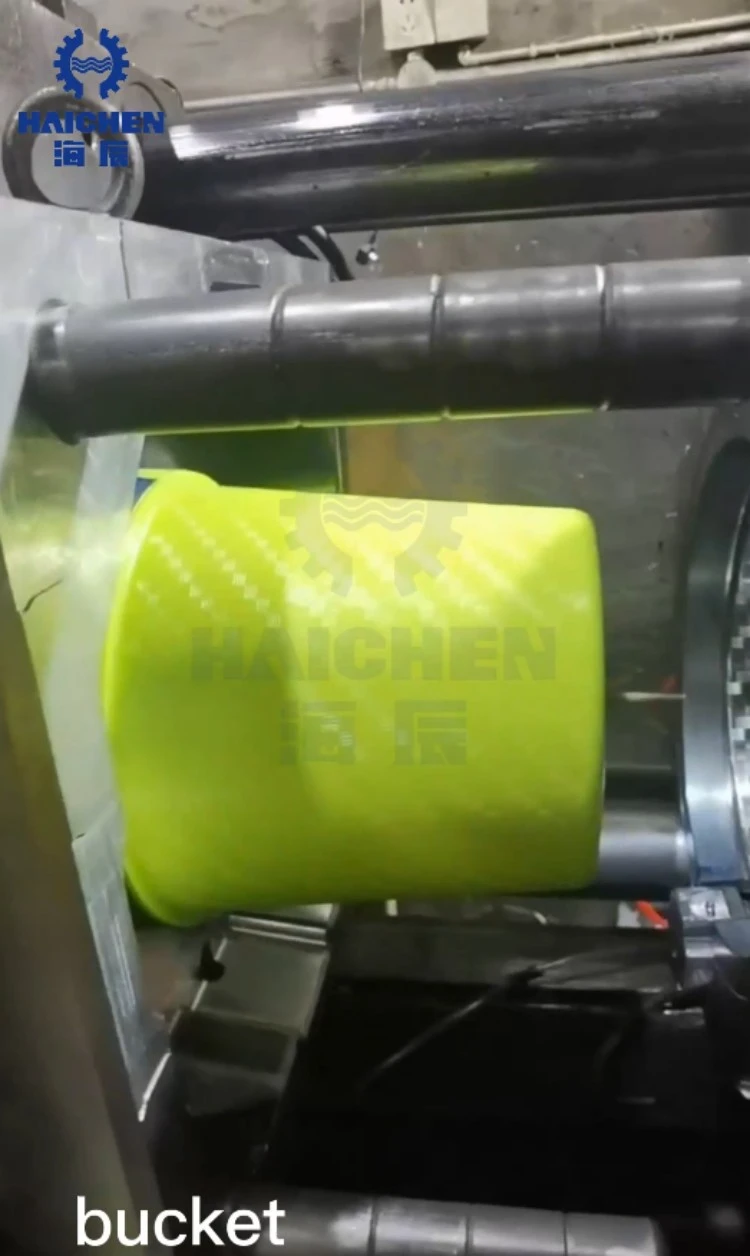
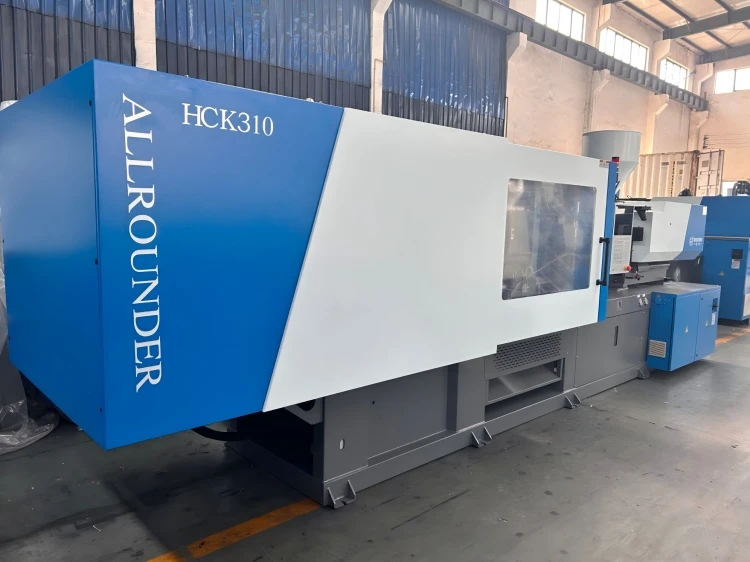
- 12L rattan weave pattern bucket – HCK310 servo plastic bucket injection moulding machine
1L thin-wall water bucket – 270Ton high-speed machine
This machine is an ideal plastic bucket manufacturing machine for high-volume production of small buckets plastic and mini plastic buckets.
| Parameter | Value |
|---|---|
| Product specs | 1L, wall 0.7mm, weight 40g (similar to 1 gallon plastic buckets) |
| Mold cavities | 2 cavities (one shot two pieces) |
| Cycle time | 6-7 seconds |
| Injection rate | 250-300 g/s |
| Motor power | ≥30 KW |
| Clamping force | 270 Ton |
| Result | Daily output ~25,000 pcs, scrap rate <1.5% |
| Typical applications | plastic buckets 5 gallon in small size, plastic drink buckets, plastic water pails |
| INJECTION UNIT | HCK270 | |||
| ITEM | UNIT | A | B | C |
| INJECTION UNIT | ||||
| Screw diameter | mm | 55 | 60 | 65 |
| Screw L/D ratio | L/D | 24.0 | 22.0 | 20.3 |
| Shot volume(theoretical) | cm3 | 713 | 848 | 995 |
| Injiection weight(ps) | g | 649 | 772 | 906 |
| oz | 22.9 | 27.2 | 32.0 | |
| Injection pressure | Bar | 2114 | 1777 | 1514 |
| Injection rate | cm3/s | 243 | 289 | 339 |
| Plasticizing capacity | g/s | 36 | 46 | 56 |
| Screw speed (Max.) | r/min | 220 | ||
| CLAMPING UNIT | ||||
| Clamping force | Kn | 2700 | ||
| Space between tie bars(W×H) | mm | 620×570 | ||
| Platens size | mm | 885×835 | ||
| Opening stroke | mm | 560 | ||
| Min.Mold height | mm | 270 | ||
| Max.Mold height | mm | 620 | ||
| Distance between platens(daylight) | mm | 1180 | ||
| Ejector stroke | mm | 150 | ||
| Ejector force | Kn | 80 | ||
| OTHERS | ||||
| Systerm pressure | Bar | 175 | ||
| Pump motor | Kw | 34 | ||
| Heating power | Kw | 23.4 | ||
| Oiltank cubage | L | 300 | ||
| Machine dimension(L×W×H) | m | 6.0×1.5×2.0 | ||
| Machine weight | t | 9.0 | ||
12L rattan weave pattern bucket – HCK310 servo machine
This servo-driven plastic bucket injection moulding machine excels at making large plastic bucket, plastic buckets with handles, colored buckets plastic and square plastic buckets with textured surfaces.
| Parameter | Value |
|---|---|
| Product dimensions | Top dia. 280mm, Bottom dia. 203mm, Height 230mm (similar to 2 gallon plastic buckets) |
| Mold material | P20, mold size 500×500×530mm |
| Demolding method | Air blow + robotic pick (non-auto ejection) |
| Mold lifetime | 200,000 cycles |
| Selected machine | HCK310 servo plastic bucket moulding machine |
| Result | Clear texture, no tearing, 28% energy reduction per part |
| Also suitable for | plastic pails with lids, plastic cask, plastic beer cask, 10 gallon plastic pail, 5 gallon plastic pail |
Regarding plastic bucket manufacturing machine price, Haichen offers competitive pricing with excellent ROI — contact us for a quote based on your plastic buckets specifications, whether you need plastic buckets 5 gallon, 2 gallon plastic buckets with lids, or plastic large buckets for industrial use.
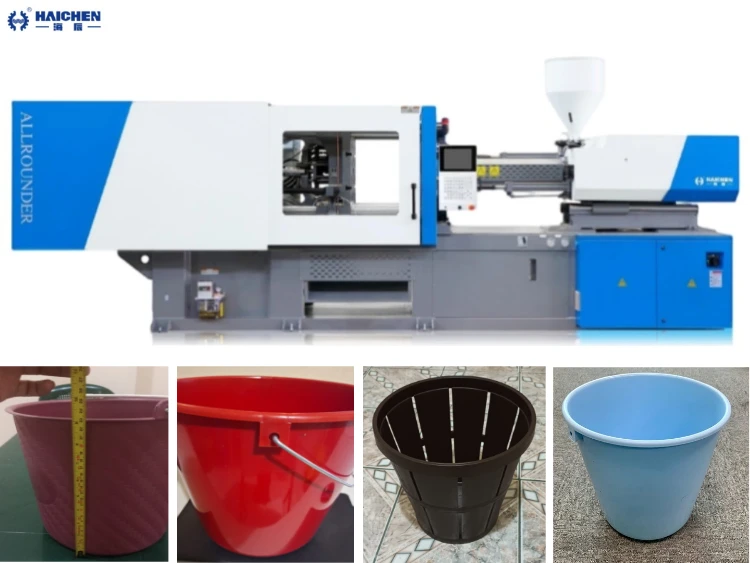
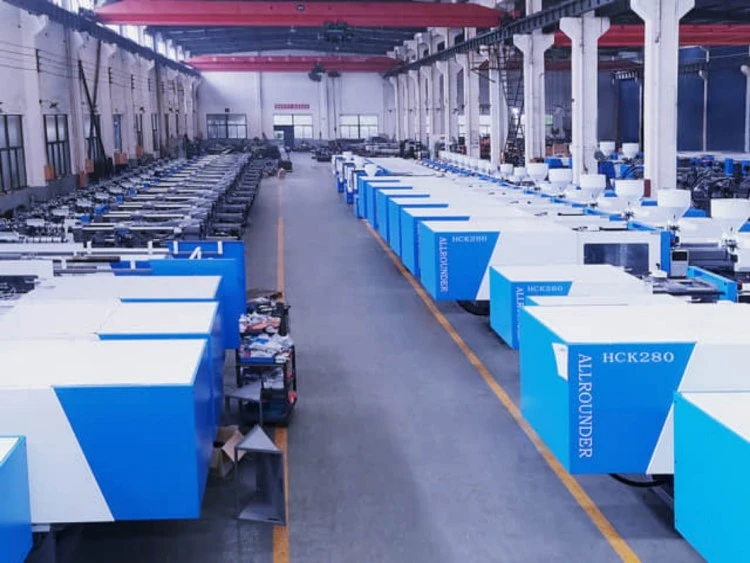
Haichen Machinery‘s 270Ton high-speed machine and HCK310 servo machine are proven plastic bucket making machine solutions.
Whether you need small buckets plastic, mini plastic buckets, 1 gallon plastic buckets, 2 gallon plastic buckets, large plastic bucket, big plastic bucket, plastic drink buckets, plastic pails with lids, 10 gallon plastic pail, or 5 gallon plastic pail — choosing the right plastic bucket manufacturing machine and optimizing parameters delivers low scrap rate, short cycle time, and automated production.
For detailed plastic bucket manufacturing machine price and technical specifications of our plastic bucket injection moulding machine or plastic bucket moulding machine, please contact Haichen Machinery.
FAQ (Additional Practical Questions)
Q1: Which material is better for plastic buckets, PP or PE?
A: PP is stronger and more heat-resistant, good for industrial use. PE is softer and cheaper, often used for food-grade buckets. Choose based on your product needs.
Q2: How often should I clean the injection mold?
A: Clean the mold after every shift with a soft brush and mold release agent. Regular cleaning prevents buildup and keeps the surface smooth.
Q3: Can the same machine produce both light and dark colored buckets?
A: Yes, but you need to purge the barrel thoroughly when changing colors. Use purging compound to avoid color mixing in the next run.
Q4: What is the simplest way to check bucket quality during production?
A: Check the mouth roundness, wall thickness, and weld line appearance every hour. Weigh the parts and measure the diameter with a caliper to catch problems early.