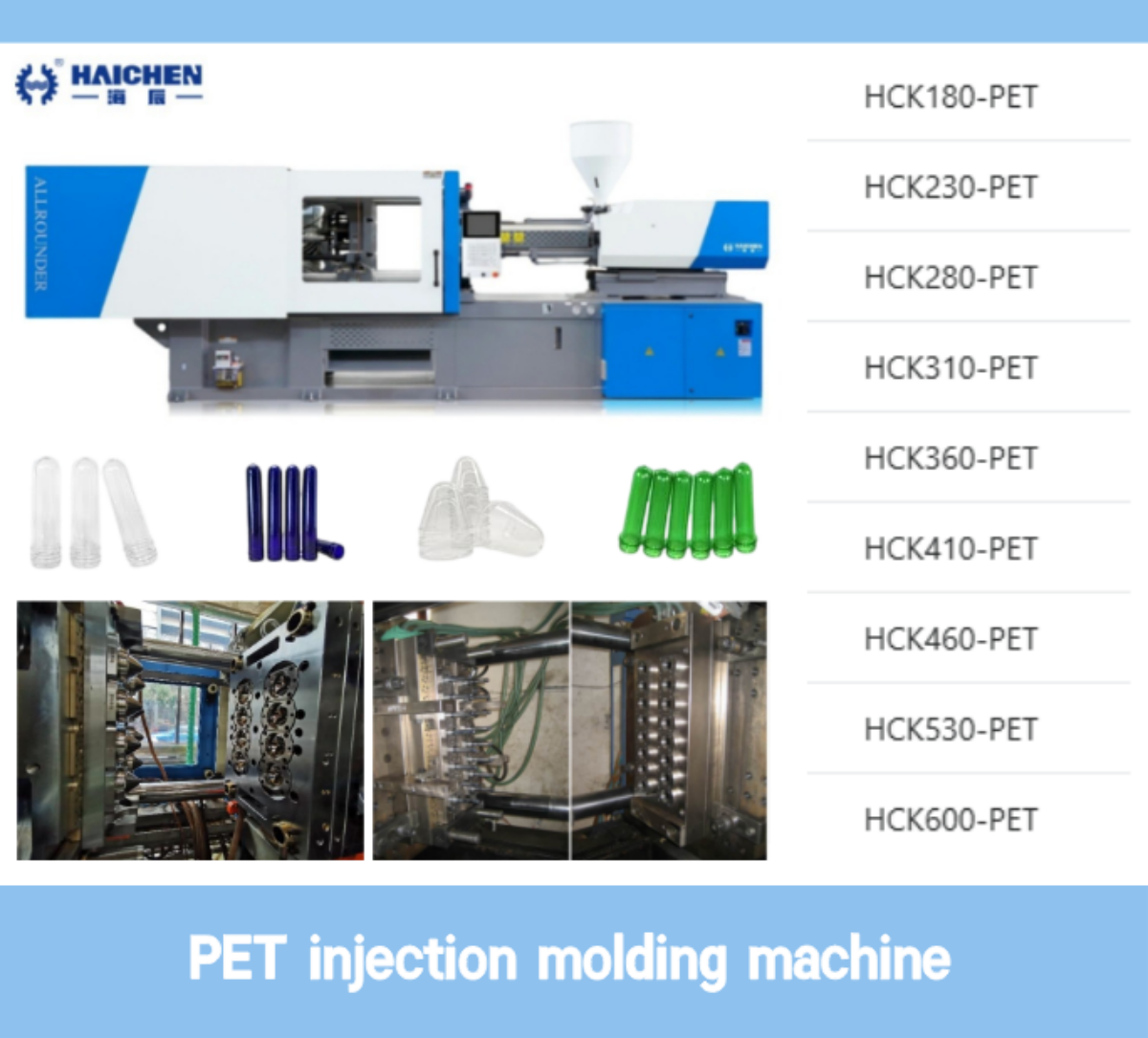
Problem and Solution about PET Injection Molding:The most common problems in pet injection molding—yellowing, opacity, silver streaks, uneven wall thickness, and long cycle times—are mainly caused by insufficient drying, improper temperature control, poor venting, or low cooling efficiency.Each can be solved by optimizing drying, precise temperature management, mold design improvements, and selecting the right pet preform injection molding machine.
Producing high‑quality pet preforms requires strict control over every stage of the injection process. Pet preforms are the starting point for blow‑molded bottles, and any defect directly affects bottle strength and transparency. Therefore, understanding the root causes of common problems is essential.
As an injection molding machine manufacturer, Haichen Machinery not only supplies equipment but also helps customers analyze problems and provides proven solutions.
This article analyzes common defects of pet preforms and their countermeasures from four aspects: material drying, process parameters, mold design, and machine selection. It also includes real production data from Haichen’s customer cases. Finally, we summarize a complete optimization strategy from drying to take‑out.
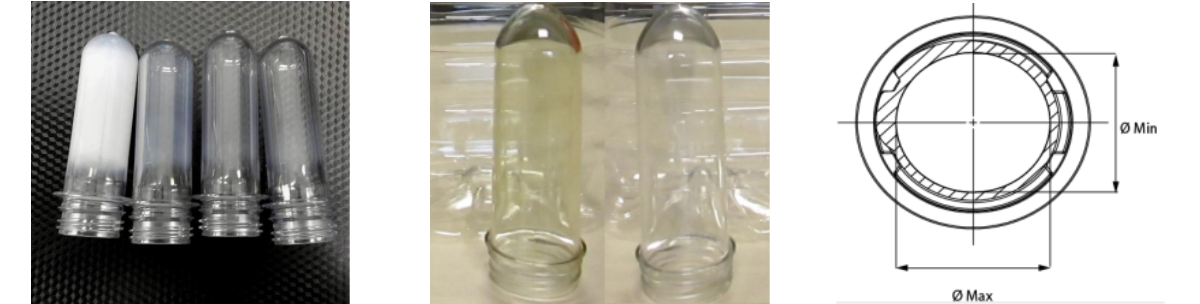
Common Defects and Solutions for PET Preform Injection Molding
- Yellowing of PET Preforms – Causes and Solutions
- Opacity and Bottom Whitening of PET Preforms
- Silver Streaks and Bubbles in PET Preforms
- Uneven Wall Thickness and Eccentricity of PET Preforms
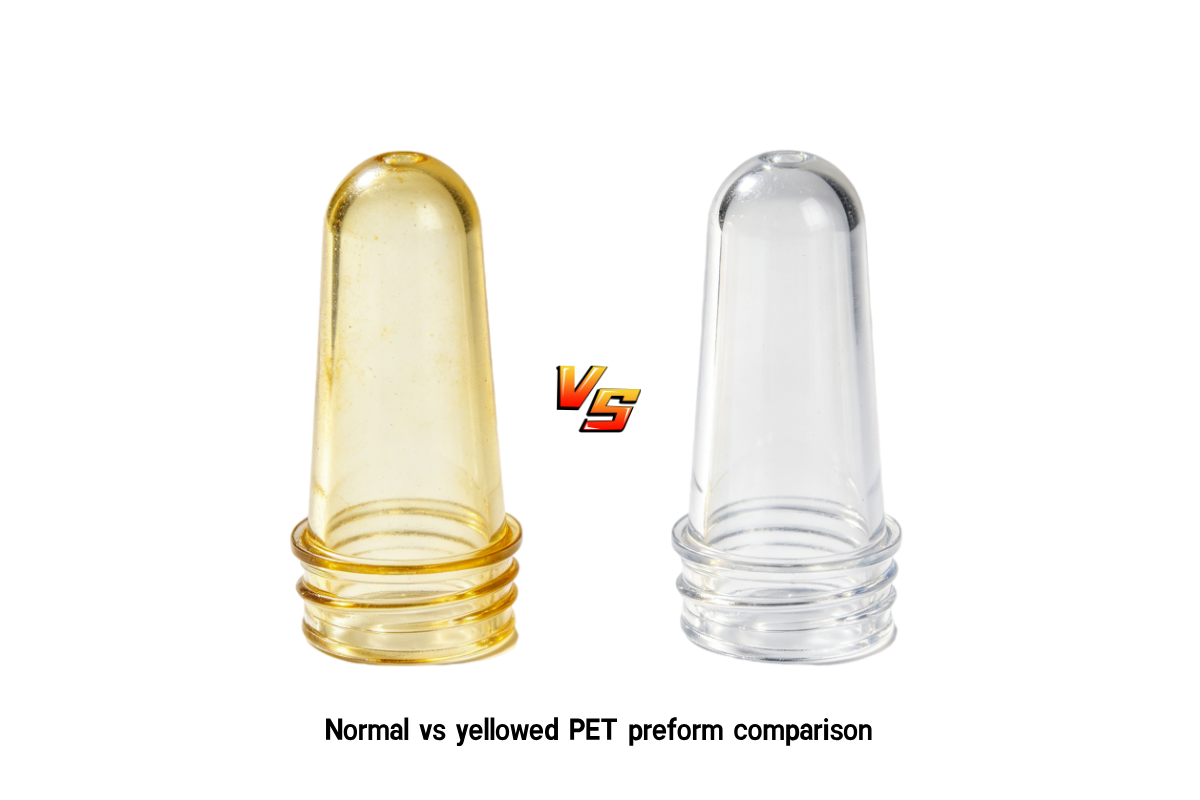
Yellowing of PET Preforms – Causes and Solutions
Causes: Yellowing in pet preforms is a typical sign of thermal degradation. Main causes include drying temperature too high or drying time too long (>6 hours), barrel or nozzle temperature exceeding 295°C, or melt residence time in the screw too long.
Solutions:
- Keep drying temperature at 160–170°C and drying time strictly within 4–6 hours for all pet preforms.
- Set barrel temperature at 275–285°C, with the last zone and nozzle below 290°C.
- Optimize cycle time to avoid long idle periods. If the injection molding machine stops for more than 10 minutes, purge the barrel.
Opacity and Bottom Whitening of PET Preforms
Causes: Excessive crystallization makes pet preforms milky or opaque, often seen on the body or gate area. The reason is too slow cooling, giving molecular chains enough time to arrange into crystals. High mold temperature or low injection speed promotes this issue.
Solutions:
- Lower mold temperature (use a chiller, water temperature 8–15°C).
- Increase injection speed to reduce melt residence time in hot zones.
- Check gate area cooling; add independent cooling circuits if necessary.
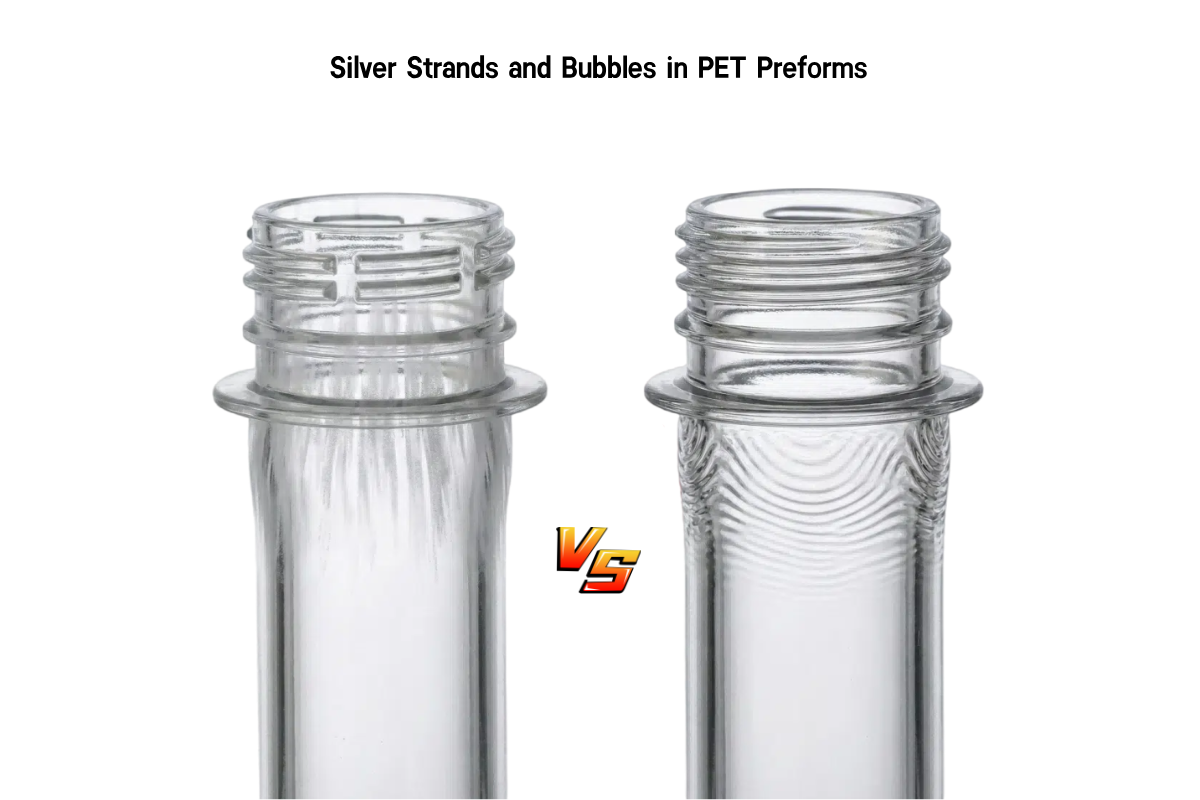
Silver Streaks and Bubbles in PET Preforms
Causes: PET is extremely hygroscopic. If moisture content after drying exceeds 0.02%, water vaporizes at high temperature and forms silver streaks or bubbles inside or on pet preforms. This is the most common problem in pet injection molding.
Solutions:
- Must use a dehumidifying dryer with temperature 160–170°C, time 4–6 hours, dew point ≤ -30°C.
- Verify moisture content below 0.02% (or below 0.004% for high‑end products) before processing.
- Slightly increase back pressure to help remove residual water vapor from the melt.
Uneven Wall Thickness and Eccentricity of PET Preforms
Causes: Non‑uniform wall thickness in pet preforms leads to bottle deformation or poor neck sealing. Two main reasons: poor mold concentricity, or unstable clamping causing eccentric mold closing.
Solutions:
- Regularly inspect mold concentricity and correct core position with a dial gauge.
- Check wear on tie bars and platen holes of the injection molding machine; replace or repair as needed.
- Select a dedicated PET machine with a more stable clamping structure. Haichen’s pet preform injection molding machine series performs excellently in this regard.
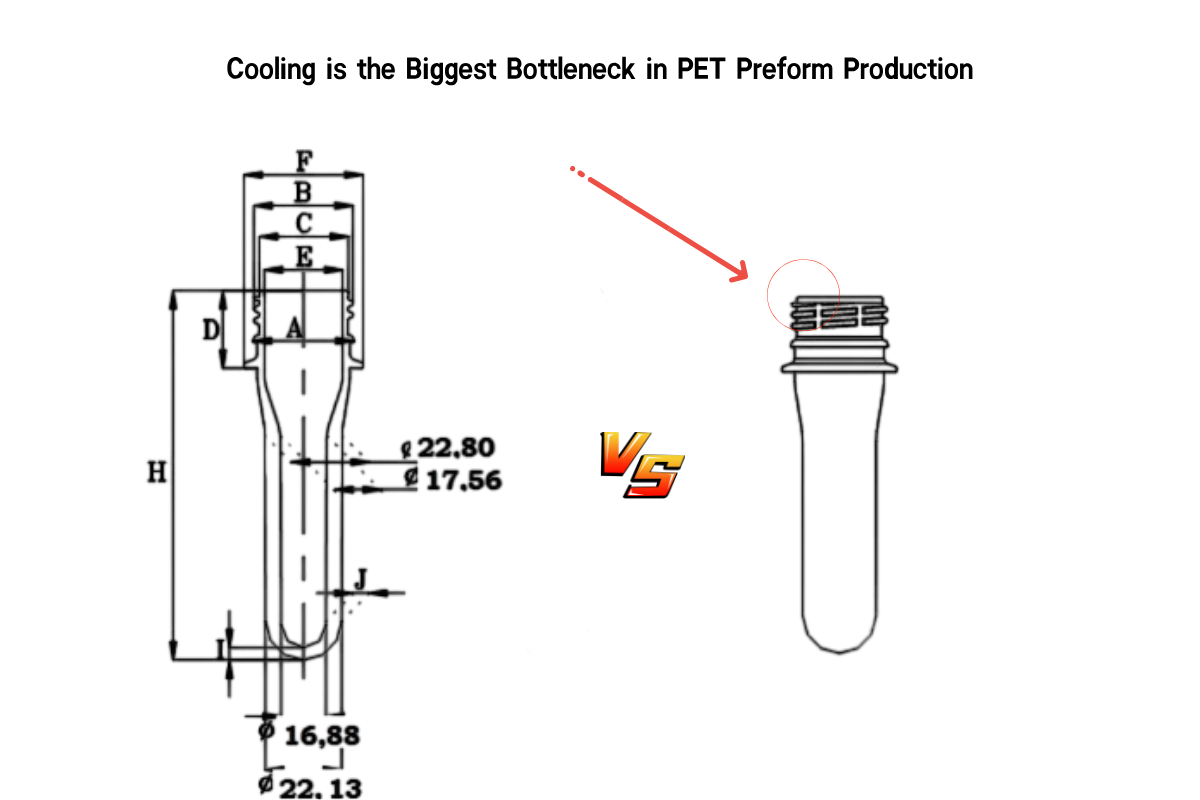
Shortening PET Preform Cycle Time Without Sacrificing Quality
- Cooling Time – The Biggest Bottleneck in PET Preform Production
- Standard vs. Fast PET Injection Molding Machines
- Haichen Production Cases for PET Preforms
Cooling Time – The Biggest Bottleneck in PET Preform Production
In pet injection molding, cooling time usually accounts for 70%–80% of the total cycle. Many factories shorten cooling to increase output, resulting in whitish pet preforms or deformation upon ejection. The correct approach is not to blindly reduce cooling, but to overlap cooling with other actions.
Overlapping actions: In advanced injection molding machines, plasticization can run in parallel with cooling and mold opening/closing. For example, while the mold is cooling, the screw begins preparing the next shot of pet preforms. Thus the total cycle equals the longest individual action time, not the sum of all action times. For more technical details, see our PET injection molding blog article.
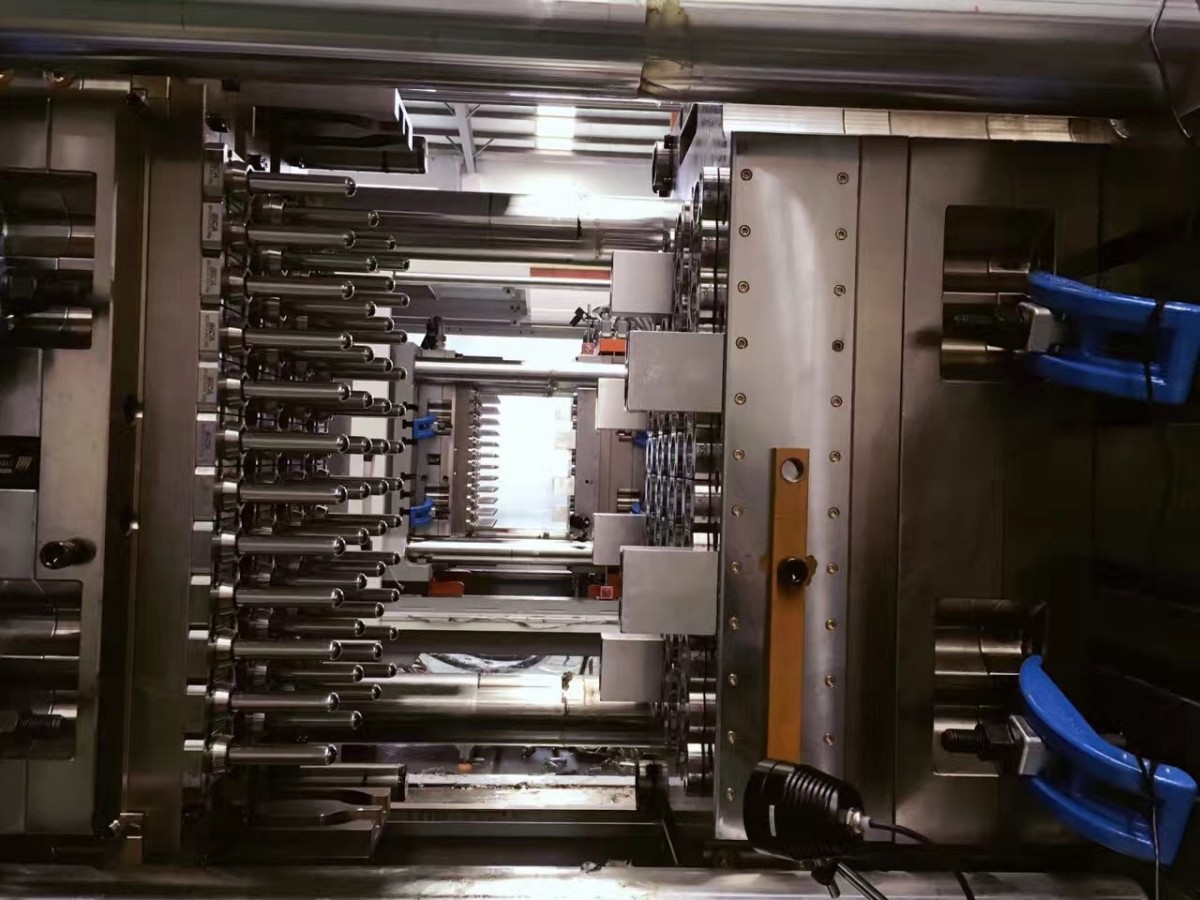
Standard vs. Fast PET Injection Molding Machines
| Feature | Standard PET Machine | Fast PET Machine |
|---|---|---|
| Screw L/D ratio | 22:1 | 24:1 or higher |
| Hydraulic response | Standard | Optimized oil circuit, faster response |
| Clamping reinforcement | Basic | Specially strengthened platens and tie bars |
| Electronic control | Standard PLC | High‑speed signal response |
| Typical cycle for 32‑cavity 12g pet preform | 20–25 sec | 14–16 sec |
The advantage of a fast machine is that it overlaps cooling with plasticization while maintaining pet preform quality (no yellowing, no whitening), and its stronger clamping ensures better concentricity.
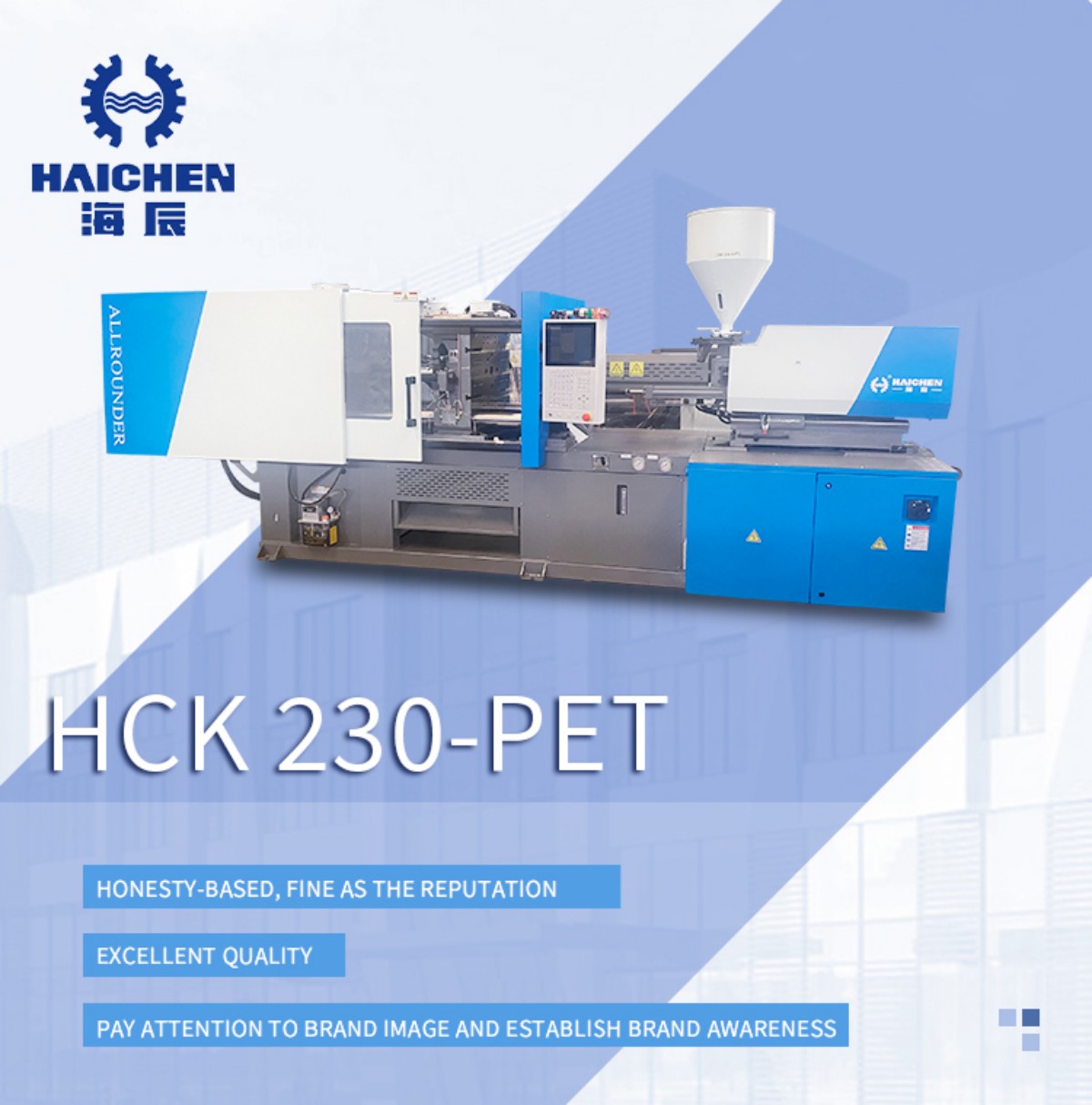
Haichen Production Cases for PET Preforms
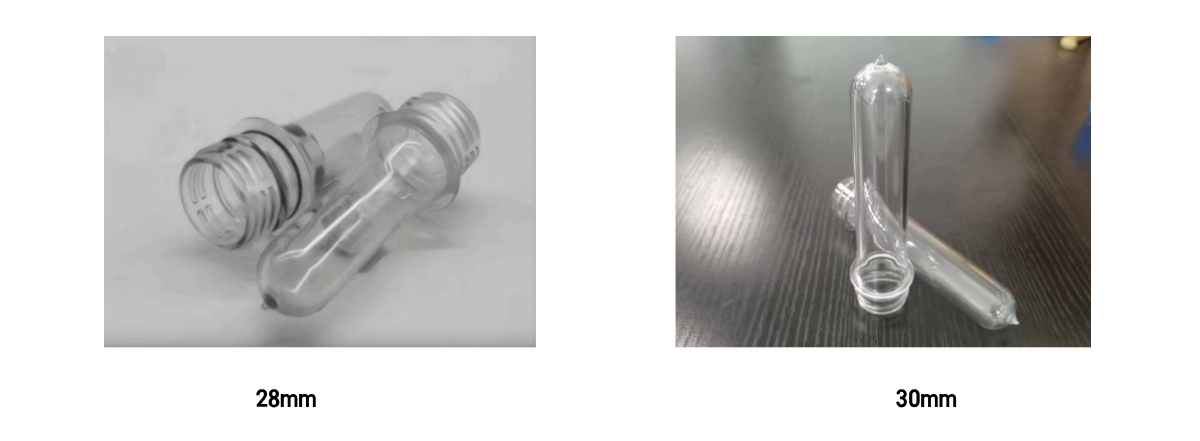
The table below shows two pet preform solutions provided by Haichen Machinery, both successfully solving quality and cycle time issues:
| Parameter | Case 1 (Fast Machine) | Case 2 (Standard Machine) |
|---|---|---|
| Neck size | 28 mm | 30 mm |
| Preform weight | 12 g | 15 g |
| Material | Virgin PET | Virgin PET |
| Cavities | 32 cavities | 24 cavities |
| Haichen model | HCK 250 (fast injection type) | HCK 250 (standard type) |
| Achieved cycle time | 14 seconds | 20 seconds |
| Quality result | Clear, no yellowing, wall deviation <0.08mm | Clear, no bubbles, yield >99% |
If you have similar production needs, please feel free to contact Haichen Machinery for a customized solution .
Auxiliary Equipment and Mold Selection for PET Preform Production
- Wrong Dryer Choice Causes Batch Scrap of PET Preforms
- Undersized Chiller Fails to Cool PET Preforms Properly
- Needle Valve vs. Self‑Locking Hot Runners – How to Choose
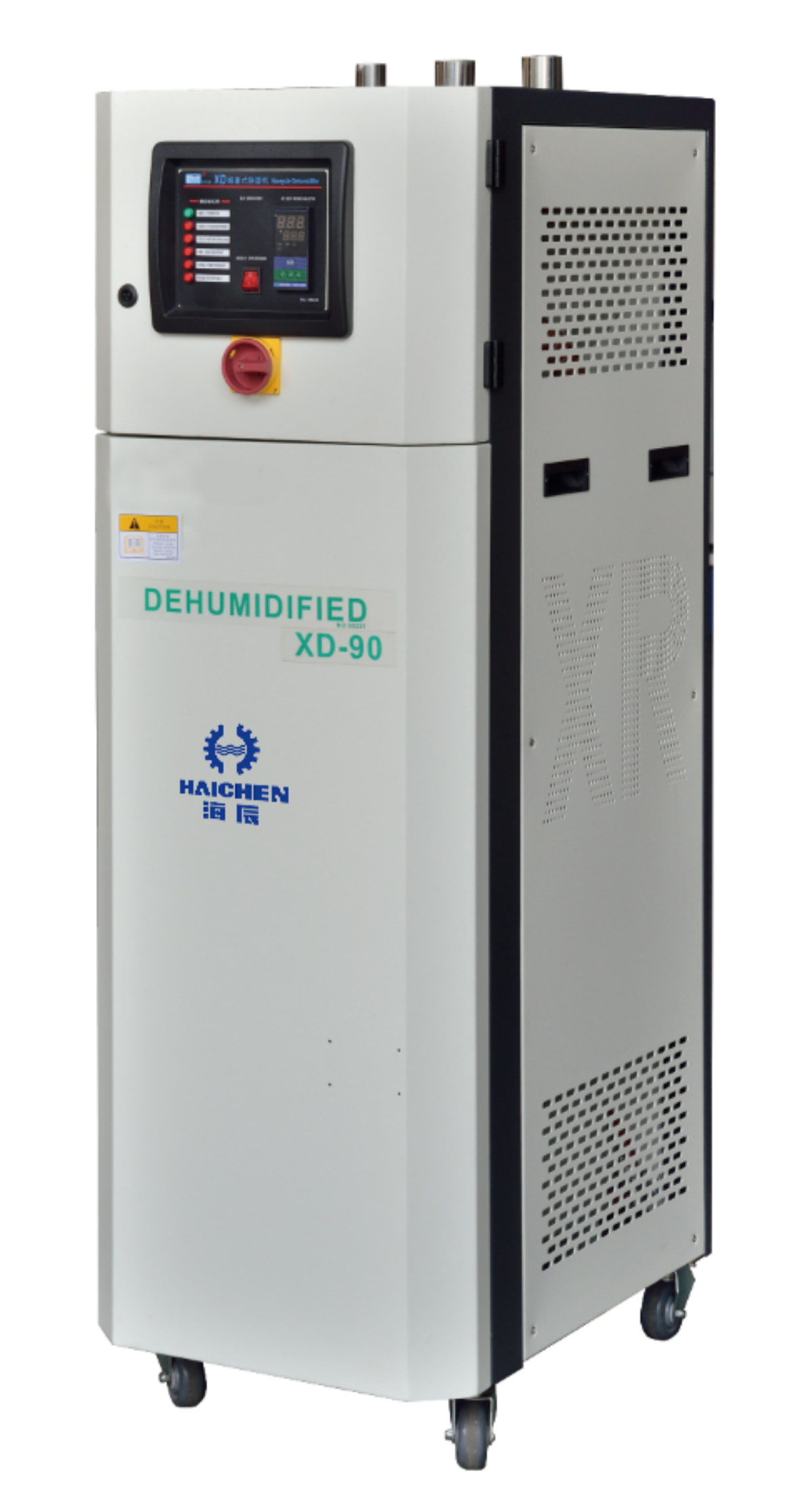
Wrong Dryer Choice Causes Batch Scrap of PET Preforms
Problem: Some users use ordinary hot air dryers for PET. Because the air dew point is too high, moisture content may still exceed 0.02% after 4 hours of drying, causing massive silver streaks and bubbles during pet injection molding, leading to full‑cavity rejection of pet preforms.
Solution: Must use a dehumidifying dryer with dew point ≤ -30°C. Drying time 4–5 hours at 160–170°C. Dried material should be stored in a sealed hopper to prevent re‑absorption of moisture.
Undersized Chiller Fails to Cool PET Preforms Properly
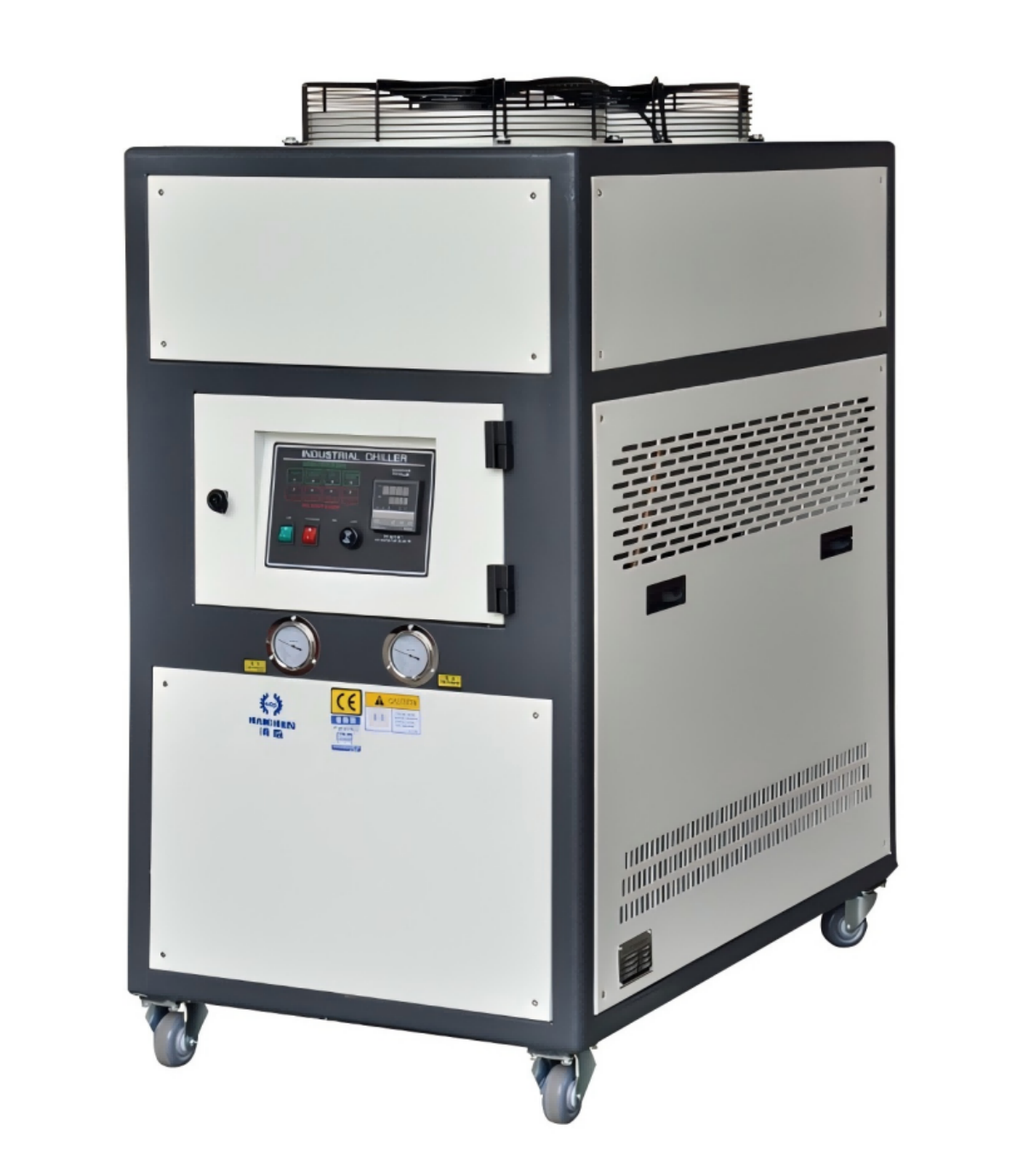
Problem: Insufficient cooling water flow or too high water temperature results in pet preforms still hot after ejection, causing crystallization whitening and forcing a longer cycle.
Solution: Size the chiller according to the number of cavities. Reference: 16 cavities → 15 ACI, 24 cavities → 20 ACI, 48 cavities → 40 ACI. Control cooling water at 8–15°C and ensure water channels are not blocked.
Needle Valve vs. Self‑Locking Hot Runners – How to Choose
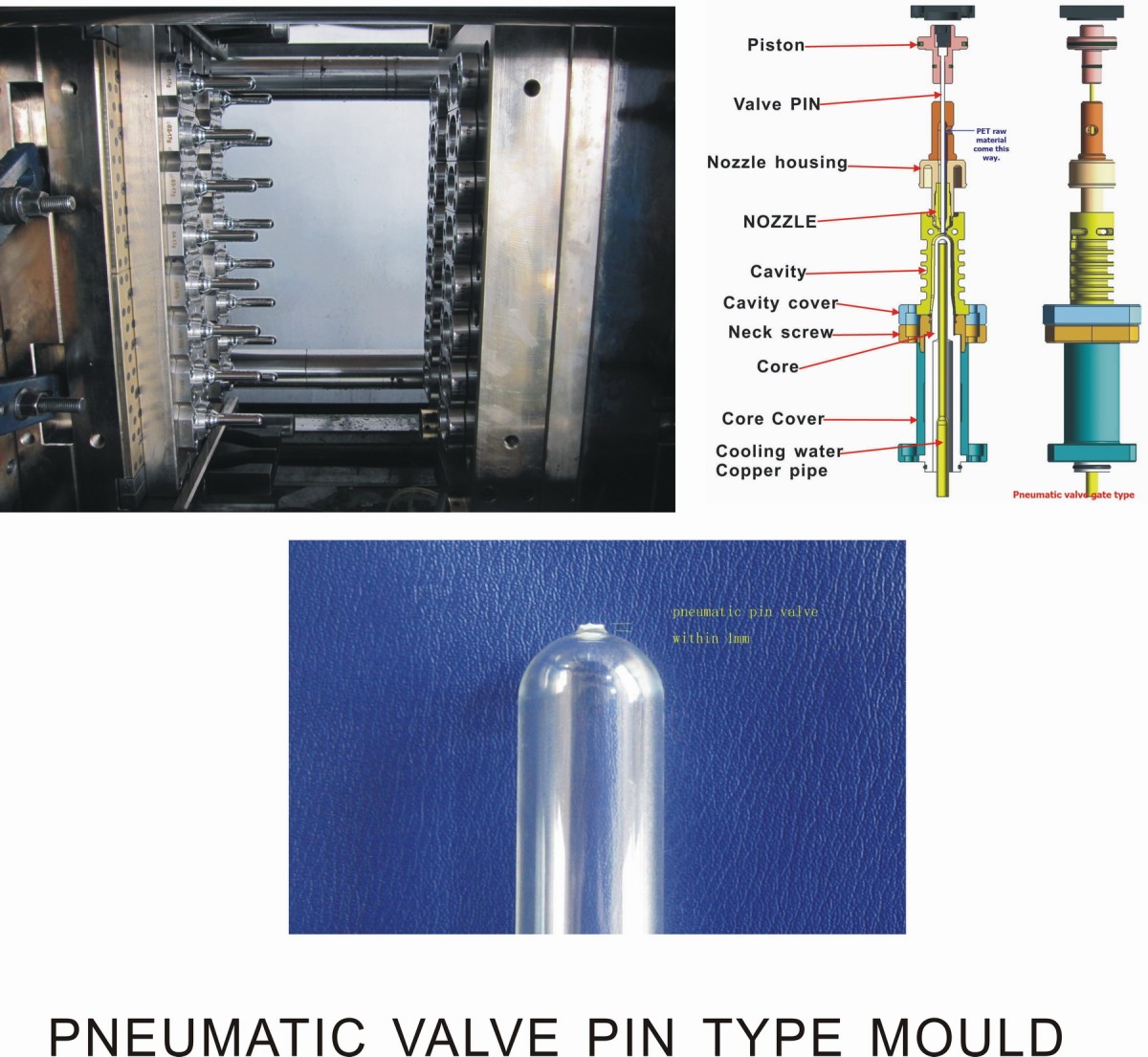
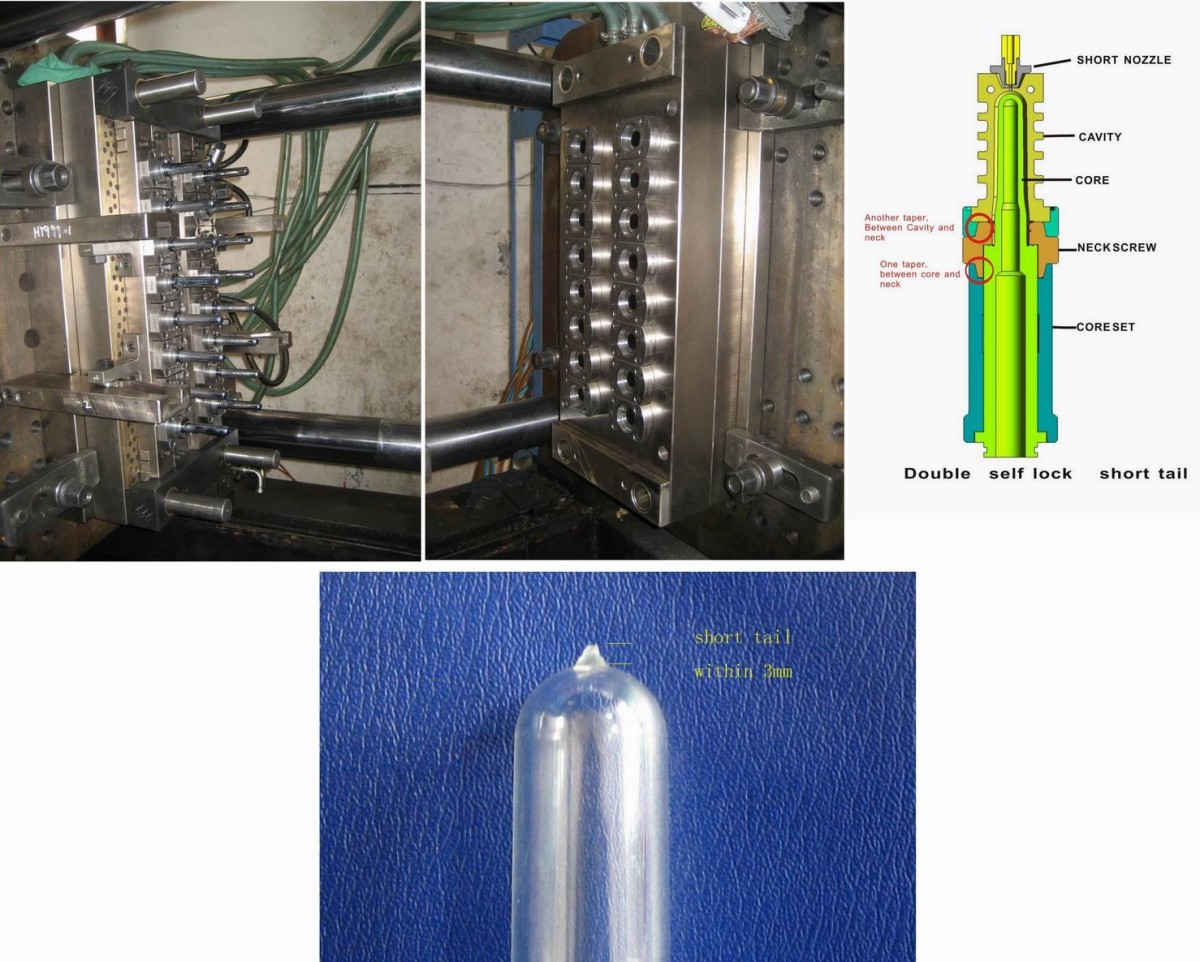
| Hot runner type | Price | Gate tail length on pet preform | Application |
|---|---|---|---|
| Needle valve | Higher | Short | High appearance requirements, automatic gate removal lines |
| Self‑locking | Lower | Longer | General production not sensitive to tail length |
Problem: If the temperature of a self‑locking hot runner is not precisely controlled, it can cause gate drooling or an excessively long tail on the pet preform, affecting downstream blow molding alignment. Therefore, if your pet preform requires a very flat bottom, choose a needle‑valve hot runner and pair it with an injection molding machine that has ±1°C temperature control accuracy.
 |
 |
PET Injection Molding Machine Selection Guide
Selecting the right PET injection molding machine is critical for solving quality issues and optimizing production efficiency. Here are key parameters to consider:
Machine Selection Checklist for PET Preform Production
| Parameter | Minimum Requirement | Recommended | Why It Matters |
|---|---|---|---|
| Clamping force per cavity | 8 tons/cavity | 10-12 tons/cavity | Prevents flash and ensures concentricity |
| Screw L/D ratio | 20:1 | 24:1 or higher | Better melting and mixing for PET |
| Temperature control accuracy | ±2°C | ±1°C | Prevents yellowing and degradation |
| Injection speed | Standard | Fast (300mm/s+) | Reduces cycle time, improves filling |
Machine Selection Matrix by Production Scale
| Scale | Recommended Model | Cavities | Clamping Force | Expected Cycle Time |
|---|---|---|---|---|
| Startup / R&D | HCK180-PET | 16-24 | 180 tons | 18-22 sec |
| Regional bottler | HCK280-PET | 32-48 | 280 tons | 15-18 sec |
| Large-scale production | HCK410-PET | 48-72 | 410 tons | 12-16 sec |
| High-speed mass production | HCK530-PET or larger | 72-96 | 530+ tons | 10-14 sec |
PET Machine vs Standard Machine Comparison
| Feature | Standard Machine | PET-Dedicated Machine |
|---|---|---|
| Screw design | General purpose | PET-specific with barrier design |
| L/D ratio | 18-20:1 | 22-24:1 |
| Injection control | Standard | Multi-stage, dual-platform |
| Cooling system | Standard | Optimized for PET cooling |
| Typical scrap rate | 3-5% | <1% |
| Energy consumption | Baseline | 15-20% lower |
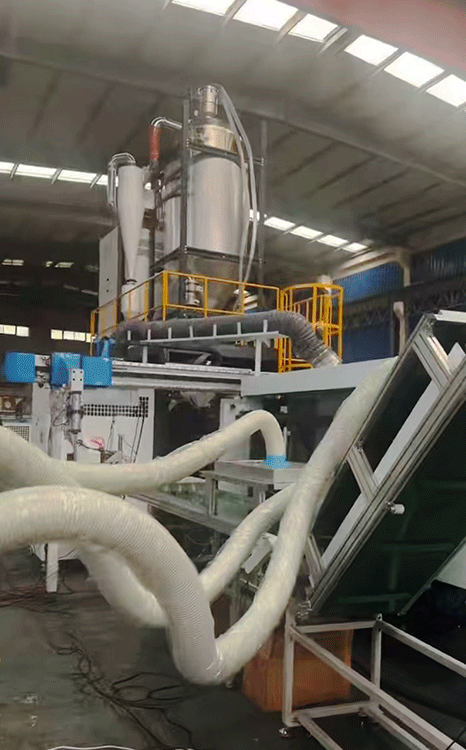
PET Injection Molding Temperature Control and Screw Configuration
Temperature control is the most critical factor in PET injection molding. Improper settings directly cause yellowing, opacity, and silver streaks.
Recommended Temperature Profile for PET Injection Molding
| Zone | Temperature Range | Notes |
|---|---|---|
| Hopper zone | 40-60°C | Prevents moisture condensation |
| Barrel zone 1 (feed) | 260-270°C | Gradual melting starts |
| Barrel zone 2 (compression) | 270-280°C | Main melting zone |
| Barrel zone 3 (metering) | 275-285°C | Final melt homogenization |
| Nozzle | 275-285°C | Must stay below 290°C to prevent yellowing |
| Hot runner | 275-285°C | Match barrel temperatures |
| Mold cooling water | 8-15°C | Prevents crystallization whitening |
Screw Configuration Tips for PET Injection Molding
- Compression ratio: 2.5:1 to 3.0:1 for PET (higher than general-purpose 2.0:1)
- Barrier screw design helps reduce shear heat and prevent degradation
- Check ring: Should be checked regularly for wear; worn rings cause inconsistent shot size
- Screw speed: Keep below 80-100 rpm to avoid shear heating
- Back pressure: 10-20 bar maximum for PET (higher causes overheating)
Problems in pet preform injection molding mainly stem from four areas: insufficient drying, excessive temperature, uneven cooling, and mold eccentricity. As an injection molding machine manufacturer, Haichen Machinery recommends a three‑step approach:
- Raw material first: Strict dehumidifying drying at 160–170°C for 4–6 hours, moisture content <0.02%.
- Process focus: Melt temperature 275–285°C, mold temperature 8–15°C, injection pressure not exceeding 80MPa (for thin‑wall molds).
- Right equipment: Choose standard or fast machine according to output targets, and ensure correct sizing of chiller, dryer, and hot runner.
Haichen’s HCK series dedicated pet preform injection molding machines, with longer screws, optimized hydraulics, reinforced clamping, and support for overlapping plasticization and cooling, have helped many customers achieve cycle times of 14–20 seconds while maintaining clear pet preforms, uniform wall thickness, and qualified concentricity. If you are facing a specific production issue, feel free to provide samples or parameters – we can offer a targeted process analysis.