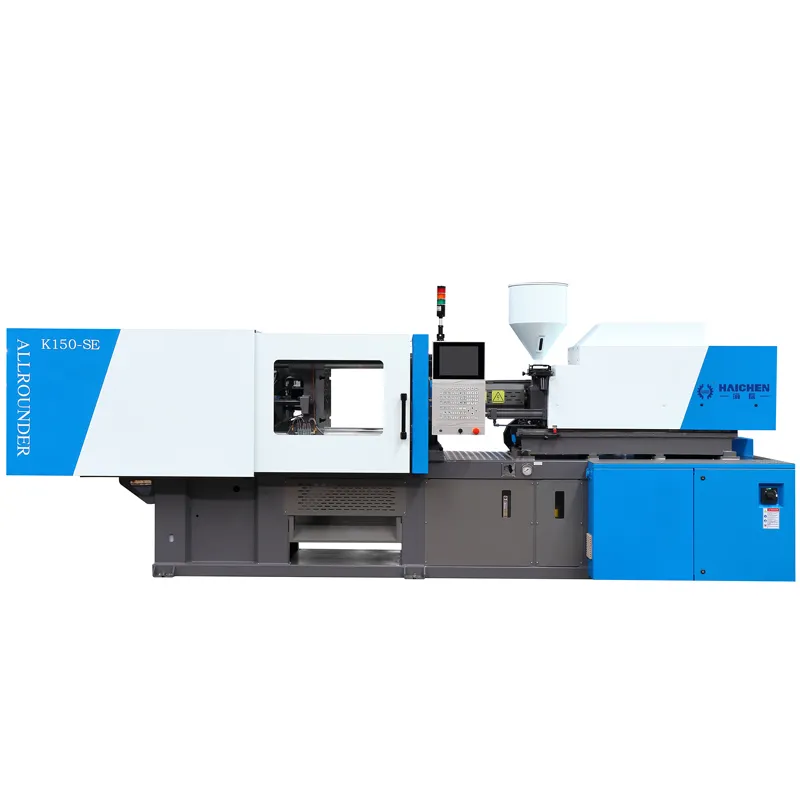
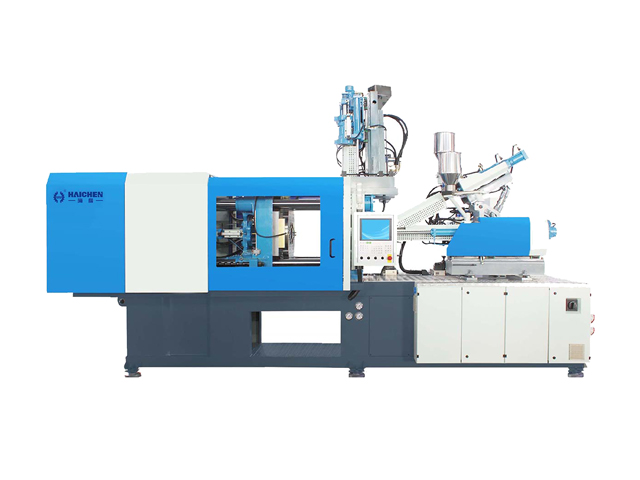
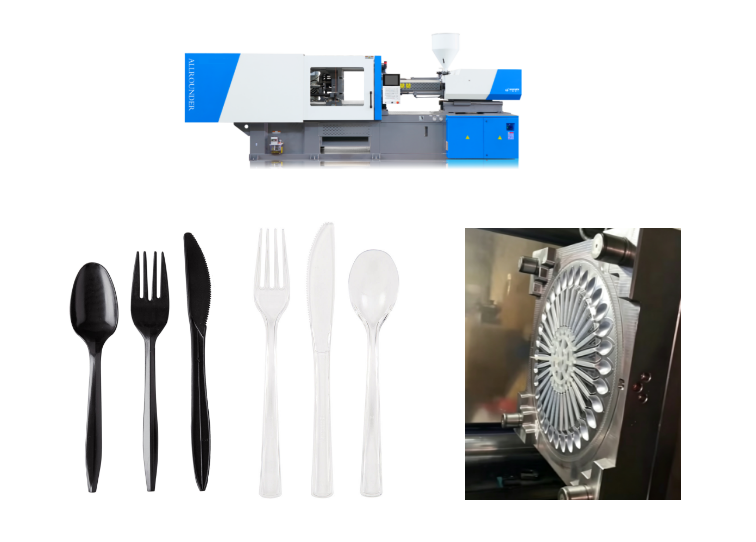
Plastic spoons, forks, and knives look simple, but high-volume production requires more than a standard injection molding machine. A cutlery project needs the right machine, mold, cavity layout, injection performance, cooling system, and product handling method.
A plastic cutlery injection molding machine works with a multi-cavity mold to produce many pieces in each cycle. Therefore, manufacturers need to match the machine with the actual cutlery design and mold instead of choosing a model from product weight alone.
Haichen supplies injection molding machines, plastic cutlery molds, and auxiliary equipment for different cutlery production projects. Our actual production references include 20-cavity spoon molds, 24-cavity 3-in-1 cutlery molds, and 48-cavity spoon and fork molds.
What Can a Plastic Cutlery Injection Molding Machine Produce?
A plastic cutlery injection molding machine can produce many types of disposable or reusable plastic tableware, depending on the mold design.
Common products include:
- Plastic spoons
- Plastic forks
- Plastic knives
- Spoon and fork combinations
- Knife, fork, and spoon sets
- Other small plastic tableware parts
The machine itself does not determine the final product shape. The mold defines the product design, while the injection molding machine provides the clamping, injection, plasticizing, and mold movement required for production.
For this reason, the same machine can often run different cutlery molds when the mold dimensions and machine parameters match.
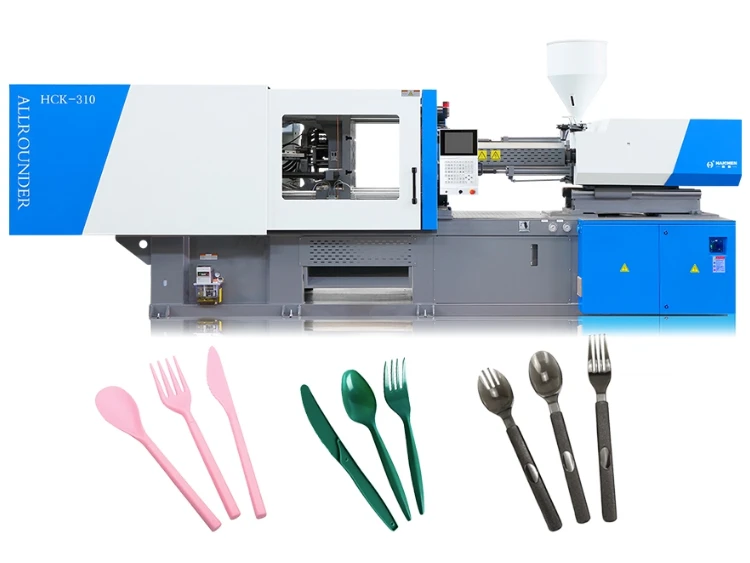
Why Is Cutlery Production Different From General Plastic Products?
Plastic cutlery often uses a relatively thin product structure and a multi-cavity mold. This creates several production requirements.
First, the plastic must reach all cavities consistently. If some cavities fill earlier than others, the final products can show different weights, dimensions, or appearance.
Second, the mold must remove heat efficiently. A spoon, fork, or knife can have thin sections that cool quickly, while thicker areas may need more cooling time.
Third, the mold opening, ejection, and product removal need to work smoothly when the machine runs a short cycle repeatedly.
Therefore, a suitable machine should work as part of the complete molding system rather than as an isolated piece of equipment.
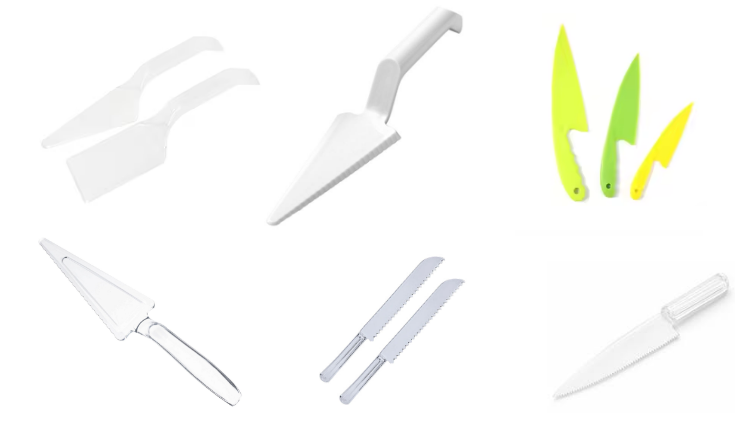
What Makes the Injection Molding Machine Suitable for Cutlery?
There is no single machine specification that fits every cutlery project. However, several machine functions deserve close attention.
Stable Injection Performance
Thin cutlery sections may require the melt to travel through relatively long and narrow flow paths. The injection unit therefore needs to provide stable and controllable filling.
The required injection performance depends on the product, material, mold layout, gate design, and target cycle time.
Suitable Clamping Force
The machine must provide enough clamping force for the mold and product layout.
Instead of selecting tonnage only from the number of cavities, manufacturers should check the mold’s projected area and the molding pressure required for the material and product.
This approach gives a more reliable machine match.
Correct Shot Capacity
The injection unit should provide enough shot capacity for the complete shot, including the products and runner system where applicable.
For example, a 24-cavity mold does not have the same shot requirement for every product. Product weight, runner design, and cavity layout all affect the required shot.
Mold Installation Space
A high-cavity cutlery mold may require more space than a simple single-cavity mold.
Before confirming a machine, check:
- Mold width and height
- Tie-bar spacing
- Maximum mold thickness
- Minimum mold thickness
- Mold opening stroke
- Ejector position and stroke
- Platen dimensions
These checks help prevent a situation where the molding machine has enough clamping force but cannot properly install or operate the mold.
What Cutlery Molds Can Be Used With the Machine?
The mold plays a major role in cutlery production.
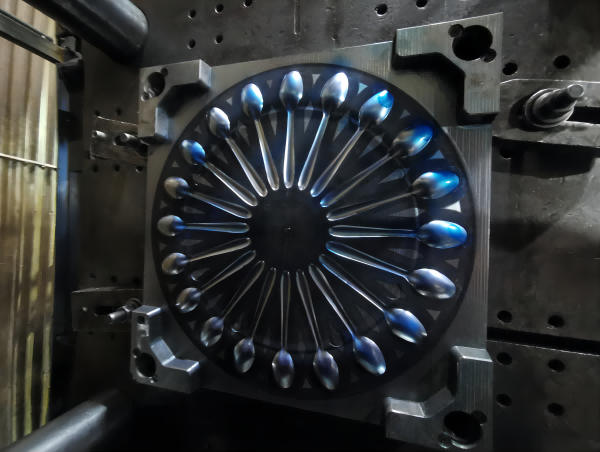
A cutlery mold can contain multiple cavities so that the machine produces several products during one molding cycle.
For example, Haichen has published production references for:
- 20-cavity plastic spoon mold
- 24-cavity knife, fork, and spoon 3-in-1 mold
- 48-cavity spoon and fork 2-in-1 mold
- 24-cavity plastic fork mold
- 24-cavity spoon mold
These projects used HCK230 or HCK310 machines, with published cycle times of around 9–10 seconds for the referenced cases. Actual results depend on the product and mold configuration.
Real Plastic Cutlery Injection Molding Cases
Real production data can provide a more useful reference than a fixed machine-tonnage table.
| Cutlery Product | Mold | Machine | Published Cycle |
|---|---|---|---|
| Plastic spoon | 20 cavities | HCK230 | 9s |
| Knife + fork + spoon | 24 cavities, 3-in-1 | HCK230 | 9s |
| Spoon + fork | 48 cavities, 2-in-1 | HCK310 | 10s |
| Plastic fork | 24 cavities | HCK230 | 9s |
| Plastic spoon | 24 cavities | HCK230 | 9s |
These figures come from Haichen’s published cutlery production references. They should serve as project references rather than universal machine specifications.
For a new project, the machine should still be checked against the customer’s actual product and mold.
Can One Injection Molding Machine Run Different Cutlery Molds?
In many cases, yes.
A factory may use one machine for different cutlery molds when the molds fall within the machine’s operating range.
For example, a factory may change between:
- Spoon mold
- Fork mold
- Knife mold
- 2-in-1 mold
- 3-in-1 mold
Before changing molds, the manufacturer should check mold dimensions, clamping requirements, injection capacity, ejector compatibility, and process settings.
The machine should not be selected only because it can physically close the mold. The complete molding requirements also need to match.
What Auxiliary Equipment Does Cutlery Production Need?
The exact equipment depends on the production method and automation level.
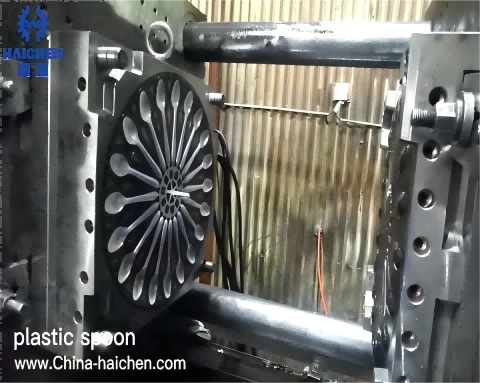
A typical setup may include:
- Injection molding machine
- Cutlery mold
- Chiller or cooling system
- Material loader
- Dryer when required by the material
- Mold temperature controller when required
- Robot or automatic take-out system
- Conveyor
- Counting equipment
- Packaging equipment
- Plastic crusher for suitable production waste
Not every factory needs every item.
For example, a small production project may use manual product handling, while a high-volume factory may add automatic take-out, conveying, counting, and packing.
The equipment should therefore follow the production process instead of adding unnecessary equipment.
How Does Automation Help Cutlery Production?
Automation becomes more useful as production volume increases.
A robot can remove products from the mold and transfer them to a conveyor. A counting system can then organize the products before packing.
Automation can also reduce manual handling between molding and packaging.
However, automation should match the mold and machine cycle. The robot must have enough speed, reach, and payload for the production process.
For this reason, manufacturers should consider automation during the machine and mold planning stage rather than adding it after the production line is complete.
What Should You Check Before Buying a Cutlery Injection Molding Machine?
Before asking for a quotation, prepare the basic product and mold information.
Useful information includes:
- Product type
- Product drawing or sample
- Product dimensions
- Single-piece weight
- Plastic material
- Expected cavity number
- Mold dimensions
- Existing mold or new mold
- Target production quantity
- Required automation level
This information allows the machine supplier to evaluate the project more accurately.
It also avoids choosing a machine from one number, such as product weight or cavity count.
Plastic Cutlery Machine and Mold Should Be Matched Together
A common mistake is to select the machine first and discuss the mold later.
For cutlery production, the machine and mold should be considered together.
The mold determines:
- Product arrangement
- Cavity number
- Runner layout
- Gate location
- Cooling layout
- Ejection method
- Mold dimensions
The machine then needs to provide the required:
- Clamping force
- Injection capacity
- Injection performance
- Mold installation space
- Ejection capability
This combined approach gives a more practical basis for machine selection.
Why Work With a Supplier That Can Provide Both Machine and Mold?
A cutlery project involves several connected parts.
If the machine supplier and mold supplier work separately, the customer may need to coordinate technical information between different companies.
Haichen can supply injection molding machines and plastic molds for cutlery production. This allows the machine, mold, and production requirements to be discussed together.
Our published cutlery cases also include different cavity layouts and machine models, such as HCK230 and HCK310.
For a new project, we can review the product, mold requirements, material, cavity number, and target output before recommending a suitable machine configuration.
Frequently Asked Questions
What machine is used to make plastic spoons?
Plastic spoons are commonly produced with injection molding machines and multi-cavity molds. The suitable machine depends on the spoon design, mold, material, cavity number, and production requirements.
Can one machine produce spoons, forks, and knives?
Yes, a machine can often run different cutlery molds if the molds match the machine’s operating range.
Is a high-cavity mold always better?
Not necessarily. More cavities can increase output per cycle, but the mold becomes more complex and requires balanced filling, cooling, and ejection.
Can I use my existing cutlery mold?
It may be possible. The mold dimensions, tie-bar spacing, clamping force, shot requirements, mold opening, and ejector system should be checked before installation.
Does Haichen supply cutlery molds?
Yes. Haichen can provide injection molding machines and customized molds for plastic cutlery production.
What information do I need to get a machine quotation?
The most useful information includes the product drawing or sample, product weight, dimensions, material, cavity number, mold information, and target production quantity.