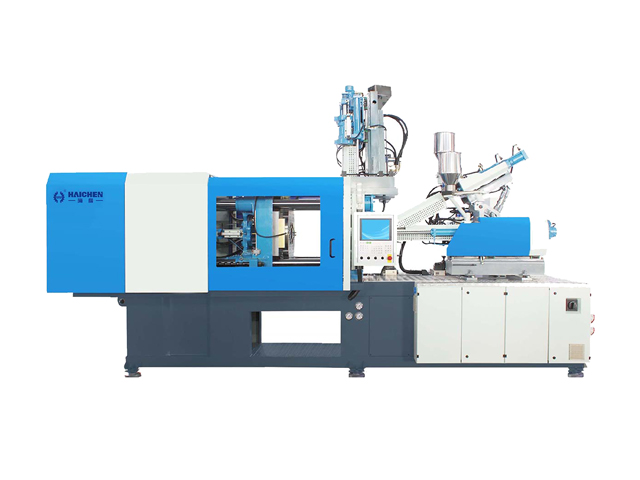
A Jar PET preform injection molding machine is a specialized piece of equipment designed to produce wide-mouth preforms for honey jars, peanut butter containers, cream pots, food storage canisters, and large cosmetic jars. Unlike standard 28mm water preforms, wide-mouth jar preforms have neck sizes from 63mm to 120mm and thicker walls, making them significantly harder to mold.
The global PET preform market continues to grow as demand for sustainable packaging increases. The wide-mouth PET preform injection molding machine addresses specific challenges: uneven plastic shrinkage, oval neck deformation, and long cooling times for thick walls. This guide covers the main parts of a wide-mouth PET preform injection molding machine, how it works, technical features, and how to select the right machine for your jar preform production needs — with real tonnage recommendations for different cavity counts and neck sizes.
A PET jar preform making machine must handle larger injection molding shot weights, higher clamping forces, and more complex cooling systems than standard PET preform machines. For wide-mouth jar preforms, the projected area is much larger, which directly increases the clamping force requirement. For a 12-cavity 110mm jar preform mold, you may need 450 tons or more — significantly higher than a 48-cavity water preform mold that runs on 300 tons.
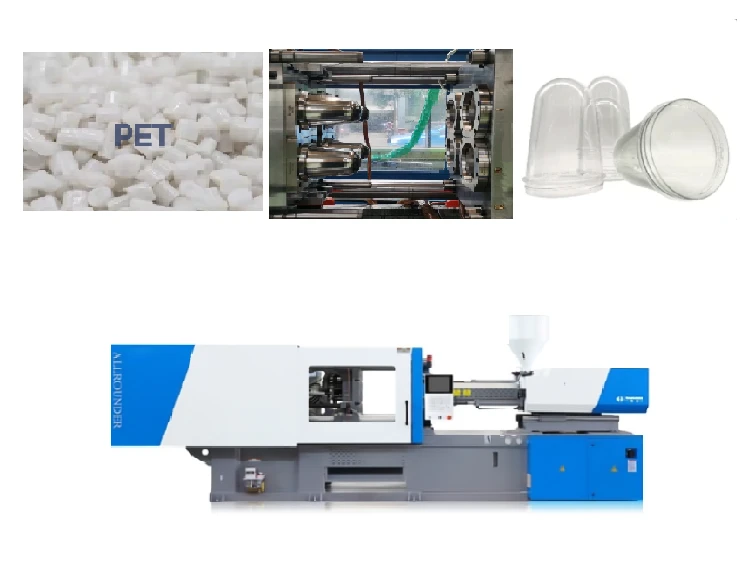
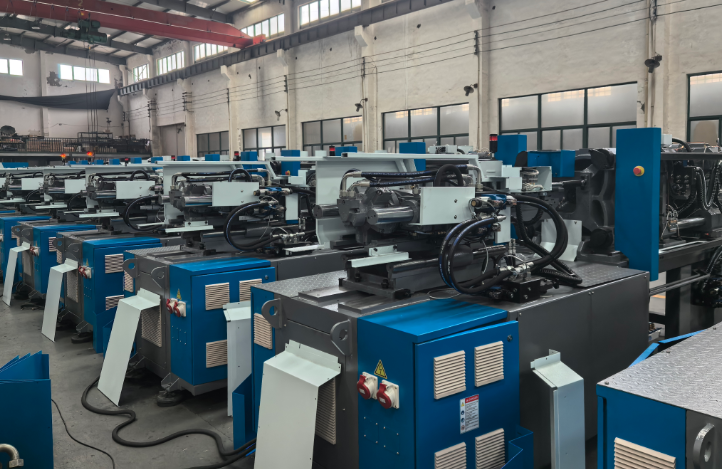
Haichen Machinery has over 20 years of experience in PET preform injection molding. Our HCK-PET series jar PET preform injection molding machines are designed specifically for wide-mouth preform production, with clamping forces from 350 to 800 tons and specialized screw designs for high-IV PET materials.
What Is a Jar PET Preform Injection Molding Machine?
Definition and Core Function
A jar PET preform injection molding machine melts PET pellets and injects the molten plastic into a multi-cavity mold to produce wide-mouth preforms. These preforms are later blow-molded into finished jars and containers. The machine must handle larger shot weights (100–150g per preform) and higher injection pressures than standard water preform machines.
Key Components of a Wide-Mouth PET Preform Injection Molding Machine
| Component | Function |
|---|---|
| Clamping Unit | Applies high clamping force (350–800 tons) to keep the mold closed during injection |
| Injection Unit | Melts PET pellets and injects them into the mold under high pressure |
| PLC Control System | Controls temperature, pressure, speed, and sequence of operations |
| Screw and Barrel | Specially designed for PET materials, often with bimetallic coating |
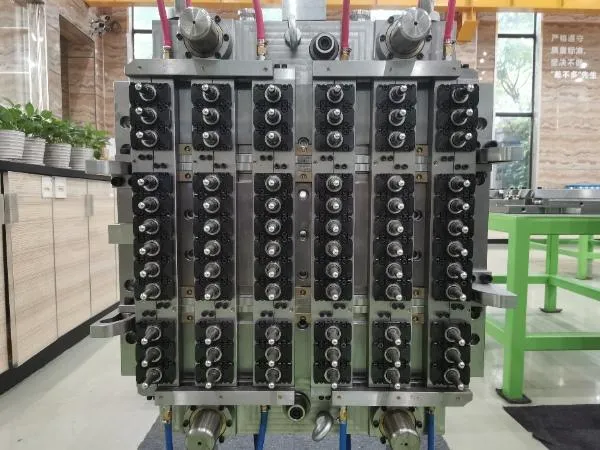
| Hot Runner System | Distributes molten PET evenly to multiple cavities |
| Hydraulic Core-Pull System | Handles complex undercuts and side actions in wide-mouth preform molds |
| Robot Interface (CE12) | Supports automatic part removal and handling |
Differences from Standard PET Preform Machines
The wide-mouth PET preform injection molding machine differs from standard PET preform machines in several key aspects:
| Feature | Standard PET Preform Machine | Jar PET Preform Machine |
|---|---|---|
| Neck diameter | 28mm (typical) | 63–120mm |
| Cavity count | 48–144 cavities | 4–12 cavities |
| Clamping force | 200–400 tons | 350–800 tons |
| Shot weight per cavity | 16–31g | 30–150g |
| Cycle time | 8–12 seconds | 22–35 seconds |
| Screw design | Standard PET screw | Low-shear, high-plasticizing screw |
| Cooling system | Standard cooling | Enhanced cooling with external cooling station |
Main Parts of a Jar PET Preform Injection Molding Machine
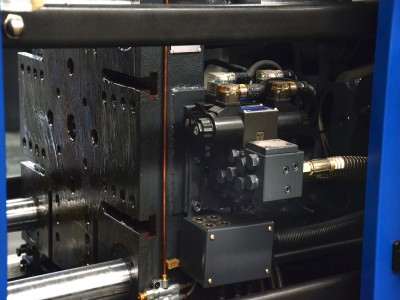
Clamping Unit – Thicker, Heavier, More Rigid
Wide-mouth jar preform molds have large projected areas. The wide neck also creates side forces that push the platens apart. The clamping unit on a wide-mouth PET preform injection molding machine must be significantly stronger:
-
Thicker platens – 15–20% thicker than standard PET machines of the same tonnage
-
Thicker tie-bars – higher bending resistance to keep the neck round
-
Higher tonnage range – typically 350 to 800 tons, depending on neck size and cavity count
For an 8-cavity 110mm jar preform mold, the recommended clamping force is 450–550 tons. For a 6-cavity 120mm mold, you need 650–750 tons.
Injection Unit – Large Shot Weight and Multi-Stage Holding Pressure
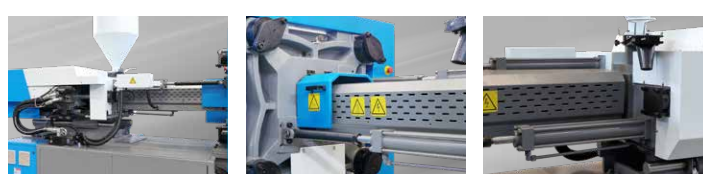
Wide-mouth jar preforms need a large shot weight per cavity (up to 100–150g) and have uneven wall thickness. The injection unit on a jar PET preform injection molding machine must provide:
-
Larger screw diameter – ensures enough plasticizing capacity without overheating the melt
-
Multi-stage holding pressure – you can set 3–5 stages, from high pressure to fill thick sections, then gradually lower to avoid stress marks
-
Special PET screw – L/D ratio 22:1 to 24:1, with a mixing head, gives even melt without degrading the material
For wide-mouth jar preforms, the melt temperature must be carefully controlled. Typical barrel temperatures for PET are 280–300°C, with nozzle temperatures slightly lower to prevent drooling.
Control Unit – Precise Temperature and Sequence Control
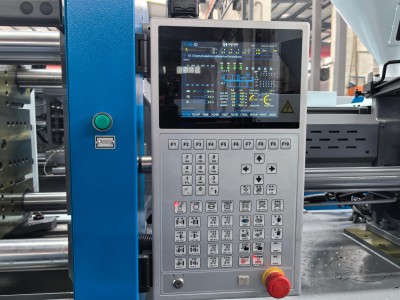
Wide-mouth preforms are sensitive to temperature and time. The control system on a PET jar preform making machine must be precise:
-
PID temperature control – independent zones for barrel, hot runner, and nozzle, accuracy ±1°C
-
Multi-stage injection and holding profiles – you can store many recipes and switch quickly between different jar preform molds
-
CE12 robot interface – ready to connect to a robot and external cooling station
-
Multi-language control – supports up to 21 languages for global operation
Auxiliary Equipment – Drying, Cooling, and Part Removal
A wide-mouth PET preform injection molding machine cannot run well without these helpers:
-
Dehumidifying dryer – dew point below -40°C, supplies dry PET material continuously
-
Water chiller – high capacity, recommended chilled water at 8–12°C, removes heat from thick walls
-
External cooling station – cools preforms after ejection, so the mold does not wait
-
Servo robot – takes out preforms, cuts sprues, moves parts to the external cooling station
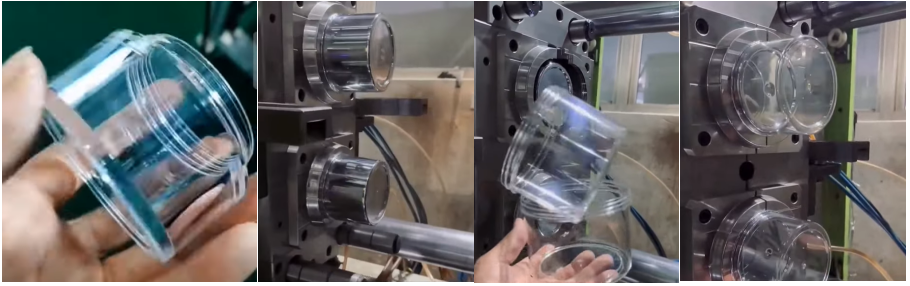
How Does a Jar PET Preform Injection Molding Machine Work?
Drying and Feeding
PET pellets go into the dehumidifying dryer for 4–6 hours. Moisture drops below 0.004%. Then an auto loader moves the dry pellets to the machine hopper without touching humid air.
Melting and Plasticizing
The large screw rotates and pushes the material forward. Heaters raise the temperature to about 280°C. The melt collects at the front of the barrel. Because each shot uses a lot of material (up to 150g per cavity), plasticizing takes time. But the machine can overlap plasticizing with cooling.
Injection and Holding Pressure
The screw moves forward. Melt flows through valve gates of the hot runner into the multi-cavity mold (typically 4–8 cavities). After filling, the machine switches to multi-stage holding pressure: first high pressure to pack the thick walls and prevent voids, then medium pressure, finally low pressure until the gate freezes. This step is critical for wide-mouth preforms.
Cooling Inside the Mold
Water from the chiller runs through cooling channels inside the mold. This removes most of the heat. But because the walls are thick, the center of the preform is not yet solid. In-mold cooling takes about 50–60% of the total cycle time.
Mold Opening and Part Removal
After the mold opens, a servo robot reaches in. It takes out all preforms at once. Air scissors cut the sprues automatically. Then the robot moves the preforms to an external cooling station (cooling sleeves or pins). The preforms stay there for another 5–10 seconds. Meanwhile, the mold closes and starts the next cycle.
Post-Processing and Packing
After external cooling, the robot or a conveyor moves the preforms to a packing area. Workers or an automatic packer put them into boxes. The whole line runs continuously – machine, robot, chiller, and dryer work together.
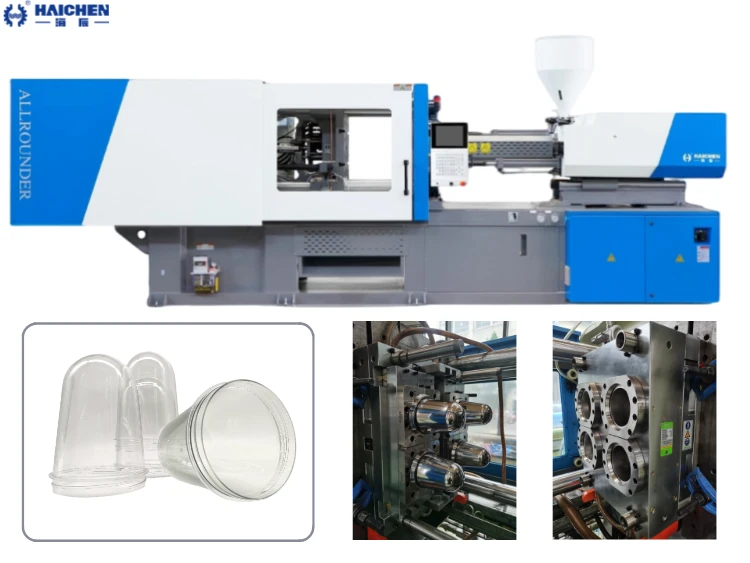
Technical Features of Wide-Mouth Jar PET Preform Machines
Feature 1 – High-Rigidity Clamping for Large Necks
Standard PET machines focus on speed and energy saving. Wide-mouth PET preform injection molding machines focus on rigidity. Our HCK-PET series uses thicker platens, thicker tie-bars, and a wider toggle linkage. The platens do not bend under large projected areas. Real test data: for an 8-cavity 110mm mold, we control neck ovality within 0.15mm – much better than a standard PET machine.
Feature 2 – Multi-Stage Holding Pressure + External Cooling Solves Thick-Wall Problems
The two biggest headaches for wide-mouth preforms are sink marks and long cycle times. We solve them with:
-
Multi-stage holding pressure (up to 5 stages) – accurately packs thick sections
-
External cooling station – preforms cool outside the mold, without taking mold time
Result: for a 110mm preform with 6mm wall thickness, cycle time drops from 45 seconds to 25–28 seconds, and sink marks almost disappear.
Feature 3 – Low Cavity Count but High Stability
Wide-mouth jar molds usually run 4 to 12 cavities – much fewer than the 48–144 cavities of water preform molds. That means the mold cost per part is higher. So you need a machine that changes molds quickly, sets up easily, and produces low scrap. Our control system stores recipes. You can recall a recipe in seconds. After a mold change, you get good parts within 5 minutes. The low cavity count also reduces cooling unbalance, which is a big advantage for making many different jar sizes.
Feature 4 – Corrosion-Resistant Screw and Barrel
PET materials, especially with high IV or recycled content, can be corrosive. The jar PET preform injection molding machine uses a nitrided screw and barrel with bimetallic coating for extended service life. This is essential for wide-mouth preform production, where melt residence time is longer due to lower cavity counts.
Selection Guide – Tonnage and Cavity Count for Jar PET Preforms
Tonnage Per Cavity – A Different Formula
For standard water preforms, the rule of thumb is 8–12 tons of clamping force per cavity. For wide-mouth jar preforms, because the projected area is much larger, you need more tonnage per cavity. A 48-cavity water preform mold fits nicely on a 300T machine. A 12-cavity 110mm jar preform mold may need 460T or more.
Jar PET Preform Injection Molding Machine Selection Table
| Jar Neck Diameter | Number of Cavities | Recommended Clamping Force | Typical Preform Weight | Cycle Time (approx.) | Haichen Model |
|---|---|---|---|---|---|
| 63–83mm | 4–6 cavities | 180–270T | 30–50g | 22–28 seconds | HCK 210-PET – HCK 280-PET |
| 89–110mm | 6–8 cavities | 360–460T | 50–80g | 25–30 seconds | HCK 360-PET – HCK 460-PET |
| 110–120mm | 8–12 cavities | 460–700T | 70–110g | 28–35 seconds | HCK 460-PET – HCK 700-PET |
| 120mm+ | 4–8 cavities | 700–800T | 100–150g | 35–40 seconds | HCK 700-PET – HCK 800-PET |
Selection Examples
Example 1 – 110mm Jar Preform (8 cavities, 80g):
A food packaging customer producing peanut butter jars needed a wide-mouth PET preform injection molding machine for 110mm preforms. We recommended the HCK 460-PET (460 tons) with an 8-cavity mold and external cooling. The machine achieved a 25-second cycle and a yield rate above 97%.
Example 2 – 63mm Honey Jar Preform (12 cavities, 35g):
A honey producer needed a PET jar preform making machine for 63mm preforms. We recommended the HCK 280-PET (280 tons) with a 12-cavity mold. The machine ran a 22-second cycle with stable quality.
Example 3 – 120mm Large Cosmetic Jar Preform (6 cavities, 110g):
A cosmetic packaging customer needed a jar PET preform injection molding machine for 120mm preforms. We recommended the HCK 650-PET (650 tons) with a 6-cavity mold and external cooling station. The machine achieved a 32-second cycle with neck ovality below 0.15mm.
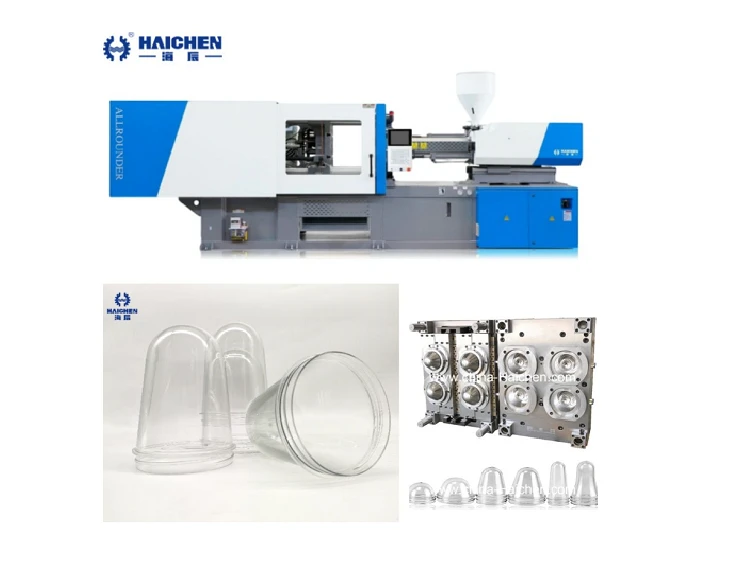
HCK-PET Series for Jar Preform Production
HCK-PET Models and Their Applications
Haichen’s HCK-PET series jar PET preform injection molding machines cover the full range of wide-mouth preform production needs:
| HCK-PET Model | Clamping Force | Best for | Typical Cavities | Key Features |
|---|---|---|---|---|
| HCK 210-PET | 210 tons | Small jars (63–83mm) | 4–6 cavities | Compact design, energy efficient |
| HCK 280-PET | 280 tons | Medium jars (63–83mm) | 6–8 cavities | Balanced performance |
| HCK 360-PET | 360 tons | Medium jars (89–110mm) | 6 cavities | High injection speed |
| HCK 460-PET | 460 tons | Large jars (89–110mm) | 8 cavities | Optimal for 8-cavity 110mm molds |
| HCK 530-PET | 530 tons | Extra-large jars (110–120mm) | 8–10 cavities | Heavy-duty clamping |
| HCK 650-PET | 650 tons | Jars (110–120mm) | 6–8 cavities | High clamping force for thick walls |
| HCK 700-PET+ | 700+ tons | Jars (120mm+) | 4–8 cavities | Maximum rigidity for large molds |
Key Features of HCK-PET Series for Jar Preforms
All HCK-PET series jar PET preform injection molding machines come with:
-
Servo energy saving – reduces electricity costs by 30–50%
-
CE12 robot interface – supports automation integration
-
Multi-zone PID temperature control – ±1°C accuracy
-
External cooling station compatibility – ready for post-mold cooling
-
Special PET screw – low-shear design for high-IV materials
-
Multi-language control system – supports 21 languages
Frequently Questions
What is a jar PET preform injection molding machine?
A jar PET preform injection molding machine melts PET pellets and injects them into a mold to produce wide-mouth preforms for jars and containers. The machine heats the plastic, injects it under high pressure, cools it, and ejects the finished preforms. These machines are designed for wide-mouth applications with neck sizes from 63mm to 120mm.
What is the typical cycle time for wide-mouth jar preforms?
Cycle times for wide-mouth jar preforms typically range from 22 to 35 seconds, depending on preform weight, wall thickness, and cooling system efficiency. With external cooling, cycle times can be reduced by 20–30% compared to in-mold cooling only.
How many cavities does a jar preform mold need?
Wide-mouth jar preform molds typically run 4 to 12 cavities. For a 110mm jar preform, 8 cavities is the most common configuration. For larger diameters (120mm+), 4–6 cavities is more practical due to the large projected area.
Why do wide-mouth preforms need higher clamping force?
Wide-mouth preforms have much larger projected areas than standard water preforms. The projected area directly determines the clamping force needed. For a 110mm jar preform, the projected area is about 3–4 times larger than a 28mm water preform, requiring 1.5–2 times the clamping force per cavity.
Can I use a standard PET preform machine for wide-mouth jar preforms?
Not effectively. A standard PET preform machine designed for 48–72 cavities of 28mm preforms has a smaller screw, lower clamping force per cavity, and different cooling requirements. For wide-mouth jar preforms, you need a jar PET preform injection molding machine with larger shot capacity, higher clamping force, and enhanced cooling.
What is the recommended machine for 8-cavity 110mm jar preforms?
For an 8-cavity 110mm jar preform mold, we recommend the HCK 460-PET (460 tons) or HCK 530-PET (530 tons). The exact model depends on the preform weight and cycle time target. HCK 460-PET can achieve 25-second cycles with external cooling.
Does Haichen provide whole-line solutions for jar preform production?
Yes. Haichen provides the jar PET preform injection molding machine, mold recommendations, drying system, chilling system, robot, and external cooling station. We also provide installation, commissioning, and operator training. Our service covers many countries worldwide.
Haichen Machinery – your jar PET preform injection molding machine partner. From HCK 210-PET to HCK 800-PET, from 4 to 12 cavities, we help you get the right machine for your wide-mouth jar preform production.
Author: Yang, Senior Engineer, Haichen Machinery