
The plastic crates injection molding work through repeating production cycle, the injection unit melts plastic materials and injects it into a mold to form the crates.
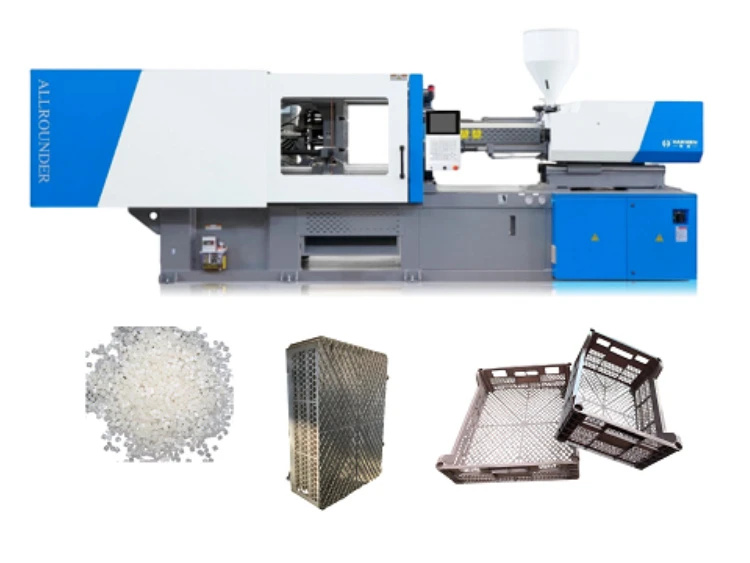
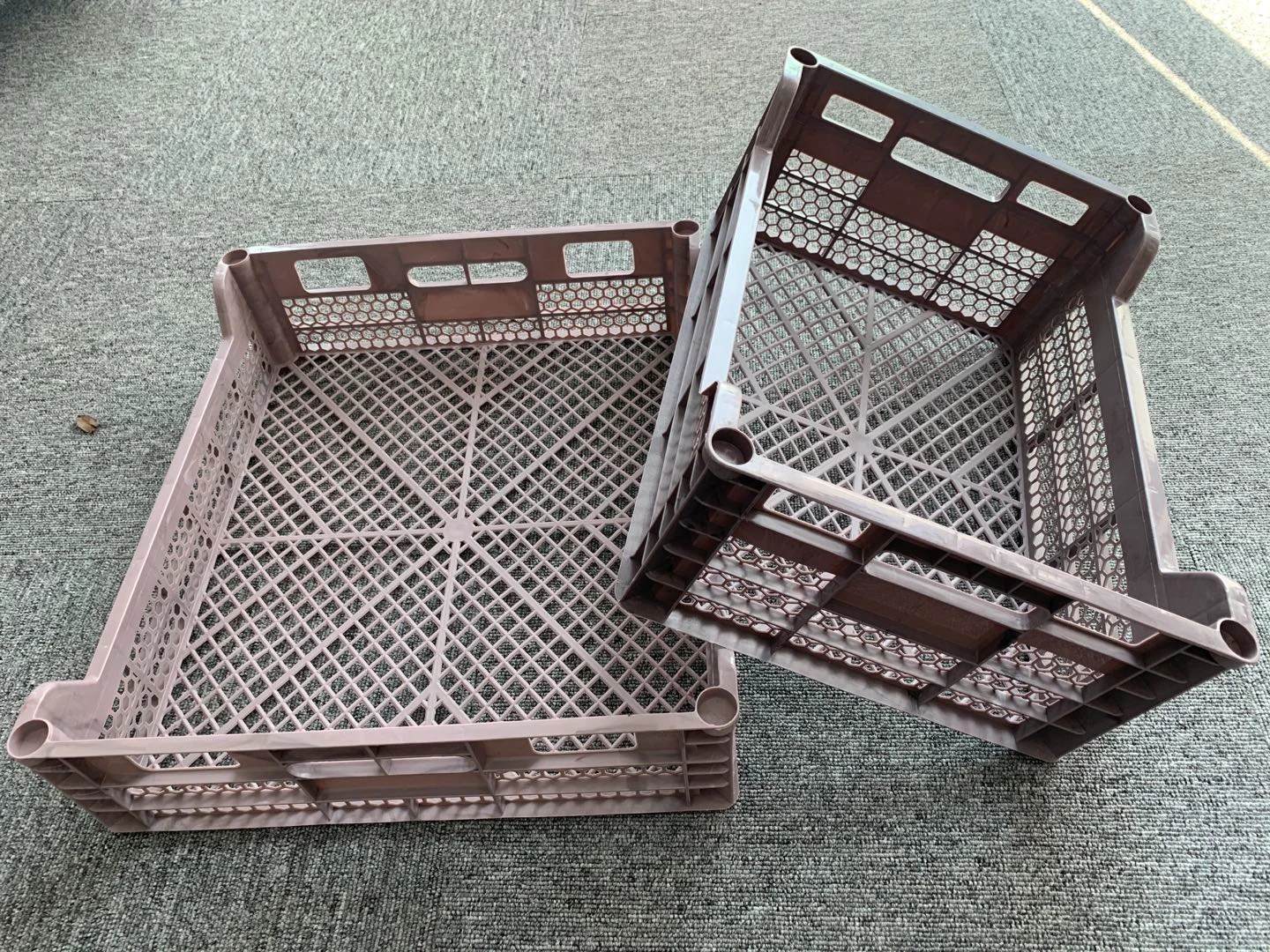
The plastic crate injection molding machine is a specialized equipment designed to manufacture plastic crates through the injection molding process. These machines are engineered to meet the demands of plastic crates industries such as plastic milk crates, plastic milk crate, plastic egg crate and plastic storage crates and so on. And we will tell you firstly what equipment is needed for a factory to produce plastic crates. Futhermore, how to select suitable injection molding production line for plastic crates
The machine first takes crates plastic materials from a hopper. It then moves these pellets into a heated barrel. The screw inside the barrel melts the plastic and pushes it forward. The melted plastic then goes into a closed crate mould. After cooling, the mold opens and the machine ejects the finished crate. This cycle repeats for every crate production.
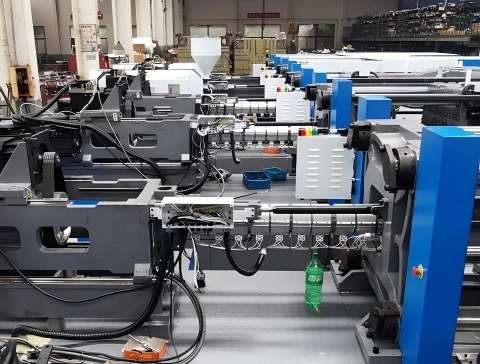
In this article, we will explain how does a plastic crate injection molding machine work. It under four four main stages.To let you understand and know it better, we will cite Haichen plastic crate injection molding making machine as the case study. As Haichen machinery is with over ten years of experience in plastic crates injection molding machine production. Using it’s light-weight small plastic fruit crate injection molding machine work as an example for your easily know the machine work process.
Plastic Crates injection Molding-melting Material
-
machine screw works
-
Heating in the machine barrel
Machine screw works
The screw rotates inside the heated barrel. This rotation pulls plastic pellets from the hopper. As the screw turns, it pushes the plastic forward along the barrel. The plastic crate making machine screw design creates friction, and this friction adds more heat to the plastic.
Heating in the machine barrel
The barrel has several heating bands along its length. Each zone has a different temperature. The first zone warms the plastic pellets. The middle zones melt them completely. The front zone keeps the plastic at injection temperature. For crate production, these temperatures range from 200°C to 260°C.
Injection of Plastic Crates injection Molding
The Clamping Unit Holds the Mold Shut Under Pressure
-
Mold closing
-
Clamping force for crates
-
Injection action
Mold closing
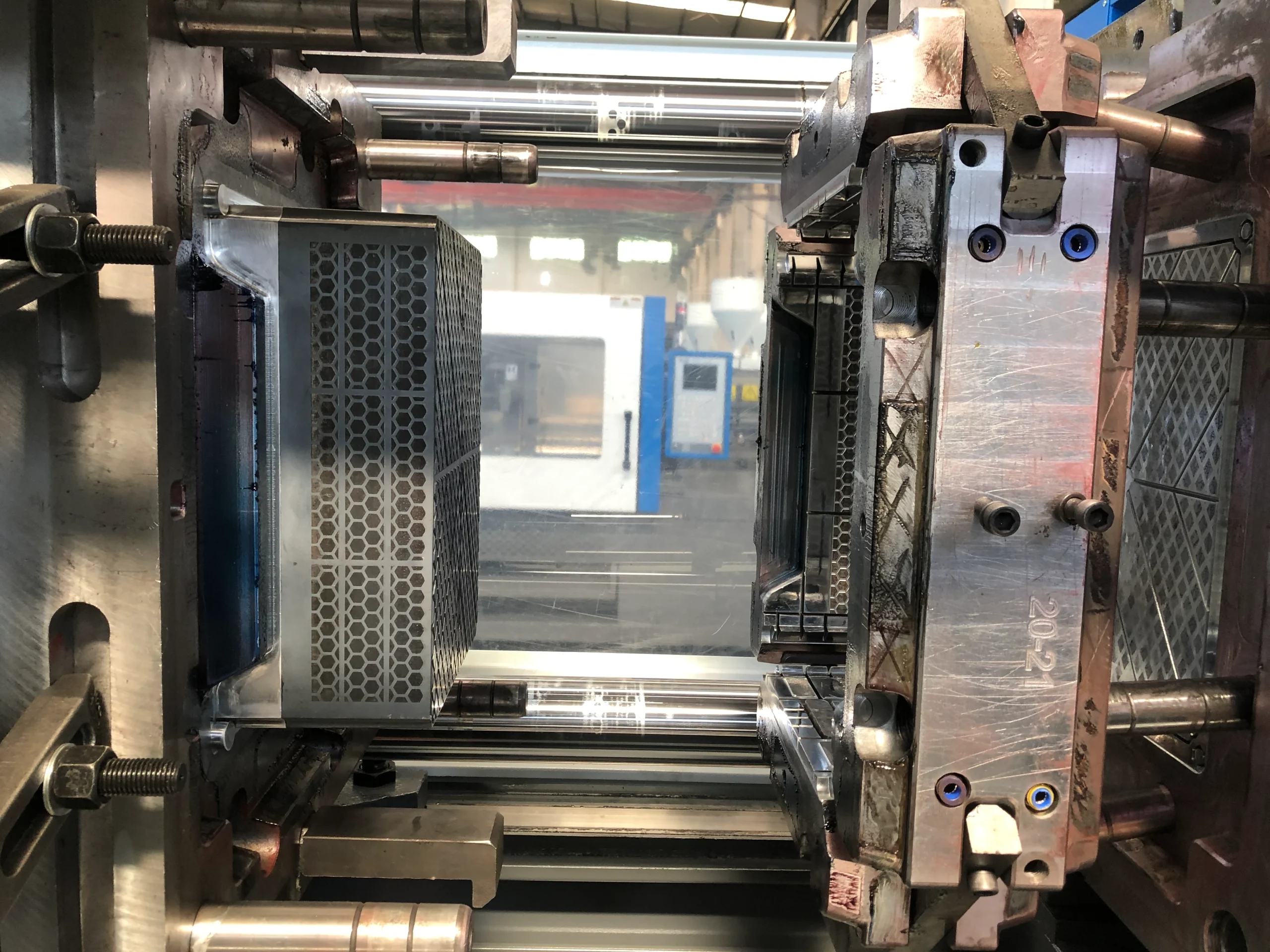
During plastic crates injection molding, the clamping unit moves the moving platen toward the fixed platen. This action closes the two mold halves together. The machine first uses low pressure to close the mold. It then increases speed to complete the closing motion.
Clamping force for crates
After the mold halves meet, the machine applies high clamping force. This force keeps the mold tightly shut during injection. For plastic crate production, typical clamping force ranges from 310 to 700 tons. Large crates need up to 6,500 tons of clamping force.
The melted plastic enters the mold under high pressure. Without enough clamping force, the plastic can push the mold open slightly. This creates a defect called flash on the crate edges. The clamping force must stay higher than the plastic injection pressure throughout the cycle.
Injection action
Once enough melted plastic collects at the front, the screw moves forward like a plunger. This action pushes the melted plastic through a nozzle. The plastic then flows into the closed mold cavity. This injection happens very quickly, usually in 1 to 3 seconds.
Plastic Crates injection Molding-Cooling and Ejection
-
How plastic fills the mold
-
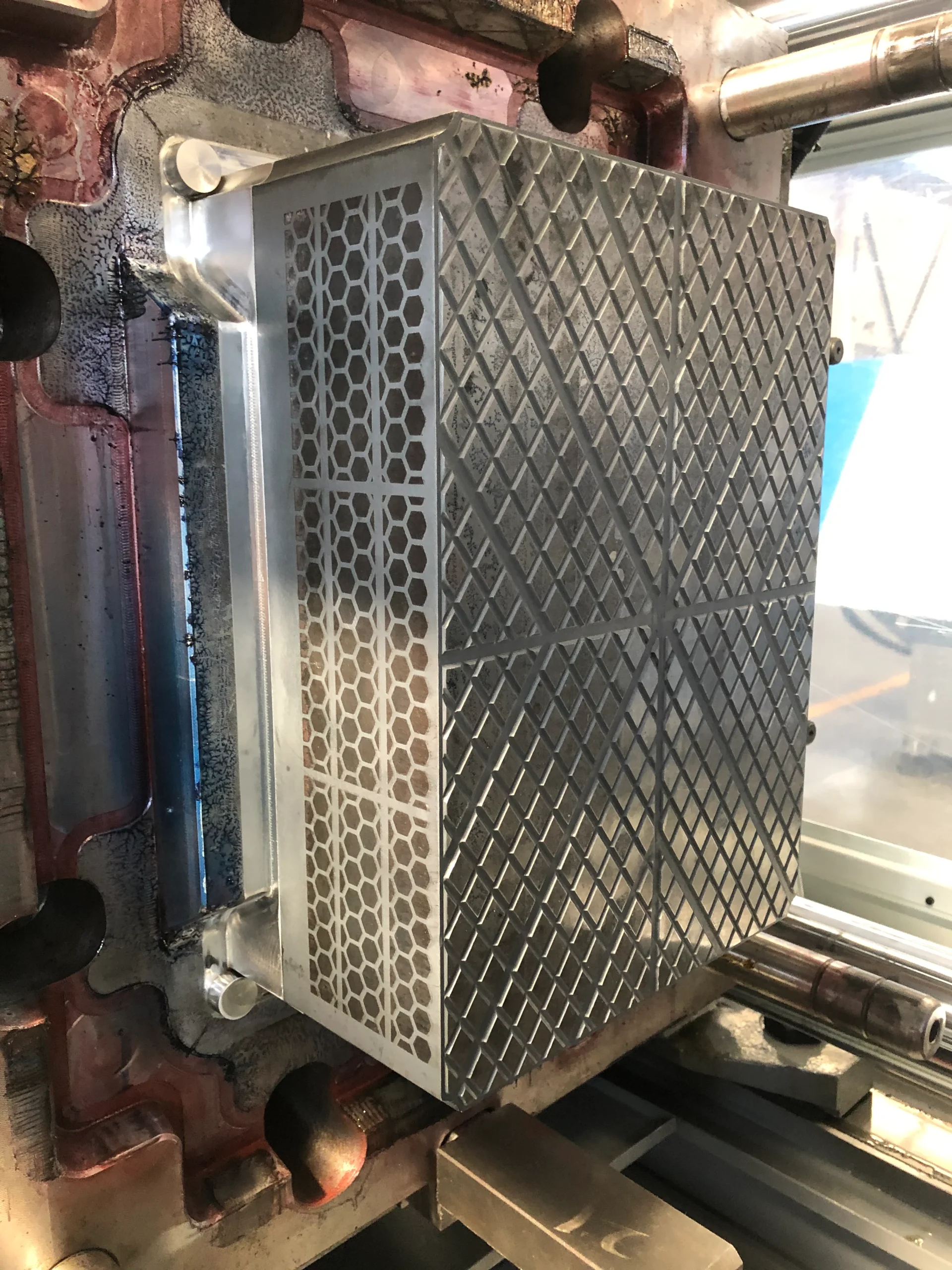
Cooling channels inside the mold
-
Ejecting the platsic crate
How plastic fills the mold
The melted plastic first enters the sprue, which is the main channel. From there, it flows through runners to reach all parts of the cavity. The gate is the small opening where plastic enters the crate shape. Good gate design prevents weak spots in the finished crate. We will insturct you how to make an crate injection mold and successfully conduct a trial run.
Cooling channels inside the mold
The mold has cooling channels built inside it. Cool water or oil flows through these channels. This removes heat from the melted plastic. The plastic crate hardens from the outside inward. Cooling usually takes 10 to 25 seconds, and this is the longest part of the cycle.
Ejecting the crate
After the plastic hardens, the machine opens the mold. Ejector pins then push the crate off the mold surface. For large crates, some molds use a stripper plate for more even ejection. The crate then falls onto a conveyor. A robot arm or an operator can also remove it.
Plastic Crates Injection molding from Start to Finish
-
Plastic crates production sequence
-
Cycle times for crates
-
Machine Setting
Plastic crates production sequence
First, choose the suitable plastic crates material. Normally, using PP, HDPE material. Second, design the moulds for your need shape. Third, choose the right machine model
Cycle times for crates
For plastic crates, total cycle time ranges from 15 to 30 seconds.
A small fruit crate weighing 350g can have a 15-second cycle. A large beer crate weighing 2.5kg may take 25 seconds. A very large 620L crate can take 280 seconds. Shorter cycles mean more crates per hour.
Machine setting
Melt temperature must stay within the material’s range. Injection speed affects how the mold fills. Too much speed causes air traps. Too little speed causes incomplete filling. Cooling time determines if the crate comes out warped. Each crate design needs its own settings for good results.
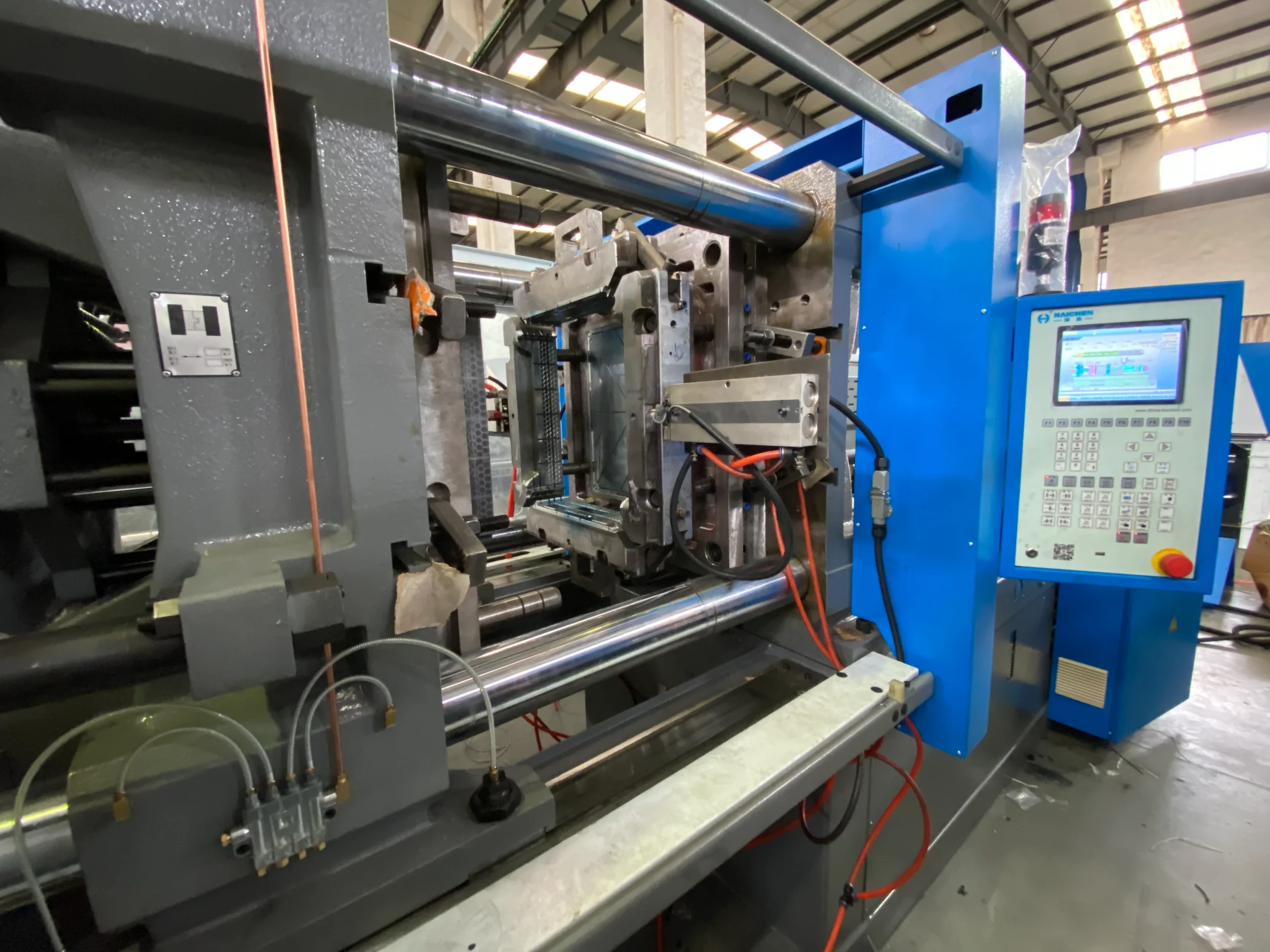
Technical support
Haichen provides free cycle time analysis for your plastic crate design. We recommend the suitable machine based on crate weight, size, and cavity count. Our team also trains your operators on machine settings and maintenance procedures. Moreover, supply service of common problems and solutions in plastic crate injection molding.


