Introduction
Choosing the right plastic stool injection molding machine starts with the stool, not the machine tonnage. Product weight, overall dimensions, wall thickness, mold cavities, resin, cycle time, and annual output all affect the final machine configuration.
Plastic stools usually have a large projected area and, in many designs, a relatively deep cavity. As a result, manufacturers need to look beyond clamping force. The injection unit must provide enough shot capacity, while the clamping system needs sufficient mold opening space for the stool mold and the part-removal process.
PP remains a common choice for molded stools because it combines good toughness, reasonable cost, and efficient processing. A suitable machine can then turn that material into a stable, repeatable production process.
For this reason, a machine selection should connect five things: the stool, the material, the mold, the production target, and the machine.
What Is a Plastic Stool Injection Molding Machine?
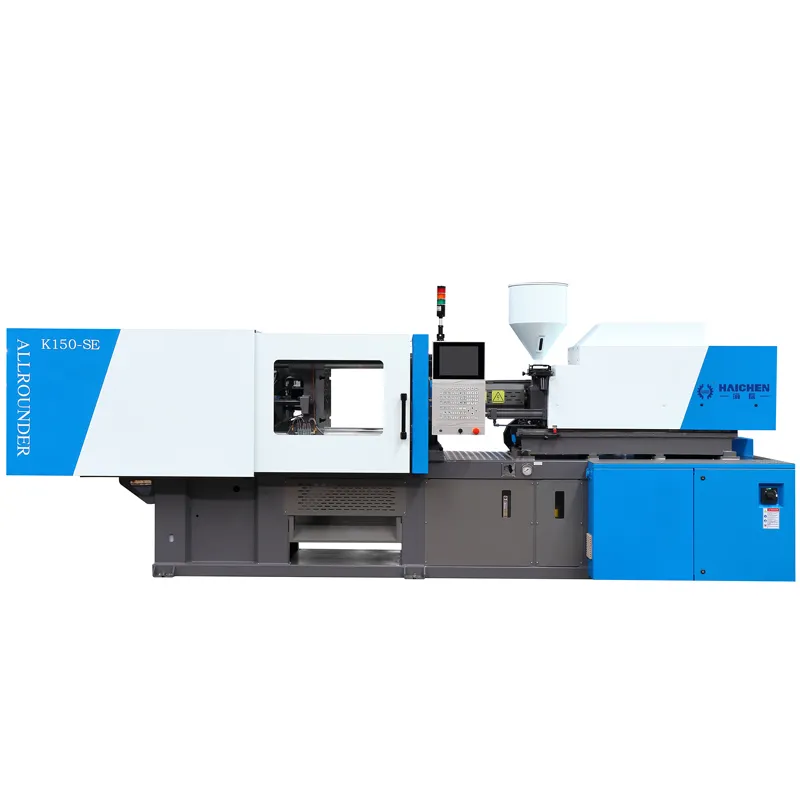
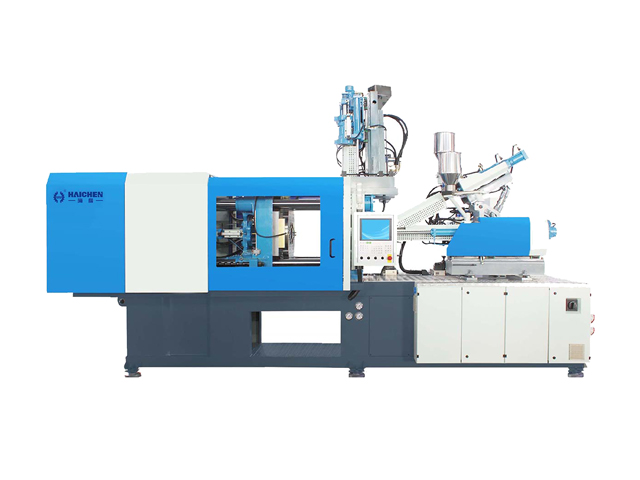
A plastic stool injection molding machine melts thermoplastic resin, injects the melt into a mold, holds pressure while the part takes shape, and then opens the mold for ejection.
Manufacturers use this process for many stool designs, including:
- Household stools
- Stackable stools
- Kids’ stools
- Foot stools
- Heavy-duty stools
- Commercial seating products
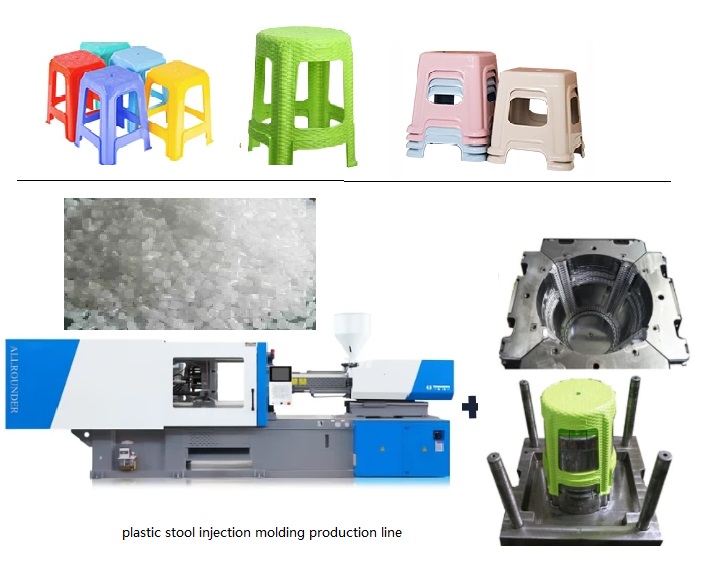
A typical line combines the injection machine with a stool mold, material handling equipment, cooling equipment, and part-removal automation.
The machine does more than close the mold. It must also provide enough injection capacity to fill the cavity, stable plasticizing for the selected resin, sufficient opening stroke, and enough space for the mold.
What Material Is Best for Plastic Stools?
PP for General-Purpose Plastic Stools
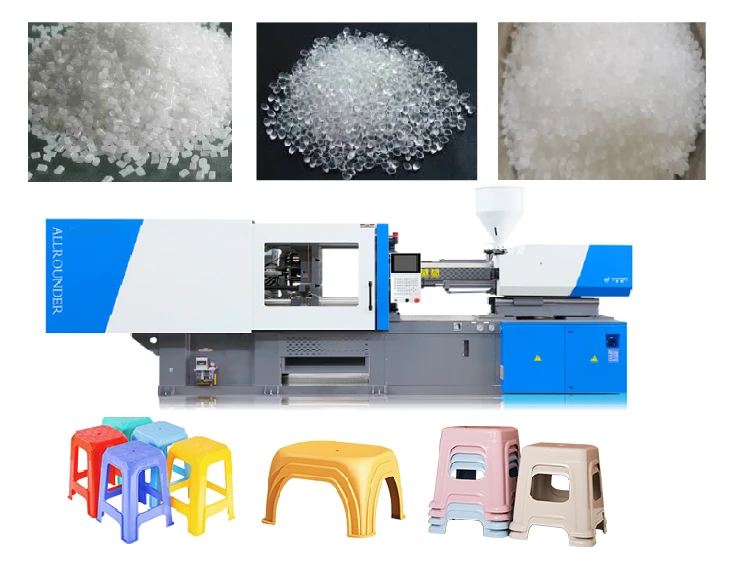
Polypropylene is a common material for plastic stools because it offers a useful combination of stiffness, toughness, chemical resistance, and relatively low material cost.
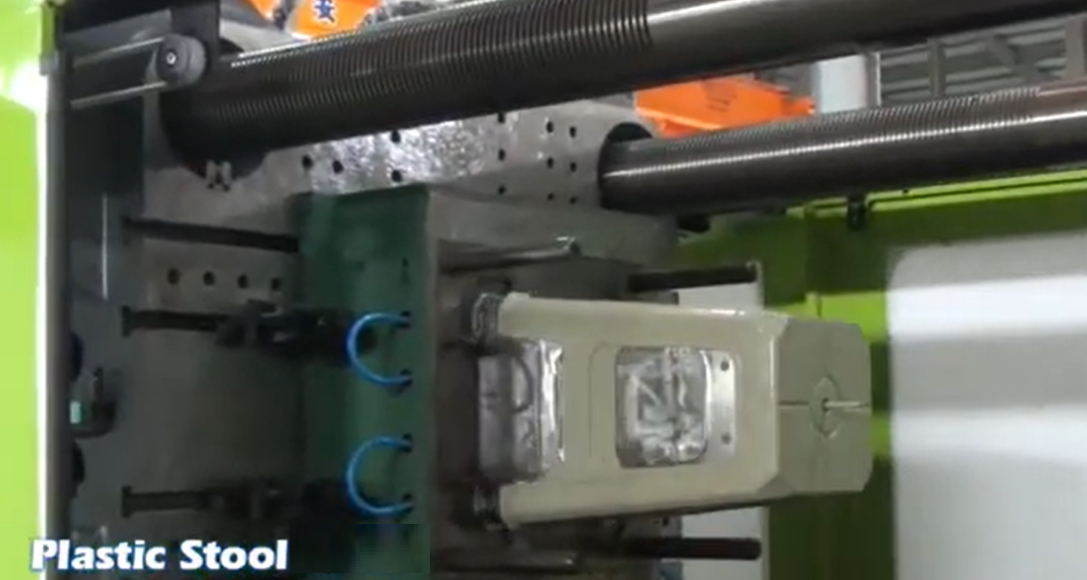
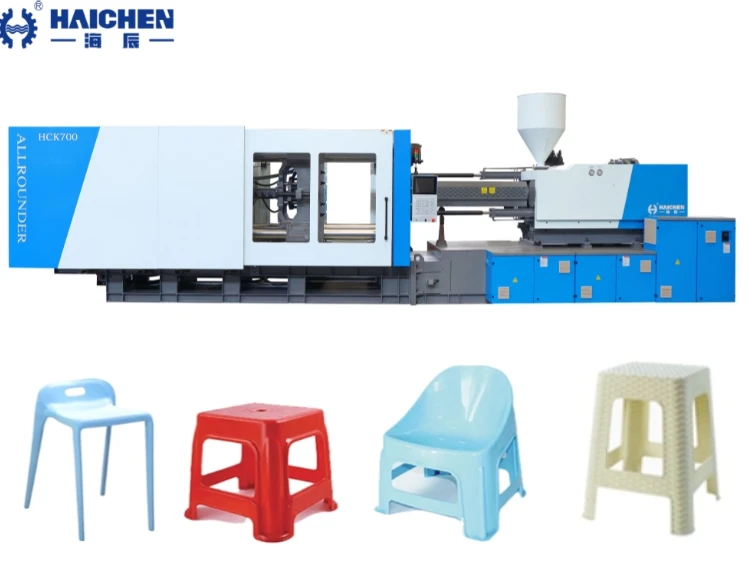
PP also works well in high-volume injection molding. For instance, shows a square plastic stool made from low-MFR PP at around 730–790 g per part with a cycle time of about 20 seconds on a 700-ton machine. The manufacturer identifies the machine application specifically for a square stool.
That example does not mean every stool needs a HCK700 ton machine. Instead, it shows why manufacturers should evaluate the complete product and mold before selecting machine capacity.
Recycled PP for Cost-Sensitive Production
Some manufacturers also use recycled PP or blended materials to reduce material cost.
However, the material quality must remain consistent. Variations in melt flow, contamination, moisture, or additives can affect filling, color, surface quality, and part strength.
Therefore, the resin grade should be part of the machine-selection discussion rather than an afterthought.
Other Materials
ABS, PE, and other thermoplastics can also suit specific stool designs.
However, changing the material can change:
- Melt viscosity
- Shrinkage
- Injection pressure
- Cooling behavior
- Cycle time
- Product stiffness
For that reason, the injection unit and process settings should match the selected resin rather than the stool shape alone.
How to Choose a Plastic Stool Injection Molding Machine
Start With the Stool Dimensions and Weight
Before looking at machine tonnage, collect the basic product information:
- Overall stool length, width, and height
- Product weight
- Wall thickness
- Rib structure
- Leg geometry
- Open or closed underside
- Required surface finish
The weight helps determine shot capacity. The projected area helps determine clamping force. The overall height and mold construction affect opening stroke and mold height requirements.
For example, a tall stool may not need an unusually large shot size, but the mold can still require more opening space than a shallow household product.
Calculate the Required Clamping Force
Clamping force depends mainly on the projected area of the molded product, cavity pressure, and cavity count.
A useful engineering relationship is:
Required clamping force ≈ Projected area × average cavity pressure × safety factor
The actual calculation should use the product geometry, material, mold design, and expected processing conditions.
This is why manufacturers should avoid rules such as:
“A large stool always needs 500 tons.”
The same logic applies to smaller products. A one-cavity stool and a four-cavity stool can require very different machine capacities even when the individual product dimensions are similar.
A current market example shows a 530-ton machine being positioned for plastic stool production, while another supplier lists 3880 kN machines for large stool applications. Those examples demonstrate the range of equipment available, but they do not establish a universal tonnage requirement for stools.
Check Shot Size
Shot capacity is just as important as clamping force.
A basic calculation is:
Total shot weight = product weight × cavity number + runner weight
For example, suppose a stool weighs 750 g and the mold has one cavity. If the runner system requires another 100 g, the total shot would be approximately 850 g.
The selected injection unit should provide enough capacity for the complete shot while maintaining a practical operating range.
Manufacturers should also check plasticizing capacity and recovery time. A machine that can physically hold the shot but cannot recover it within the required cycle will not deliver the target output.
Check Mold Size and Tie-Bar Spacing
The stool mold must fit physically inside the machine.
Check:
- Mold width
- Mold height
- Tie-bar spacing
- Platen dimensions
- Minimum mold height
- Maximum mold height
- Mold opening stroke
- Ejector stroke
Haichen’s HCK and K Series machine specifications include items such as tie-bar spacing, mold height, opening stroke, ejector stroke, and shot weight, making these dimensions useful when matching a stool mold to a machine.
| Stool Type | Typical Weight | Material | Recommended Tonnage | Haichen Model |
|---|---|---|---|---|
| Lightweight stackable stool | 1.2–1.8 kg | PP | 300–500 tons | HCK 530 |
| Standard dining stool (no armrests) | 1.8–2.2 kg | PP | 500–700 tons | HCK 600 |
| Standard dining stool (with armrests) | 2.0–2.8 kg | PP | 700–900 tons | HCK 700 / HCK 800 |
| Heavy‑duty outdoor stool | 2.8–4.5 kg | PP/ABS | 800–1,200 tons | HCK 800 / HCK 1200 |
| Premium PC stool (transparent) | 2.0–3.0 kg | PC | 900–1,200 tons | HCK 1000 / HCK 1200 |
This step often prevents an expensive mistake: buying a machine with enough clamping force but insufficient physical space for the mold.
Why Plastic Stool Molds Need a Large Opening Stroke
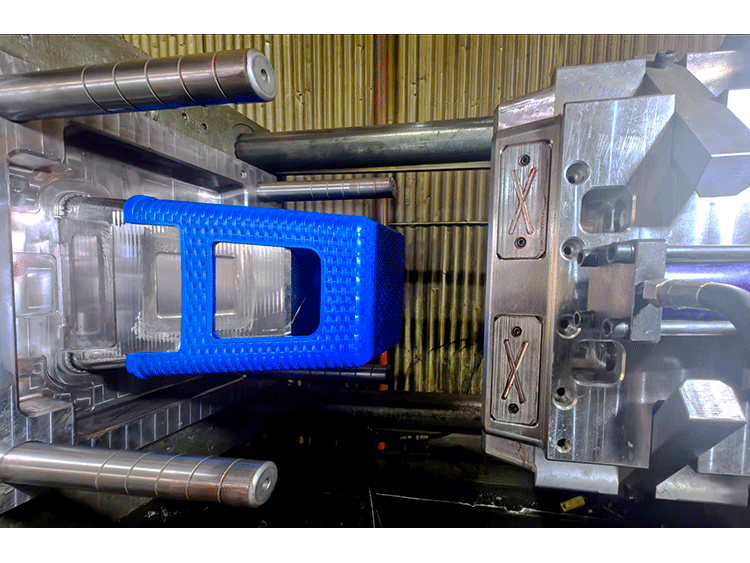
Many stool designs have relatively tall cavities.
That makes mold opening an important part of the machine-selection process.
A deep-cavity stool mold may need enough opening stroke to separate the molded part safely and provide clearance for a robot or operator.
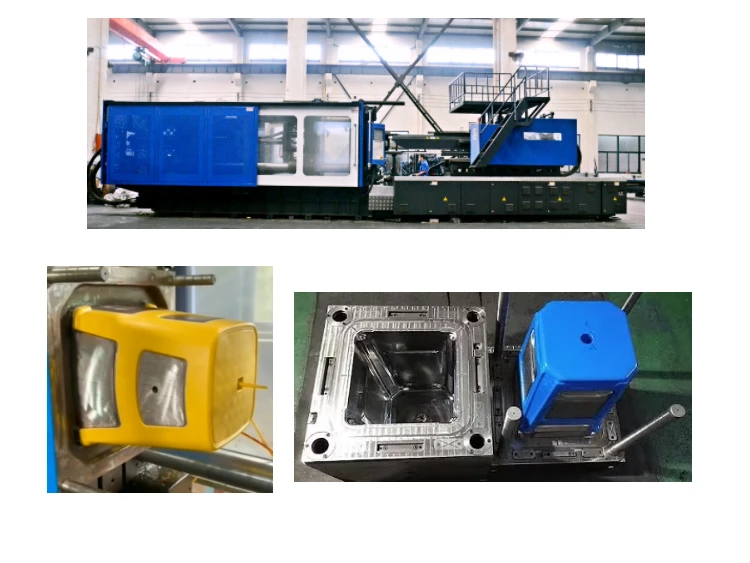
For example, HCK series specifically targets deep-cavity products and lists plastic stools among its applications. Its catalog explains that the series uses a larger opening stroke than conventional clamping units, which helps with products such as stools and other deep-cavity parts.
HCK530 application example also shows a square plastic stool with a machine model S530LS and a 530-ton-class machine used for the application. The published test case lists a stool weight of 730–790 g and a cycle time of about 20 seconds.
The key point for buyers is simple:
Do not select a stool machine from clamping force alone.
Check the mold height and required opening stroke at the same time.
Plastic Stool Mold Design and Machine Matching
Deep-Cavity Mold Design
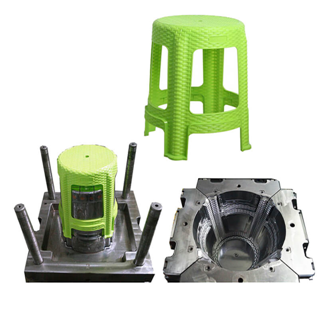
Plastic stool molds often combine a broad top surface with long legs and reinforcing ribs.
Mold design therefore has a direct effect on the machine configuration.
The main points include:
- Gate location
- Runner layout
- Cooling circuits
- Ejection system
- Core structure
- Mold height
- Mold weight
A current stool mold example uses hot runner technology and recommends PP, while allowing the cavity number, steel grade, cooling system, and machine interface to match the customer’s product and machine.
Cooling System
Cooling can become a major part of the cycle for large stool parts.
A stool mold needs balanced cooling across the main body and structural sections. Uneven cooling can contribute to:
- Warpage
- Uneven shrinkage
- Surface defects
- Longer cycles
Therefore, a well-designed cooling system can improve both part quality and productivity.
Ejection System
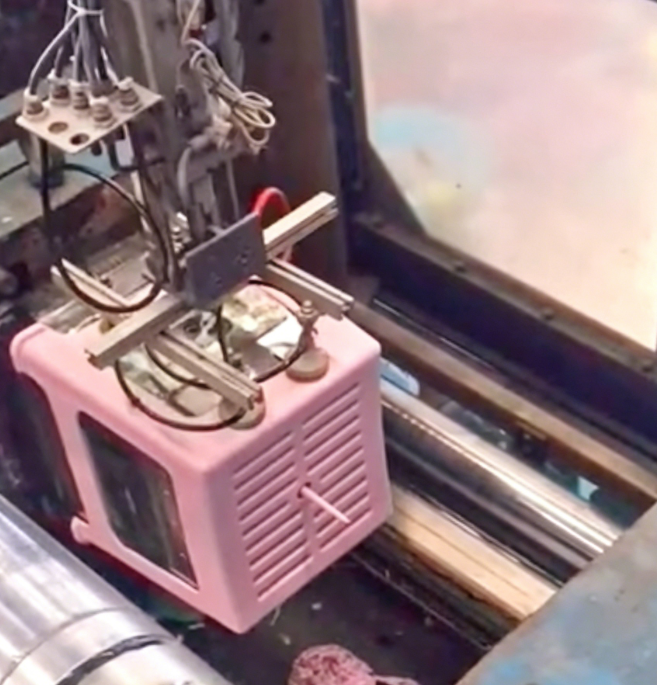
The machine and mold need enough ejector force and stroke to release the stool without damaging the part.
Tall or deep-cavity products may need a carefully designed ejector layout. Mold suppliers commonly place ejector pins behind structural ribs or on less visible surfaces to reduce cosmetic marks.
How Many Cavities Should a Plastic Stool Mold Have?
Cavity number depends on stool size, target output, mold cost, shot capacity, and filling balance.
Cavity Mold
A one-cavity mold can make sense when:
- The stool is large
- The project has moderate output
- The product is new
- The customer wants lower initial mold investment
A current commercial stool-mold example, for instance, proposes a 1-cavity configuration for household and commercial stools and designs the mold around the customer’s product and machine.
2- or 4-Cavity Mold
Additional cavities can increase output without pushing mold complexity as far as very high-cavity tooling.
However, the machine must provide enough shot capacity, injection rate, and clamping force for the complete mold.
Higher-Cavity Production
For smaller stools or very high-volume projects, manufacturers may consider more cavities.
At the same time, more cavities mean:
- Larger total shot weight
- More complicated runners
- Higher mold investment
- Greater filling-balance requirements
- More demanding cooling design
Therefore, the highest cavity number is not automatically the best production solution.
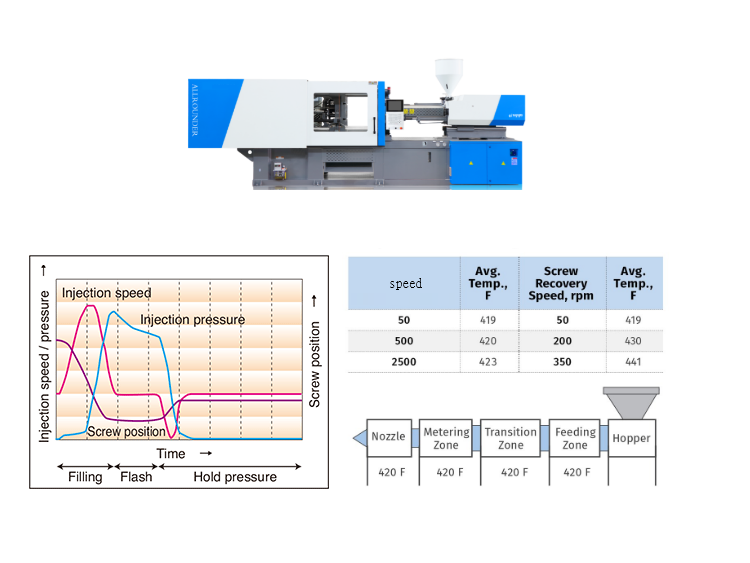
Injection Speed and Pressure for Stool Production
A stool mold can have a large flow path and relatively thin structural sections.
The machine therefore needs enough injection speed to fill the cavity before the melt cools too much.
Operators can optimize:
- Injection speed
- Injection pressure
- Melt temperature
- Mold temperature
- Holding pressure
- Holding time
The correct settings depend on the material grade and mold design.
A high injection pressure alone does not solve every filling problem. The gate location, runner system, wall thickness, and melt temperature also affect filling performance.
For this reason, manufacturers should evaluate the injection unit as a complete system rather than comparing only maximum injection pressure.
Screw Design for PP Plastic Stools
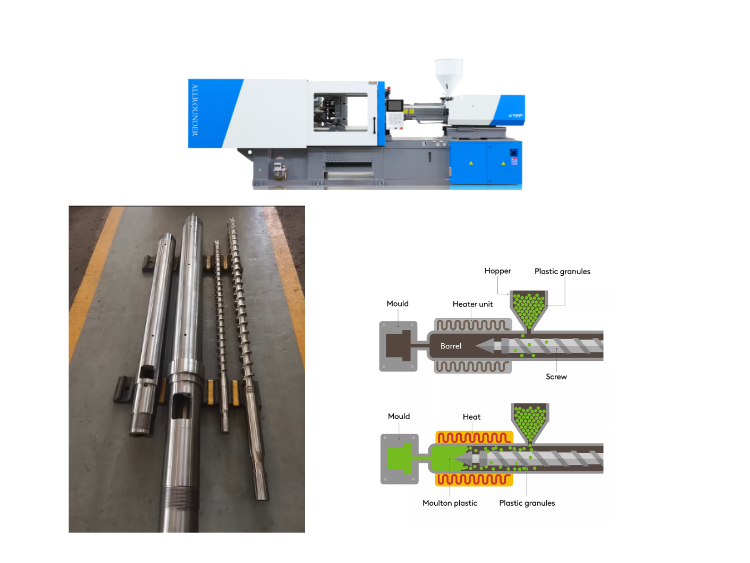
The screw should match the resin, product weight, shot size, and target cycle.
For standard PP stool production, the machine should provide stable plasticizing without excessive residence time.
Important points include:
Screw Diameter
The screw should provide enough shot capacity without unnecessarily oversizing the injection unit.
L/D Ratio
The L/D ratio affects plasticizing behavior and residence time. The correct value depends on the machine and resin rather than one universal stool standard.
Screw Speed
The machine should reach the required plasticizing rate without forcing the screw to operate continuously at an extreme speed.
Wear Resistance
Recycled materials, fillers, pigments, or contaminated feedstock can increase wear. Manufacturers should therefore consider screw and barrel material according to the resin and operating environment.
Plastic Stool Injection Molding Machine Price
Machine price varies widely because manufacturers configure stool production lines differently.
Current commercial listings show plastic stool injection molding machines across a broad price range. For example, one 500-ton stool machine listing shows a price range of about US$10,000–80,000, while other commercial listings show approximately US$18,000–35,000 for chair and stool injection molding equipment. These online prices represent supplier listings rather than a universal market price and may exclude molds, automation, shipping, installation, and other options.
What Affects the Machine Price?
The biggest factors include:
- Clamping force
- Injection unit size
- Screw and barrel specification
- Servo system
- Control system
- Opening stroke
- Mold requirements
- Cavity number
- Core-pull systems
- Robot automation
- Auxiliary equipment
For a complete stool production line, manufacturers should therefore ask for a system quotation rather than comparing the machine body price alone.
Plastic Stool Production Line Setup
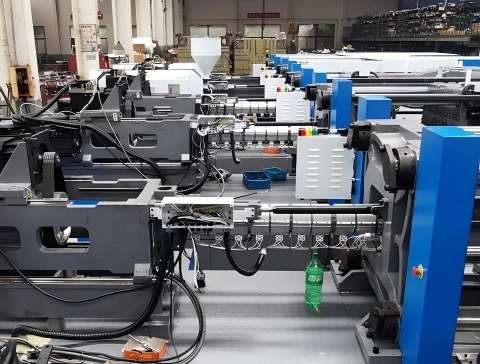
A typical plastic stool manufacturing line can include:
PP resin → material loading → injection molding machine → stool mold → cooling → ejection → robot or manual removal → inspection → packing
Depending on the production target, the factory may also add:
- Hopper loader
- Dryer
- Chiller
- Crusher
- Robot
- Conveyor
- Automatic packing system
For large-volume production, automation can reduce handling labor and keep cycle times more consistent.
However, the right automation level depends on the product, cycle time, factory layout, and labor costs.
Haichen Injection Molding Machines for Plastic Stool Production
Haichen approaches stool-machine selection from the complete production requirement rather than from tonnage alone.
Engineers can review:
- Product drawing
- Product weight
- PP grade
- Projected area
- Cavity number
- Mold dimensions
- Required opening stroke
- Cycle time
- Annual production target
- Automation requirements
The HCK series can then be configured around the actual project.
Depending on the application, the setup can include a suitable injection unit, screw and barrel, temperature-control system, servo drive, robot interface, and auxiliary equipment.
This approach also makes it easier to evaluate whether a manufacturer needs one machine for a single stool model or a flexible machine that can run several products.
When a 530-Ton Class Machine Makes Sense
A 530-ton-class machine can be relevant to some large or deep-cavity stool projects, but the product data should confirm the requirement.
The reason is straightforward.
A stool may have:
- Large projected area
- Deep mold cavity
- Heavy part weight
- Long mold opening requirements
- High output targets
A 530-ton-class machine can offer a combination of clamping force, mold space, and injection capacity suitable for some of these applications.
Published industry application data supports this type of use. We published stool test case uses an S530LS for a square stool weighing approximately 730–790 g, while its deep-cavity HCK series specifically includes plastic stools among its target applications.
However, manufacturers should not select 530 tons simply because another factory uses it.
Send the actual product drawing, weight, cavity number, and mold dimensions to the machine supplier first.
Frequently Asked Questions
What size injection molding machine is needed for a plastic stool?
There is no single machine size for every stool.
The required capacity depends on projected area, cavity number, product weight, mold dimensions, injection requirements, and production target.
How many tons do I need for a plastic stool mold?
Start with the projected area and cavity pressure, then apply an appropriate safety factor.
Do not determine tonnage from stool height or diameter alone.
What is the best material for plastic stools?
PP is a common choice for general-purpose stools because it offers a useful balance of cost, toughness, stiffness, and processability.
However, the final choice depends on the product requirements and market.
Can one machine produce different plastic stools?
Yes, provided the machine can accommodate the different molds and their injection requirements.
Check mold size, tie-bar spacing, shot capacity, opening stroke, and injection-unit capability before changing products.
How many cavities should a plastic stool mold have?
One cavity can suit large or lower-volume stools. Two or four cavities can increase output for suitable products.
Higher-cavity molds can work for smaller, high-volume products, but they also require more shot capacity, a larger mold, and better filling balance.
Does a plastic stool need a large opening stroke?
Many deep-cavity stool molds benefit from a large opening stroke.
The actual requirement depends on mold height, stool geometry, ejection method, and part-removal system.
How much does a plastic stool injection molding machine cost?
The price depends on machine size, injection unit, screw and barrel, automation, mold requirements, and auxiliary equipment.
Online supplier listings show a wide range, so manufacturers should compare complete configurations rather than one headline machine price.
Can recycled PP be used for plastic stools?
Yes, some stool manufacturers use recycled PP or blended materials.
However, material consistency can affect appearance, strength, flow, and processing stability. Test the actual recycled material before finalizing the machine and process settings.
What should I send to a machine manufacturer for a quotation?
Prepare:
- Stool drawing or sample
- Product weight
- Material grade
- Mold cavity number
- Mold dimensions
- Target cycle time
- Required annual output
- Automation requirements
These details allow the supplier to calculate the machine configuration more accurately.
Can Haichen provide a complete plastic stool production solution?
Haichen can configure the injection molding machine around the stool, mold, material, and production target.
Depending on the project, the solution can include the HCK machine, screw and barrel configuration, temperature control, robot interface, material handling, cooling equipment, conveyor systems, and other auxiliary equipment.
Choosing the Machine From the Product, Not the Tonnage
A plastic stool project should start with the product drawing and production target.
From there, the manufacturer can calculate projected area, shot size, cavity requirements, mold dimensions, and opening space.
This method helps avoid two common mistakes: choosing a machine that cannot handle the mold, or paying for a machine that is much larger than the application requires.
For manufacturers planning PP stool production, Haichen can evaluate the product and mold data and configure an HCK series machine around the actual production requirements.
Haichen Machinery — Injection Molding Solutions for Plastic Stool Production
Author: Yang, Senior Engineer, Haichen Machinery