
The handle needs to fit the bottle, carry the required load, keep its shape after molding, and maintain stable dimensions during mass production.
For this reason, oil bottle handle injection molding requires the product, mold, injection molding machine, cooling system, and product handling process to work together.
The right setup does not start with machine tonnage. It starts with the handle design.
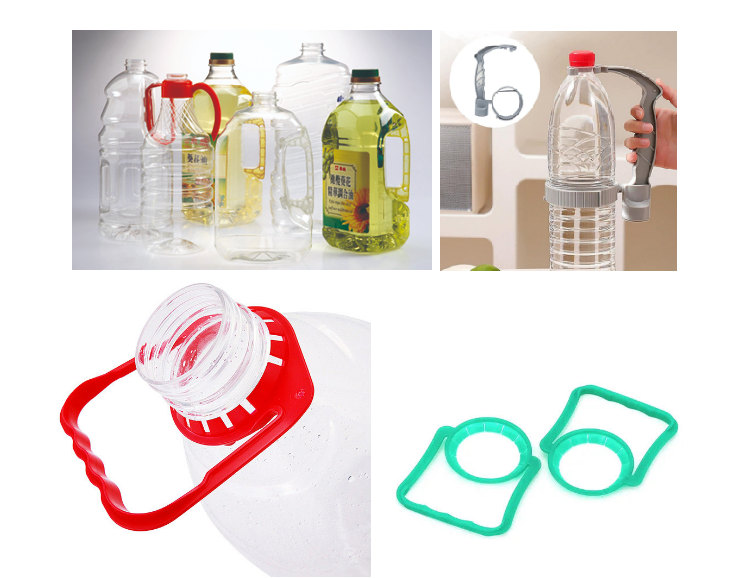
What Are Plastic Oil Bottle Handles?
Plastic oil bottle handles are used to make containers easier to carry and pour. Depending on the bottle design, the handle may connect to the bottle at one or more mounting areas.
A handle can include:
- A grip section
- Mounting points
- Connecting sections
- Holes or openings
- Ribs
- Reinforced areas
These features affect the way the plastic flows inside the mold.
For example, a long and thin handle may have a different filling pattern from a short and thick handle. Likewise, a handle with ribs or mounting structures may need different gate and cooling arrangements.
Therefore, the product drawing should be the starting point for the molding project.
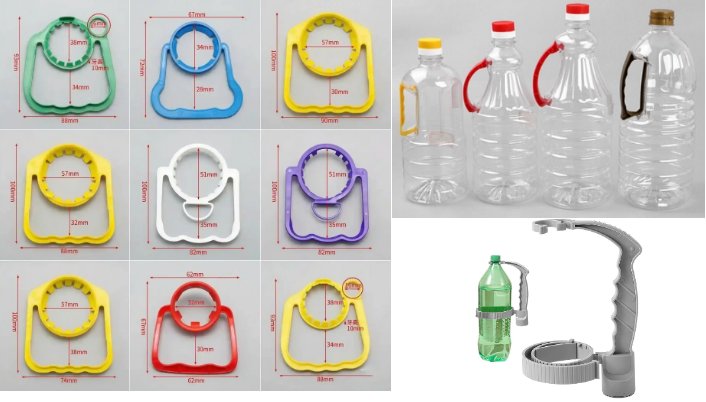
What Makes Oil Bottle Handle Injection Molding Different?
The handle needs more than a good appearance.
It must also provide enough strength for its intended use. At the same time, the product should remain dimensionally stable after ejection.
Several product features deserve special attention.
Handle Shape
The overall length, width, thickness, and grip shape affect mold design and filling.
A long flow path may require careful gate placement and injection control.
Wall Thickness
Uneven wall thickness can create different cooling rates in different areas.
This may lead to:
- Warpage
- Sink marks
- Uneven dimensions
- Stress
- Appearance differences
A balanced product design can make the molding process easier.
Mounting Areas
The mounting area connects the handle with the bottle.
It needs accurate dimensions because a poor fit can affect assembly and product use.
Load-Bearing Areas
The grip and connecting sections may experience more mechanical stress than other areas.
For this reason, the mold and product design should consider the required strength rather than focusing only on reducing product weight.
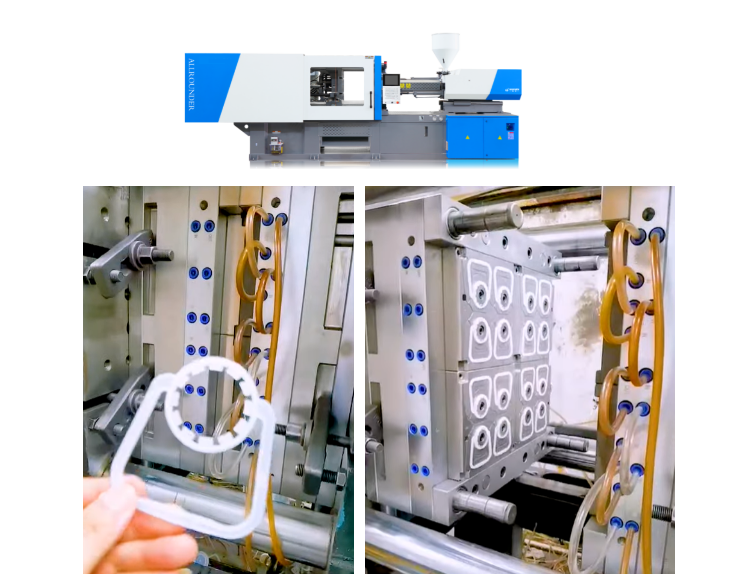
What Plastic Is Used for Oil Bottle Handles?
PP is commonly considered for many plastic handle applications because it offers useful toughness, low density, and chemical resistance.
However, the material grade should match the actual product requirements.
The manufacturer should consider:
- Required strength
- Flexibility
- Chemical resistance
- Product appearance
- Processing characteristics
- Cost
- Use environment
Some projects may also use recycled PP or a blend of virgin and recycled material.
However, recycled material can have different flow and mechanical properties.
Therefore, manufacturers should test the actual resin before mass production instead of assuming that different PP sources will process in exactly the same way.
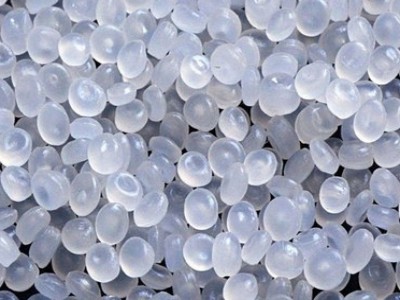
How Is an Oil Bottle Handle Mold Designed?
The mold should follow the product design and production target.
A typical handle mold needs to consider:
- Cavity number
- Cavity arrangement
- Gate location
- Runner layout
- Cooling channels
- Venting
- Ejection
- Mold dimensions
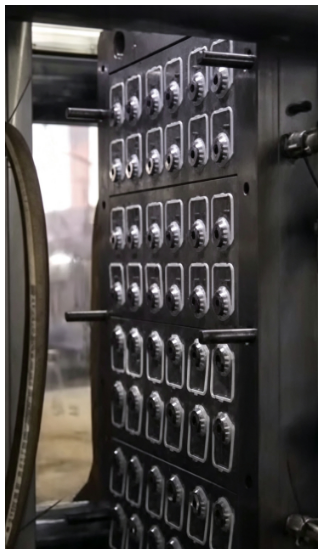
Cavity Arrangement
More cavities can increase the number of handles produced in one cycle.
However, adding cavities also increases mold complexity.
The mold designer needs to keep filling, cooling, and ejection balanced across the cavities.
For a high-cavity mold, one cavity should not fill much earlier or later than the others. Otherwise, the finished handles may show differences in weight, dimensions, or appearance.
Gate Location
The gate affects how the plastic enters the handle cavity.
A suitable gate position can help control:
- Filling distance
- Weld line position
- Packing
- Product appearance
- Stress distribution
The best gate location depends on the actual handle geometry.
Cooling Design
Cooling has a direct effect on cycle stability and product deformation.
The mold should provide suitable cooling around areas with different wall thicknesses.
Good cooling control can help reduce:
- Warpage
- Dimensional variation
- Long cooling times
- Cavity-to-cavity differences
The goal is not simply to make the cooling time as short as possible. Stable cooling is more important.
What Injection Molding Machine Is Used for Oil Bottle Handles?
There is no single machine model for every oil bottle handle.
The machine should match the actual mold and product.
The main points to check include:
Clamping Force
The machine needs enough clamping force to keep the mold closed during injection.
The required force depends on the total projected area and molding conditions.
Therefore, manufacturers should not use a simple rule such as:16 cavities = a specific tonnage.
Two 16-cavity handle molds can have different product sizes and projected areas. They may therefore require different machine configurations.
Shot Capacity
The injection unit needs enough capacity for the complete shot.
The calculation normally considers:
- Product weight
- Cavity number
- Runner weight
A machine should also have a suitable working margin rather than running continuously at its maximum shot capacity.
Mold Installation
The mold must physically fit the machine.
Check:
- Platen dimensions
- Tie-bar spacing
- Mold height
- Mold opening stroke
- Ejector stroke
- Mold weight
A machine with enough clamping force may still be unsuitable if the mold cannot fit correctly.
Injection Control
Some oil bottle handles may have long flow paths or thin sections.
The machine should therefore provide stable control of:
- Injection speed
- Injection pressure
- Holding pressure
- Screw position
- Plasticizing
The final process settings should come from mold testing and actual production results.
How Can You Prevent Common Oil Bottle Handle Molding Defects?
Oil bottle handles can develop several common injection molding defects.
Short Shots
A short shot occurs when the cavity does not fill completely.
Possible causes include:
- Insufficient filling speed
- Incorrect process settings
- Poor venting
- Unsuitable gate design
- Low material temperature
The actual cause should be checked before changing machine parameters.
Warpage
Warpage can occur when different areas cool and shrink at different rates.
Mold cooling, wall thickness, material behavior, and ejection conditions can all affect the result.
Sink Marks
Thicker sections may shrink more during cooling and create surface depressions.
A better product structure, suitable packing, and proper cooling can help control this problem.
Weld Lines
When two melt fronts meet, a visible or weak weld line may appear.
Gate location, flow direction, mold temperature, and injection conditions can affect its position and appearance.
For a handle that carries a load, weld-line location deserves particular attention.
Flash
Flash can appear around the parting line when the mold does not close properly or the molding conditions exceed the mold’s capability.
The machine, mold condition, clamping force, and process settings should all be checked.
How Does an Oil Bottle Handle Production Line Work?
A basic production line can include:
- Injection molding machine
- Oil bottle handle mold
- Material loading system
- Dryer when required
- Chiller
- Mold temperature controller when required
- Robot or automatic take-out system
- Conveyor
- Inspection equipment
- Packing equipment
Not every project needs all of these machines.
For example, a smaller factory may start with manual handling after molding. A high-volume factory may add automatic take-out, conveying, counting, inspection, and packing.
The production line should therefore match the required output and automation level.
How Should You Plan Production Capacity?
Production capacity depends mainly on cavity number and cycle time.
The basic theoretical formula is:
Output per hour = Cavity number × 3600 ÷ Cycle time
For example, a 16-cavity mold running at a 15-second cycle gives:
16 × 3600 ÷ 15 = 3,840 handles per hour
This is only theoretical output.
Actual production will be lower because of:
- Machine stops
- Material changes
- Mold adjustments
- Quality inspection
- Maintenance
- Product handling
- Packing
Therefore, production planning should use realistic machine utilization instead of assuming continuous operation.
How Do You Match the Machine, Mold and Production Target?
The machine should not be selected separately from the mold.
A practical project review should connect these three areas:
Product
- Handle dimensions
- Weight
- Wall thickness
- Mounting structure
- Strength requirements
Mold
- Cavity number
- Mold dimensions
- Gate and runner
- Cooling
- Ejection
Machine
- Clamping force
- Shot capacity
- Injection performance
- Platen size
- Mold opening
- Ejector system
When these three parts match, the production line has a better starting point for stable production.
What Information Is Needed for an Oil Bottle Handle Machine Quote?
A supplier can evaluate the project more accurately when the customer provides basic product information.
Useful information includes:
- Product drawing or sample
- Product dimensions
- Product weight
- Plastic material
- Wall thickness
- Required cavity number
- Existing mold information
- Target production quantity
- Target cycle time
- Factory voltage and frequency
- Required automation level
- Destination country
If an existing mold is available, its drawing and technical specifications should also be provided.
If there is no mold yet, the product drawing or physical sample can be used as the starting point.
Can Haichen Provide a Complete Oil Bottle Handle Solution?
Haichen can coordinate the injection molding machine with the mold and auxiliary equipment according to the customer’s product requirements.
Instead of selecting a machine from the product name alone, the project can be evaluated from:
- Product design
- Material
- Mold cavity number
- Shot requirements
- Projected area
- Mold dimensions
- Target production
- Automation requirements
This approach helps avoid choosing a machine only because its tonnage appears suitable.
For a new oil bottle handle project, the product drawing and production target are the best starting points.
Frequently Asked Questions
What machine is suitable for oil bottle handle injection molding?
There is no fixed machine size for every oil bottle handle. The machine depends on the product, mold, cavity number, projected area, shot requirements, and production target.
Is PP suitable for oil bottle handles?
PP is commonly used for many plastic handle applications. However, the specific PP grade should match the required strength, flexibility, chemical resistance, and processing conditions.
Can recycled PP be used for oil bottle handles?
It may be suitable for some products. However, recycled PP can have different flow and mechanical properties, so the actual material should be tested before mass production.
Does a higher cavity number always mean higher production efficiency?
Not necessarily. More cavities can increase output per cycle, but they also increase mold complexity, shot requirements, cooling demand, and mold cost.
Can an existing oil bottle handle mold be used on a new machine?
It may be possible. The mold dimensions, tie-bar spacing, clamping force, mold height, opening stroke, and ejector system should be checked first.
Can Haichen supply the mold and auxiliary equipment?
Yes. Haichen can coordinate the injection molding machine with the required mold and auxiliary equipment according to the project requirements.


