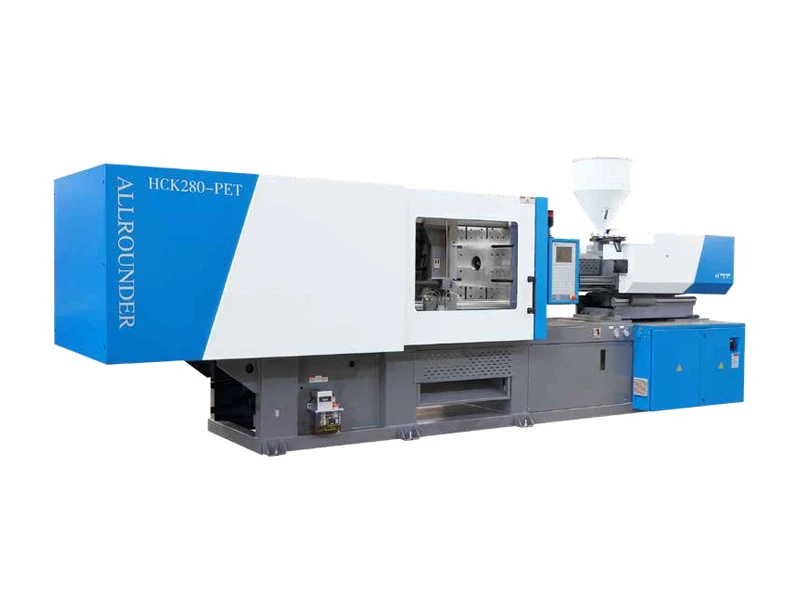
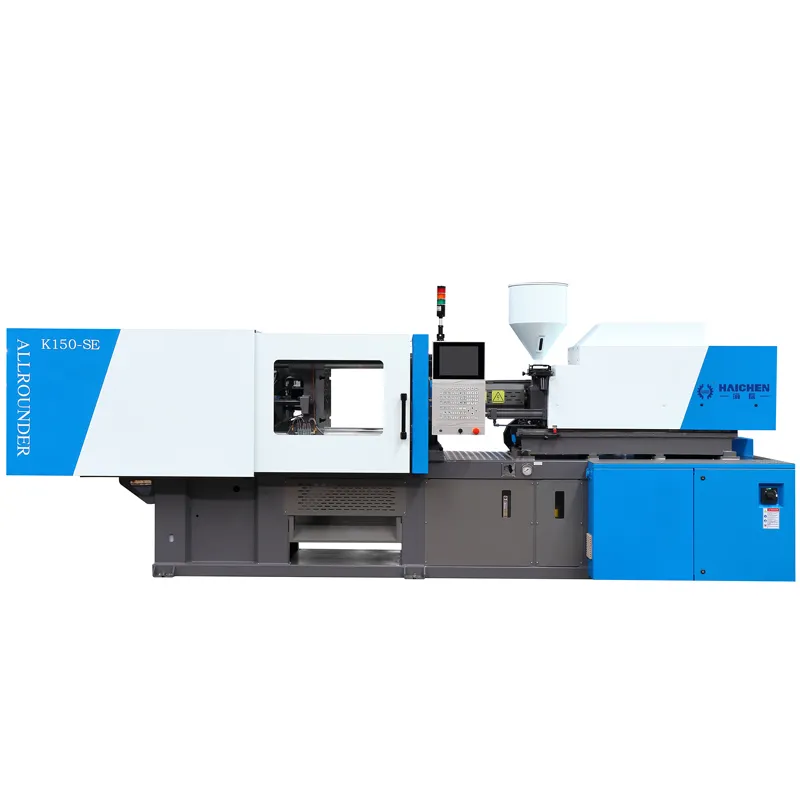
Bottle handle injection molding machine selection requires matching capabilities to your specific production requirements. An undersized machine causes quality issues while an oversized one wastes energy and increases costs. This guide walks you through five core parameters for informed decision-making.
This guide covers five key parameters for bottle handle injection molding machine selection — clamping force, injection capacity, pressure and speed, screw configuration, and automation — with real production data from HAICHEN installations.
Bottle handle production presents unique challenges that demand careful machine selection. As an injection molding machine manufacturer, HAICHEN frequently helps buyers evaluate clamping force, injection capacity, pressure, screw configuration, and automation compatibility. Understanding these parameters ensures your bottle handle injection molding machine delivers consistent quality and optimal productivity.
Clamping Force for Bottle Handle Injection Molding Machine
Clamping force is the maximum force the machine applies to keep the mold closed during injection. Measured in tons, this force must counteract the high pressure of molten plastic entering the mold cavity. For a bottle handle injection molding machine, proper clamping force prevents flashing and ensures part quality.
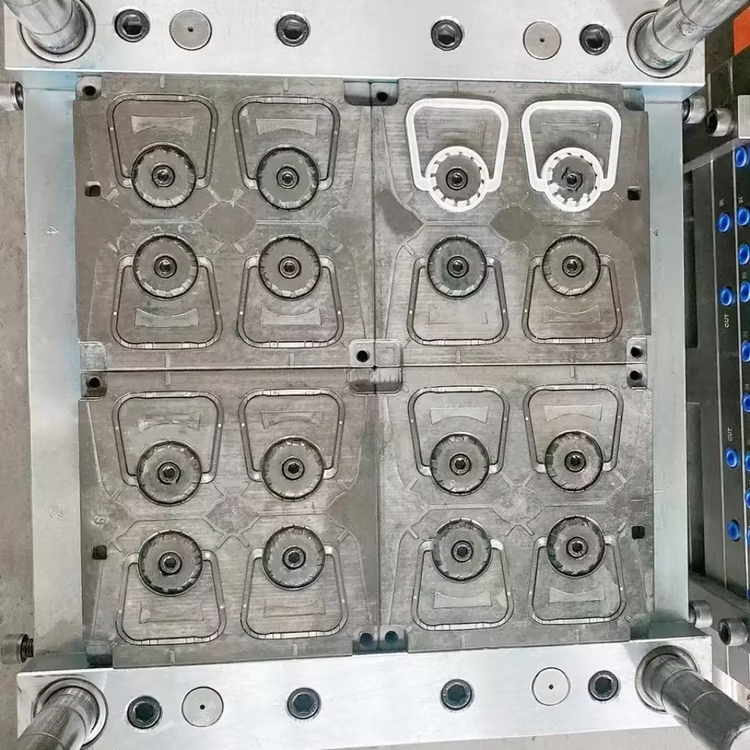
Calculating Clamping Force for Bottle Handle Molding
A practical rule of thumb requires approximately 3-5 tons of clamping force per cm² of projected mold area, plus a 10-20% safety margin. For a typical bottle handle with a projected area of 50-100 cm² using HDPE or PP material, the required clamping force generally falls between 80 and 300 tons.
Consequences of Incorrect Clamping Force
Insufficient clamping force allows molten plastic to escape through the parting line, creating flashing on the handle. This leads to defective products, increased material waste, and reduced mold life. Excessive clamping force wastes energy and may damage the mold. Proper selection is essential for any bottle handle injection molding machine.
Typical Clamping Force Ranges for Bottle Handles
Small handles for 0.5L-1.5L bottles typically require 80-150 tons. Medium handles for 2L-5L bottles need 150-250 tons. Large handles for 5L+ bottles or heavy-duty containers demand 250-350 tons of clamping force.
HAICHEN Application Examples
In practice, HAICHEN has supplied machines across this entire range to customers producing different sizes of bottle handles. For a customer producing handles for 5L cooking oil bottles, HAICHEN recommended a machine with 250 tons of clamping force. For another customer making small handles for 0.5L water bottles, a 90-ton machine proved sufficient. The key is matching the clamping force to the specific product dimensions and material.
Injection Capacity for Bottle Handle Molding Machine Selection
Injection capacity, also called shot size, is the maximum volume or weight of molten plastic the machine can inject in a single cycle. This parameter is measured in grams or cubic centimeters. For efficient bottle handle production, your machine must have enough capacity to fill all cavities and the runner system completely.
The 85% Rule for Injection Capacity
Industry guidelines recommend that the total weight of all parts and runners in one cycle should not exceed 85% of the machine’s maximum injection capacity. This safety margin ensures complete filling and consistent quality. For example, if each handle weighs 15g with a 16-cavity mold and a 40g runner system, the total shot weight is 280g, requiring a minimum injection capacity of 329g.
Capacity Requirements for Different Mold Configurations
Multi-cavity molds are common in bottle handle production and demand larger injection capacity. Small handles with 8-16 cavities typically need 100-300g. Medium handles with 16-32 cavities require 300-600g. Large handles or high-cavity molds need 600g or more of injection capacity.
HAICHEN Multi-Cavity Experience
HAICHEN has extensive experience with multi-cavity mold configurations. Some customers run 16-cavity molds for medium-sized handles, requiring approximately 300-400g of injection capacity. Others operate 48-cavity or even 72-cavity molds for high-volume production of small handles, where injection capacity exceeds 600g. In each case, HAICHEN tailors the machine’s injection unit to match the specific mold configuration and production target.
Injection Pressure and Speed for Bottle Handle Molding
Injection pressure pushes molten plastic into the mold cavity, while injection speed determines how fast the plastic fills the mold. Both parameters significantly affect the quality of your bottle handle. Complex handle shapes with thin sections and sharp corners require careful pressure and speed optimization.
Material-Specific Pressure Requirements
Different materials demand different pressure settings. HDPE offers good flowability and requires moderate pressure. PP behaves similarly to HDPE and is widely used for bottle handles. PET, used for integrated handles, requires higher injection pressure. PC offers high strength but demands higher pressure and temperature for proper molding.
Speed Considerations for Handle Quality
Higher injection speed helps fill thin sections before the material begins to cool and solidify. This prevents short shots and improves surface finish. For most bottle handle applications, injection pressure ranges from 150-250 MPa, with injection speeds between 150-400 g/s depending on machine size.
Screw and Barrel Configuration for Bottle Handle Molding Machine
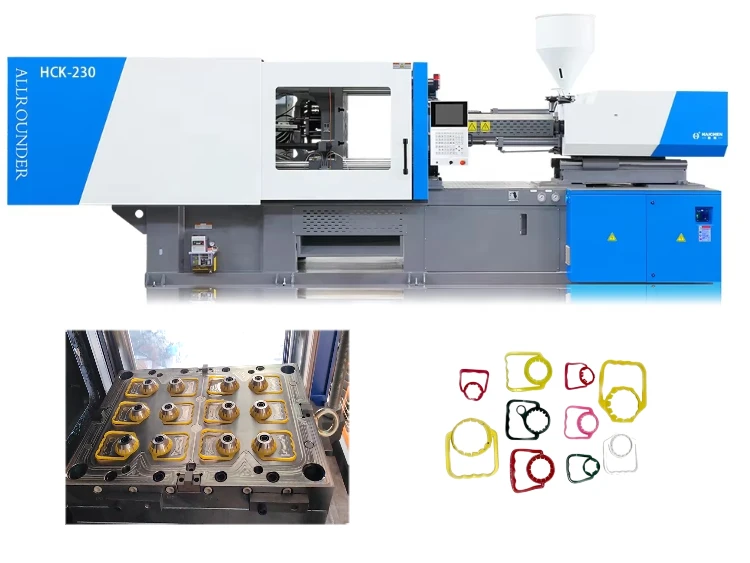
The screw and barrel form the heart of the injection unit, melting, mixing, and pushing plastic material into the mold. For bottle handle production, matching the screw configuration to your material is essential for equipment longevity and product quality.
Standard Screw for Common Materials
A standard general-purpose screw works well for HDPE and PP, the most common materials for bottle handles. This configuration offers cost-effective performance for most bottle handle applications without specialized requirements.
Wear-Resistant Screw for Reinforced Materials
Processing glass-fiber reinforced materials requires a wear-resistant screw to prevent premature wear and extend equipment life. This configuration is essential if your handles incorporate reinforcing fillers for added strength.
Corrosion-Resistant Screw for Specialty Materials
PVC and other corrosive materials demand a corrosion-resistant screw to prevent chemical attack on the screw and barrel. If you plan to use recycled materials like rHDPE or rPET, a specialized screw design may be needed to handle variations in material consistency.
HAICHEN Customized Screw Solutions
For customers processing PS or using recycled materials, HAICHEN offers customized screw designs to maintain consistent melt quality and prevent degradation. The technical team selects the optimal screw geometry and material based on your specific production requirements.
Automation for Bottle Handle Injection Molding Machine
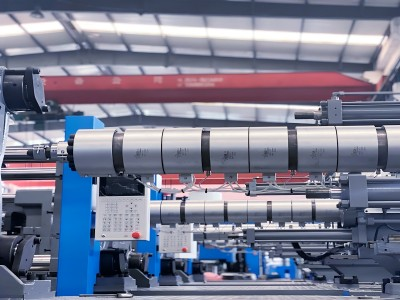
Modern bottle handle production increasingly relies on automation to reduce labor costs, improve consistency, and increase output. Your bottle handle injection molding machine should integrate seamlessly with robotic arms, conveyors, and monitoring systems.
Key Automation Features to Look For
Standardized robot interfaces enable easy connection to robotic arms for automatic part removal. IoT and remote monitoring capabilities allow tracking of production data and machine status from anywhere. SPI and Euromap interfaces ensure compatibility with industry-standard auxiliary equipment. These features are essential for efficient, modern bottle handle production.
HAICHEN Automation-Ready Machines
HAICHEN machines come with standard robot interfaces for easy automation integration. Servo-hydraulic systems reduce energy consumption by 40-60% compared to conventional machines, making them ideal for automated production lines that run continuously.
Frequently Asked Questions
Q: What clamping force do I need for bottle handle production
A: Bottle handle injection molding machine clamping force depends on handle size. Small handles (0.5-1.5L bottles) need 80-150 tons. Medium handles (2-5L bottles) need 150-250 tons. Large handles (5L+) need 250-350 tons. Use the 3-5 tons per cm² rule as a starting point.
Q: How do I calculate injection capacity for a bottle handle mold
A: Calculate total shot weight = (part weight × cavity count) + runner weight. Then divide by 0.85 to get minimum required injection capacity. For example, 15g parts × 16 cavities + 40g runner = 280g, requiring at least 329g capacity.
Q: What materials can a bottle handle injection molding machine process
A: Most bottle handle injection molding machines handle HDPE and PP as standard. PET and PC require higher pressure and temperature. Recycled materials (rHDPE, rPET) may need specialized screw designs.
Q: How many cavities should a bottle handle mold have
A: Small handles can run 16-32 cavities per mold. Medium handles typically use 8-16 cavities. Large handles or heavy-duty handles often use 4-8 cavities to maintain quality and mold life.
Q: Does HAICHEN offer customized screw designs for bottle handle production
A: Yes. HAICHEN offers standard, wear-resistant, and corrosion-resistant screw configurations based on your material. Customized screw designs are available for recycled materials and specialty applications.
Q: What is the typical energy saving of a servo-driven bottle handle molding machine
A: HAICHEN servo-hydraulic systems reduce energy consumption by 40-60% compared to conventional hydraulic machines, making them ideal for continuous bottle handle production lines.